Australia Profile
Quick Facts
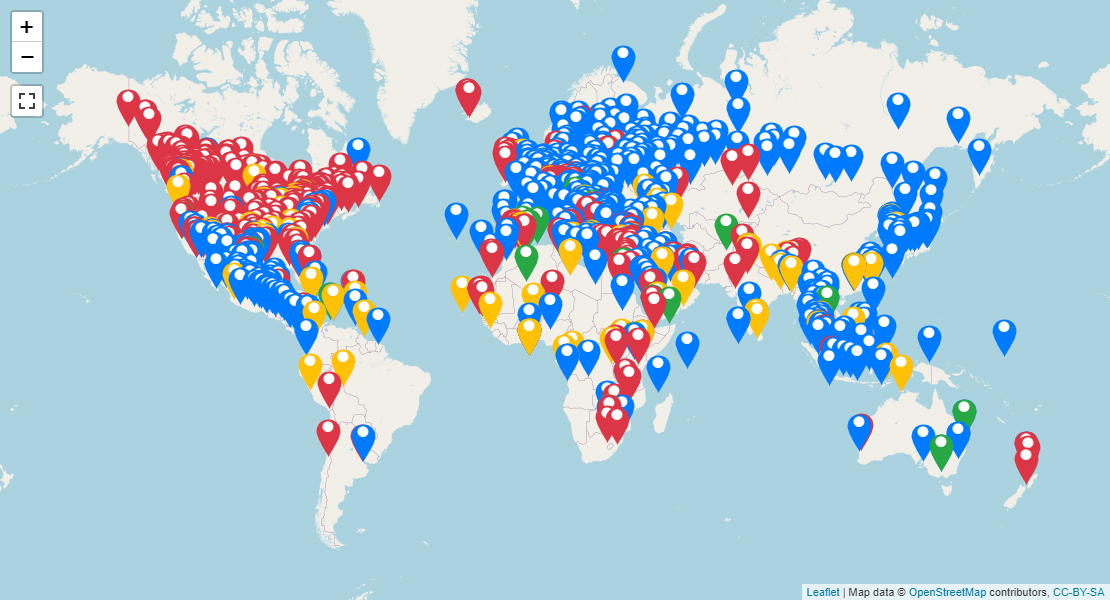
Number of Immigration Detention Sites: 9 (2008)
Detention Capacity: 2,380 (2008)
Annual Number of Deportations:
6,768 (2007)
Undocumented Population:
46,500 (as of June 2007)
Number of asylum seekers:
1,516 (end of 2007)
Last updated: July 2008
Australia Detention Profile
Detention Facts and Figures
All non-citizens who arrive in Australia without a visa, who overstay their visa, who have their visa cancelled, or who are detained as illegal foreign fishers on Australian territorial waters are classified as being unlawfully in Australia and can currently be placed in immigration detention. According to the Australian Department of Immigration and Citizenship (DIAC), the main nationalities of people detained since 2002 have been Indonesian, Chinese, Malaysian, and Korean. Most detainees from Indonesia are unlawful foreign fishers held, according to the DIAC, “only for a short period of time.” The main nationalities of those detained between 2000 and 2002 were Afghani, Iraqi, Iranian, Palestinian, Malaysian, and Sri Lankan (DIAC 2008e).
When a non-citizen, including asylum seekers, is refused permission to stay in Australia, he or she can remain in detention until deported. The UN High Commissioner for Human Rights (UNHCR) questions the “unlawful” status assigned to those detainees who request asylum, defining a person as a refugee as soon as his or her circumstances fit the definition, rather than when formal “refugee” status is given to them. There have been numerous cases of asylum seekers who, after being detained, were eventually granted refugee status (HREOC 2004).
In July 2008, the government proposed circumscribing its policy of mandatory detention for asylum seekers. The proposal, if passed by the Senate, would allow irregular non-citizens that don’t pose a security threat to be released into the community while their visa status is evaluated or they await deportation. The Christmas Island offshore detention centre would continue to be used for initial processing, health, and security checks of people intercepted offshore, but detainees would be granted access to legal assistance (Senator Evans 2008).
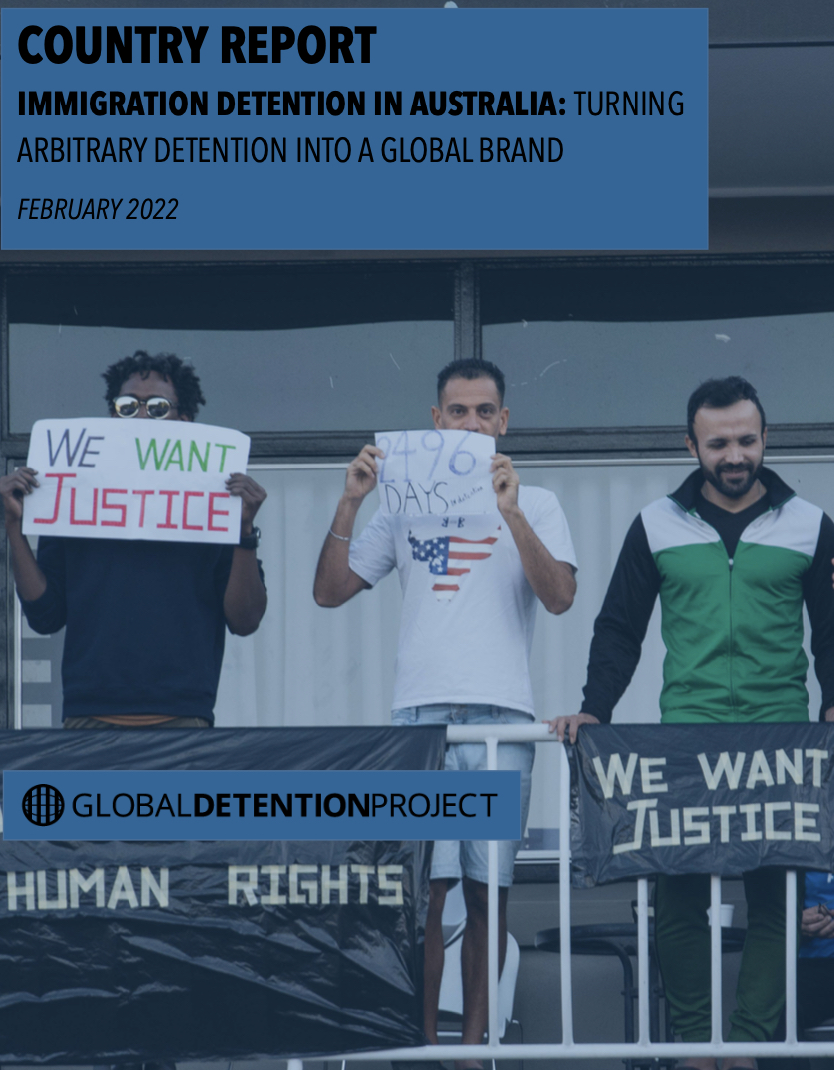
As of November 2008 there were 279 people held in immigration detention in Australia (DIAC 2008b). The total number of people detained at some time during 2006-2007 was 5,485, compared to 8,587 in 2004-2005 (the 12-month period is from July to June). There were 4,718 people taken into immigration detention during 2006-2007, compared with 7,522 in 2004-2005 (DIAC Annual Report 2006-2007). These figures illustrate a marked decrease in the detention of immigrants in recent years, matched by the closure of a number of previously key immigration detention centres during 2007. Of the 279 people in immigration detention as of November 2008, 175 were detained as a result of overstaying or breaching the conditions of their visa and 14 were illegal foreign fishers. 34 detainees were unauthorized boat arrivals and 46 were unauthorized air arrivals. 41 of the detainees were seeking asylum or judicial review of a decision in relation to their application for a protection visa (DIAC 2008b).
Immigration detention statistics are updated fortnightly by the Department of Immigration and Citizenship and can be viewed at on its website.
There were 5,044 people released from immigration detention during 2006-07, of which 150 had been granted a protection visa to remain in Australia, 610 were released in Australia based on other grounds, and 4,284 were removed from Australia (DIAC Annual Report 2006-2007).
In 2006-2007, there were 6,768 people deported from Australia, including those removed once released from immigration detention, and those deported upon arrival. Of these, 2,335 were removal departures, classified as unlawful non-citizens under section 198 of the Migration Act, or a deportee under section 200 of the Migration Act. The remaining 4,433 were classified as monitored departures. A total of 1,673 illegal foreign fishers were removed during 2006-2007 (DIAC Annual Report 2006-2007).
Onshore and offshore asylum seekers. The majority of refugees granted asylum in Australia shelter in neighboring countries before applying for refugee status (Refugee Council of Australia 2008). The government’s Offshore Humanitarian Program sets a quota of refugee resettlement places each year, which was 13,000 in 2006-2007. More than 11,000 of these were allocated, as some were carried over, brought forward, or re-credited from the previous or following years. More that 6,000 were classified as refugee places and 5,283 were Special Humanitarian Program and Initial Onshore Protection places (DIAC Annual Report 2006-2007). Australia’s refugee recognition rate in 2000 was 25 percent higher than the average of 7 percent for industrialized countries in 2000 (UNHCR 2001 in Baillet 2003). According to the statistics provided by the UN High Commissioner for Refugees (2007), as of the end of 2006, there was some 1,400 people seeking asylum in Australia.
Asylum seekers who are not granted refugee status offshore and who arrive in Australia are categorized as non-Australian citizens, unlawfully in Australia. The frequent passage to Australia by asylum seekers can include a journey by air to Malaysia or Indonesia, as well as contact with and payment to people-smugglers for false passports and a boat ride to Australia (Leach & Mansouri 2004, pp. 33-34). These asylum seekers are detained upon arrival. Some are allowed to stay in alternative destination programs (see the section “Detention Infrastructure”). Until December 2007, some unauthorized immigrants were moved to offshore processing centres, such as Nauru or Papua New Guinea (DIAC 2007).
If an asylum seeker passes the initial investigation into the legitimacy of their refugee status, they are granted a Temporary Permit Visa (TPV). The TPV provides three-year temporary residence and protection in Australia. Further protection can be applied for prior to the expiration of the initial TPV, but those who do not apply for further protection and remain in Australia are classified as unlawful, and can be detained or removed (DIAC 2008g).