Quick Facts

Est. no. of dedicated immigration detention centres: 24

Max. length of detention: No Limit

Asylum seekers: 7,117 (end 2008)

Last updated: March 2010

Turkey Detention Profile

Detention Policy

Detention Infrastructure

Facts & Figures


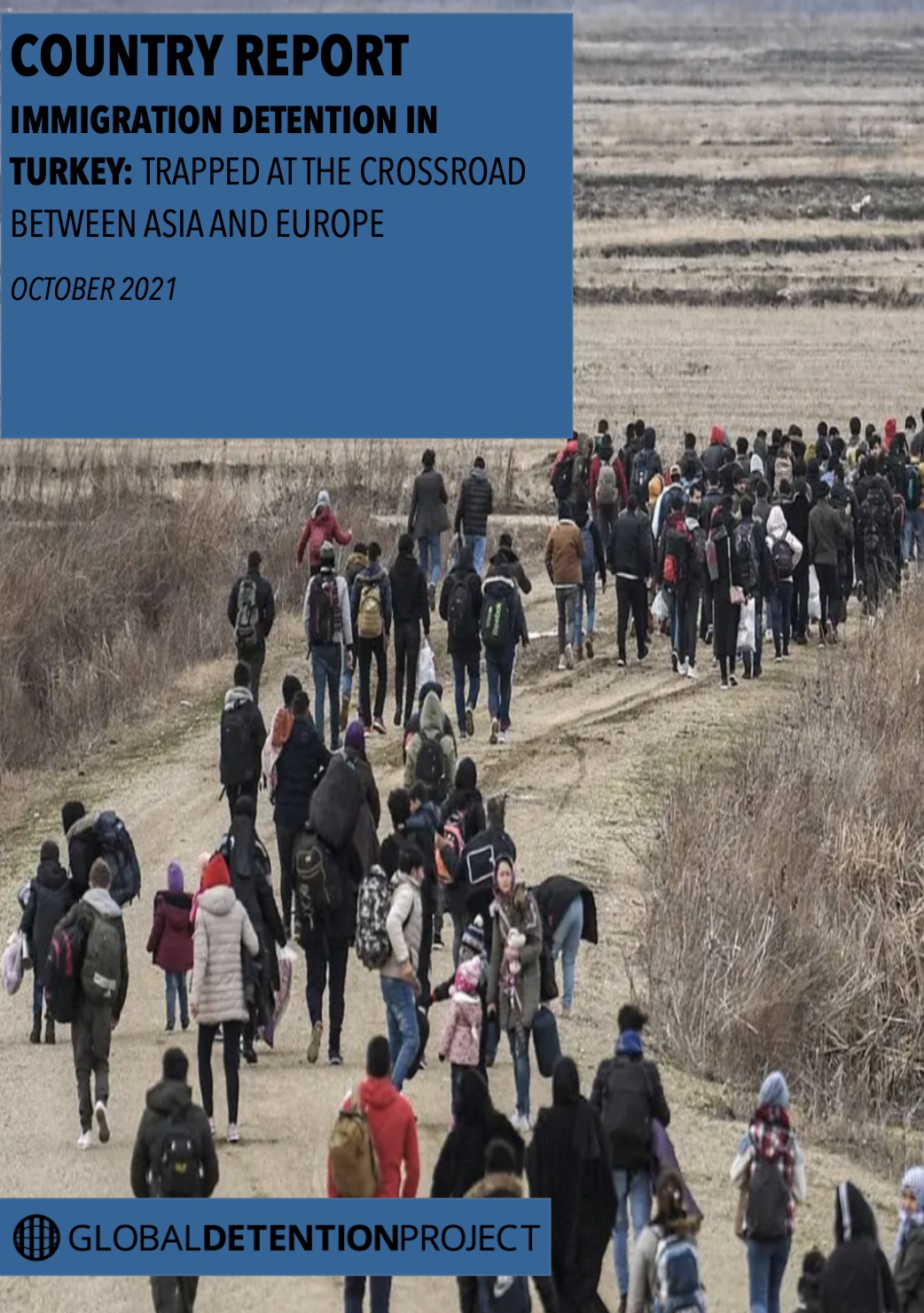
Located at a key juncture between East and West—and within a land and maritime border that extends nearly 10,000 kilometres—Turkey has become a turnstile for migrants from Asia, Africa, and the Middle East seeking passage to Europe. A candidate for membership in the European Union (EU), Turkey is under pressure to improve its human rights record and at the same time interdict irregular migrants and asylum seekers. The country has taken a number of steps in recent years to fortify its detention infrastructure and tighten its borders with substantial financial and technical support from the EU. Observers have repeatedly denounced the abusive and unsanitary conditions in Turkish detention facilities, which according to the European Court of Human Rights operate without adequate legal authority.


Detention Policy


Turkish law provides for criminal prosecution of immigration violations, but this is apparently only infrequently pursued (WGAD 2007, para 88). In some instances, judges have vacated their rulings on such cases, opting instead to hand migrants over to immigration authorities, who hold them in a type of administrative detention (see, for example, European Court of Human Rights, Abdolkhani and Karimnia v. Turkey, 2009, paras. 126-127).


However, the law is not clear about the grounds for confining non-citizens in administrative detention. The government frequently cites Article 4 of the Passport Law (Law No. 5683 of 1950) and Article 23 of the Law on the Sojourn and Movement of Aliens (Law No. 5687 of 1950) as grounds for “accommodating” undocumented foreign nationals. But various international bodies have argued that while these articles do not provide for detention, the type of accommodation carried out by authorities on the basis of these laws amounts to a clear deprivation of liberty and that the facilities used for this purpose operate as detention centres (for a detailed account of problems posed by administrative detention in Turkish law, see Abdolkhani and Karimnia v. Turkey, paras. 125-143; see also WGAD 2007 and ECHR Z.N.S. v. Turkey).


Article 4 of the Passport Law provides that foreign nationals who arrive at the Turkish border without appropriate documentation are not admissible, and that those who claim to have lost their documents during travel must stay at a location indicated by the administrative head of the local government until the Ministry of the Interior (MOI) has completed an investigation. In addition, Article 34 provides that non-citizens who enter Turkey illegally can be fined and imprisoned for up to six months and then deported upon completion of their sentences. Article 33 provides similar penalties for anyone attempting to leave Turkey without the necessary travel documents.


Article 23 of the Law on the Sojourn and Movement of Aliens provides that non-citizens who have been issued a deportation order but whom the state cannot immediately deport must reside in a location assigned to them by the MOI. Article 25 specifies that non-citizens who fail to adhere to asylum procedures, including leaving designated cities of residence without permission, can be charged.


According to reports from various international organisations, NGOs, and government agencies, irregular non-citizens can be apprehended by the police or Gendarmerie and held briefly in police custody before being taken to a “guesthouse for foreigners,” which are under the authority of the MOI (WGAD 2007, p.14; Government of Turkey 2006a, p.10; HCA 2007a). The Tracing and Control Police of the Foreigners’ Department of each City Security Directorate manages the operations of the guesthouses and is responsible for the non-citizens held in these locations (HCA 2007a, p.13).


Because administrative detention is not recognized as such by Turkish authorities or under Turkish law, there is no review of detention decisions. According to the Council of Europe’s Commissioner for Human Rights (CHR), “Irregular entry, stay, or attempt to depart results in apprehension and detention … in a so called ‘foreigners guesthouse,’ based on an administrative ruling from the Ministry of the Interior which means that no court order is necessary and no judicial review exists” (CHR 2009, p.14).


The government has insisted that the practice of holding people prior to deportation does not amount to detention because the “expulsion process does not involve a judicial procedure” (Government of Turkey 2006b, p.7). On the other hand, the UN Working Group on Arbitrary Detention (WGAD) has described the procedure as detention, stating in a 2007 report, “Foreigners who are in Turkey without the documents necessary … can be, and are in great numbers, arrested by the police or Gendarmerie. After a brief period in police custody they are taken to a so-called ‘guest house’ for foreigners run by the Ministry of the Interior, where they are—in spite of the welcoming name of these institutions—to all effect locked up awaiting expulsion. However, no written decision to this effect is issued to them” (WGAD 2007, p.22).


In addition, the European Court of Human Rights (ECHR) has ruled in successive cases that government claims that guesthouses are not detention facilities are not valid, and that confinement in these facilities constitutes a clear deprivation of liberty (Abdolkhani and Karimnia v. Turkey, paras. 125-127; Z.N.S. v. Turkey, paras. 54-57).


Turkish law also does not provide a limit to the duration of such detention. The WGAD reported that no Turkish law “provides further details as to the preconditions for, modalities of, or maximum duration of assignment to a residence for foreigners awaiting expulsion” (WGAD 2007, p.22). Non-citizens awaiting deportation are unable to challenge their detention and can be held in guesthouses for between a few days and more than a year (WGAD 2007, p.22; AI 2009; CHR 2009, p.14).


While Turkey has not issued a law or regulation outlining the minimum standards for conditions in guesthouses, a 1983 Directive on Refugee Guesthouses states that males and females should be segregated. The law does not require the segregation of criminal offenders from other detainees, or the segregation of vulnerable people, such as minors (HCA 2007a, p. 25). A 2006 government circular defining asylum procedures under Turkey’s 1994 Asylum Regulation states that temporary asylum applications for unaccompanied minors should be fast-tracked so that minors can be transferred to the national child services accommodation centres. Minors can be detained together with adults until medical tests demonstrate their age (HCA 2007a, p. 10, 25; CHR 2009, p.16).


While lawyers have access to guesthouses, NGOs do not. UNHCR is granted access for the purpose of registering and interviewing asylum seekers, but only on a case-by-case basis (HCA 2009a).


Turkey holds readmission agreements with Greece (since 2002), Syria (since 2003), Romania and Kyrgyzstan (since 2004), and the Ukraine (since 2005). First round talks were held in October 2005 for a Turkey-EU Agreement. Bangladesh and India refused to sign such an agreement with Turkey (Government of Turkey 2006a, p.12). In 2009 Turkish authorities told the European Commissioner for Human Rights that deportees are responsible for their own deportation costs, as stipulated in Turkish law, with only a limited (and generally insufficient) MOI budget allocated to deport those unable to pay their own way (CHR 2009, p.14).


Turkey revised its criminal code in 2005 to include penalties for migrant smugglers and traffickers of humans. Also, the 2003 Law on Work Permits for Foreigners provides for unspecified “administrative penalties” for non-citizens found to be working without a permit issued by the Ministry of Labour and Social Security (Government of Turkey 2006a, p.2 & 4).


Turkey and the EU. The European Union has put increasing pressure on Turkey to interdict undocumented migrants transiting the country en route to Europe (HCA 2009a). A key vehicle used to influence Turkish immigration policies has been the Twinning system of the European Commission (EC), established in 1998 to support efforts by EU candidate states to restructure their public institutions and incorporate EU legislation. For instance, in 2005, the EU and Turkey established an “Action Plan for Asylum and Migration,” which contains legislation and development projects aimed at aligning Turkey’s asylum and migration system with EU legislation (Government of Turkey 2006c, p.8; HCA 2007a, p.12). Other relevant Twinning initiatives have included projects to implement an integrated border management and asylum and migration strategy; and the provisioning of border police facilities (Turkish National Police website).


Under a 2007 Twinning project—titled “Support to Turkey’s Capacity in Combating Illegal Migration and Establishment of Removal Centres for Illegal Migrants”­— the EU has agreed to provide €15,000,000 towards the establishment of two removal centres and development of standards for their management by 2012. This project aims to “provide a better capacity to cope with illegal migration” and create centres devoted to “the purpose of controlling the illegal migrants to be removed” that will serve as models for future facilities (EC 2007, p.4-5; CHR 2009, p.30). According to the government, the “investment component” of this Twinning project will include the establishment of six asylum seeker reception and accommodation centres (each with a capacity of 750), in Istanbul, Izmir, Ankara (Ayas), Gaziantep, Van, and Erzurum provinces (CHR 2009, p.30).


Asylum seekers. Although Turkey has adopted the 1951 Refugee Convention and the 1967 Protocol, it is one of the few states that retain a “geographical limitation” clause. This clause limits the country’s protection regime to asylum seekers and refugees from the European region. Thus, Turkey has no international obligation to provide protection to asylum seekers from countries like Iraq and Afghanistan (HCA 2007a, p.12; AI 2009, p.9).


The country has considered lifting the geographic limitation, but only if the EU pledges support through burden-sharing and financial and technical commitments (Government of Turkey 2006c, p.2-3). The 2005 “National Action Plan for Asylum and Migration” states that “a proposal for lifting the geographical limitation may be expected to be submitted to the Parliament in 2012 in line with the completion of Turkey’s negotiations for accession” (HCA 2007a, p.12).


Asylum seekers are often detained in Turkey on charges of illegal entry or exit or for failure to comply with “temporary asylum” procedures. They are then held for asylum or deportation processing (HCA 2007a, p.1). The 2006 government circular­ specifies that detained asylum applicants should be processed within five working days; however, the process generally takes several months (HCA 2007a, p. 20).


People who apply for asylum after being detained, instead of upon arrival in the country, often remain in detention for more than six months. It is reportedly difficult for non-citizens to apply for asylum while in detention as they are denied or have limited access to interpreters and lawyers, have no access to NGOs, and are unaware of their rights (HCA 2007a, p.2; AI 2009, p.13). According to one NGO, “If you are caught before you had a chance to approach the UNHCR and enter the asylum system, the authorities will deny you access to the asylum procedure” (HCA 2009b, p.3).


In addition, foreign nationals detained at Turkish airports are often denied the possibility of applying for asylum and do not have access to lawyers, the UNHCR, or other relevant agencies. The MOI reportedly refuses to accept asylum applications from such airport transit zones (HCA 2009a, p.31; AI 2009, p.13).


Turkey offers only temporary protection to non-European asylum seekers, who must lodge an asylum application with both the MOI and UNHCR. The MOI determines whether Turkish law applies, while the UNHCR, operating with a Memorandum of Understanding with the Turkish government, conducts Refugee Status determination (RSD) and re-settles refugees in third countries (HCA 2007a, p.10). The Turkish government claims that protection is extended to all those granted UNHCR refugee status, “whether coming from a European or a non-European country” (Government of Turkey 2006b, p.4). In practice, asylum seekers are often detained for the duration of the temporary asylum process (HCA 2007a, p.2). The process can sometimes last more than two years (HCA 2007b, p.3).


Detention Infrastructure


Turkey maintains a large network of secure “guesthouses” for the administrative detention of asylum seekers and irregular migrants. The Global Detention Project has not been able to secure a full list of such facilities in Turkey; however, according to the European Commissioner for Human Rights, “These places of detention … exist in all major Turkish cities” (CHR 2009, p.15). These facilities are under the authority of the Ministry of the Interior and managed by the police.


The Global Detention Project categorizes Turkish guesthouses as ad hoc detention centres because they operate in an improvised legal context that does not clearly establish grounds for holding people in administrative detention. The precarious situation detainees face in these facilities as a result of this legal ambiguity has been highlighted by numerous international judicial and human rights bodies, including the UN Working Group on Arbitrary Detention, the European Court of Human Rights, and the Council of Europe’s Commissioner for Human Rights (WGAD 2007; ECHR Abdolkhani and Karimnia v. Turkey and Z.N.S. v. Turkey; CHR 2009).


Although the GDP has not been able to obtain a full or official list of guesthouses in Turkey, it has been able to collect information on 12 such facilities, including three in Istanbul, two in Edirne, and one each in Kırklareli, Izmir, Ankara, Van, Bitlis, Mus (Haskoy District), and Hatay.


Irregular migrants are also regularly detained at police stations and gendarmerie posts—including those in Istanbul, Izmir, and Van—as well as at a juvenile detention facility in Istanbul and at a transit zone at the Istanbul Ataturk Airport (AI 2009, p.26; HCA 2007a, p.9).  


Guesthouse details:


The Zeytinburnu Security Directorate (Istanbul) was previously located at the Istanbul Security Directorate buildings on Vatan Avenue (HCA 2007a, p.9).


The Kumkapi district guesthouse (Istanbul) was established as a guesthouse for foreigners in 2007 with a capacity of 560 (360 for males and 200 for females). The European Commissioner for Human Rights visited the facility in 2009 and reported on “generally good material and sanitary standards.” At the time of his visit, 96 people were detained there (56 men and 40 women) (CHR 2009, p.16).


The Haskoy District Police Headquarters Foreigners’ Department is located in the eastern province of Mus. This guesthouse was at the centre of a case before the ECHR in which the court ruled that Turkish authorities violated the rights of asylum seekers from Iran for, inter alia, “failing to consider the applicants' requests for temporary asylum, to notify them of the reasons for not taking their asylum requests into consideration, [or] to authorise them to have access to legal assistance while in Hasköy police headquarters” (Abdolkhani and Karimnia v. Turkey, para. 115)


The Tunca Camp guesthouse (Edirne) (HCA 2007a, p.9) has been the subject of particularly harsh criticism, including a 2008 HRW report that described how some 400 male detainees were at one point held in a single room in “abysmal” conditions that were “completely unfit for human habitation, even for short duration.” The rights group accused the MOI of intentionally keeping conditions “degrading and inhumane as a means of coercing detainees to self deport” (HRW 2008, p.37-40). In 2009, several months after HRW released its report, the Turkish government announced that the facility was to be closed and a new facility built to replace it (CHR 2009, p.32).


The Edirne guesthouse is located in the Edirne city centre (HCA 2007a, p.9).


The Kırklareli guesthouse (aka the “Gazi Osman Pasa Migrant Guesthouse” and “Gaziosmanpasa Foreigners’ Admission and Accommodation Centre,” formerly the “Kırklareli Gaziosmoanpasa Refugee Camp”) was described by HRW in 2008 as “relatively open … with large grounds and a capacity to hold 2,500.” Only men were free to move around the grounds, and tension between staff and detainees was high. There were 174 detainees (mainly Burmese who had been held for nine months) at the time of the HRW visit (HRW 2008, p.40-41). The ECHR, in its ruling on the case of Z.N.S. v. Turkey, highlighted the poor conditions at the facility (Z.N.S. v Turkey 2010, p.4).


The Izmir guesthouse, which was rebuilt in 2008, has a capacity of 250. The facility includes an infirmary with 14 beds, an outside courtyard, and a common cafeteria. Rooms accommodate 20 people each and women and children are segregated from men. There were 25 people at the facility at the end of June 2009 (CHR 2009, p.15-16). Conditions at the rebuilt facility are reportedly vastly improved since HRW published an account of the former Izmir guesthouse in 2008, where migrants were “held underground” for weeks at a time in overcrowded, poorly ventilated rooms (HRW 2008, p.41).


The Bitlis guesthouse, built in 1980 with a capacity of 750, was slated for renovation in the third quarter of 2009 (CHR 2009, p.32).


Other guesthouses include the Ankara guesthouse; the Van guesthouse; the Hatay guesthouse; and the Istanbul Police Headquarters Foreigners’ Department (HCA 2007a, p.9).


According to a 2009 government report, plans are in place to expand Turkey’s immigration detention infrastructure. The report states, “Two new centres will be built in Aydın and Van provinces by the end of 2010, each with a capacity of 700 persons. The guesthouse in Bitlis province that was built in 1980 with a capacity of 750 will be renovated by fall 2009. Two former prisons will be converted to guesthouses in Burhaniye and Ayvalık, Balikesir provinces by 2010/2011” (CHR 2009, p.32).


A 2007 European Commission Twinning proposal estimates that Turkey’s guesthouses had a collective capacity of around 900 people in 2007 (EC 2007, p.4). Independent observer estimate that the country’s overall detention capacity is much higher. HRW, for example, observed that the Kirklareli guesthouse alone has a capacity to hold 2,500 detainees (HRW 2008, p.40-41).


According to the rights group Helsinki Citizens Assembly (HCA), while male and female detainees are reportedly segregated in guesthouses, minors are often detained alongside adults until their age is confirmed. Convicted criminals and non-criminals are both processed by the Tracing and Control Section of the Foreigners’ Department, and are also reportedly detained together (HCA 2007a, p.21-22).


Conditions in guesthouses. A number of national and international observers have severely criticized conditions in guesthouses (CPT 2001; 2006a; 2006b; CHR 2009; HRW 2008; HCA 2007), and one guesthouse, in Kirklareli, has been the subject of two cases before the European Court of Human Rights (ECHR).


In its 2007 report Unwelcome Guests: The Detention of Refugees in Turkey’s “Foreigners’ Guesthouses, HCA provides a detailed overview of Turkey’s detention infrastructure. Based on interviews with 40 undocumented migrants who had been detained in guesthouses and other facilities in Turkey during 2006 and 2007, the report details numerous problems in detention centres, including frequent overcrowding, inadequate bedding, heating and cooling issues, poor ventilation, insect-infested bathrooms and sleeping areas, lack of access to hot water, insufficient nourishment, limited access to safe drinking water, inadequate medical services and treatment, among other problems (HCA 2007a, p. 2-3; 2009).


The ECHR, in a January 2010 ruling on the case Z.N.S. v. Turkey, found that Turkey had violated numerous statutes of the European Human Rights Convention, including Articles 5 (right to liberty).


Facts & Figures


According to various reports, there are some two dozen dedicated immigration detention facilities (“guesthouses”) in Turkey (HCA 2010; CHR 2009, p.15). However, the Global Detention Project has identified only 12 guesthouses, as well as one airport transit zone facility. While there is no established maximum limit on the duration of detention, non-citizens awaiting deportation tend to be detained for anywhere between a few days and more than a year (WGAD 2007, p.22). Asylum seekers who apply for asylum when in detention are often detained for at least six months (HCA 2007a, p.33-34).


During the 10-year period leading up to 2006, 580,000 irregular non-citizens were apprehended in Turkey (Government of Turkey 2006a, p.5). The numbers of migrants apprehended in Turkey increased from 10,000 in 1995, to more than 90,000 in 2000. It then dropped to below 60,000 in 2005 (Government of Turkey 2006, p.6). In 2005, Turkey rejected 8,008 people at the border (Government of Turkey 2006b, p.73). Some 57,000 irregular migrants were identified in Turkey in 2005, and 14,500 irregular migrants were identified between 1 January and 7 July 2007 (Twinning 2007).


According to the government, “Between 1999 and 2008 over 16.5 million Dollars (25,457,442 TRL) has been spent for food, shelter, health and transportation of illegal migrants” (Government of Turkey in CHR 2009, p.32).


HCA reported that 19,000 refugees and asylum seekers (about half of them Iraqis, 25 percent Iranians, 17 percent Afghans and 7 percent Somalis) were registered with UNHCR Turkey in October 2009. The number of asylum applications within Turkey increased from 5,000 in 2006 to 13,000 in 2008, with higher numbers of Iraqi and Afghani applicants during this time (HCA 2009b, p.2). Between 1994 and 2005, 40,898 people applied for asylum in Turkey. As of February 2006, 11,723 applications were still being processed, 1,761 people had abandoned their applications, 20,545 were granted some level of protection, and 6,869 applications were rejected (Turkish Government 2006, p.4). There were 7,117 asylum applications awaiting adjudication at the end of 2008 (UNHCR 2009).