Last updated: May 2009
Poland Detention Profile
When the European Union’s Schengen border-free zone expanded to 24 countries in December 2007, Poland became a key frontier state of Europe, with the country’s eastern border representing the EU’s new external border. Prior to its inclusion into Schengen, Poland modified its laws on the conditions of entry and/or residence of non-citizens and expanded its number of detention sites (European Parliament 2007; JRS 2007). Also, the country’s borders with its neighbours “Ukraine, Belarus, and the Russian enclave of Kaliningrad [were] strengthened with support from the foreign border-guard agencies—especially the German Bundesgrenzschutz—and financed by EU-funds from the PHARE program” (Alscher 2005, p. 2).
In October 2005, the European External Borders Agency (Frontex) was set up to coordinate management of EU border control efforts. The seat of the agency was established in Warsaw, Poland. In June 2005, during the agency’s inaugural event, Franco Frattini, then the EC’s commissioner for justice, freedom, and security, controversially equated migration on Europe’s eastern border with terrorism, arguing that coordinating migration controls would help combat “the spectre of international terrorism, the human tragedies of victims of trafficking, and the equally sad and grave consequences of illegal immigration into the EU” (Flynn 2006).
Detention policy
The detention of irregular non-citizens is governed by the 2003 Aliens Law, which covers a broad range of issues concerning all categories of non-citizens who enter or stay in Poland, and the 2003 Aliens Protection Law, which provides specific protections for asylum seekers. Various measures contained in these two laws were modified by a law passed in 2006 on the conditions of entry and/or residence of non-citizens in Poland (European Parliament 2007). Non-citizens can be subject to detention (1) if it is deemed necessary to ensure the completion of proceedings on expulsion or the withdrawal of a person’s residence permit; (2) when there is a well-founded concern that a non-citizen will attempt to evade the execution of the decision on expulsion; or (3) when a non-citizen has attempted to cross the border illegally (Aliens Law 2003).
The detention of an asylum seeker is permitted in certain cases: (1) when it is necessary to establish his or her identity; (2) to prevent abuse of the asylum proceedings; (3) to avoid risk to the safety, health, life, or property of others; (4) to protect state security or defence and public order; and (5) in case of illegal entry, unless the asylum seeker arrives directly in Poland from the country he or she is fleeing and immediately lodges an asylum request along with a reasonable explanation for why he/she entered Polish territory illegally (Aliens Protection Law 2003). During the asylum process, asylum seekers who are not subject to detention can stay if they choose in one of Poland’s 21 non-secure reception centres managed by the Bureau for the Organisation of Centres for Foreign Nationals (UDSC website).
A person suspected of being illegally inside Poland can be detained by the Border Guard or the Police for an initial period not to exceed 48 hours. The detention can be extended to up to 90 days by order of a court (Aliens Law 2003, art. 106). Asylum seekers subject to detention can be held for 30-60 days, which can be extended to up to 90 days in cases where the person applied for asylum after being detained (Aliens Protection Law 2003, art. 89). The period of detention for all categories of non-citizens can be prolonged for up to a year when an expulsion is not able to be executed because of actions taken by the non-citizen (Aliens Law 2003, art. 106;Aliens Protection Law 2003, art. 89).
Unaccompanied minors detained in Poland for immigration violations are to be kept in a room that is separate from adult detainees; if the minor is under the care of at least one adult, they can be accommodated in a single room (Aliens Act 2003). Unaccompanied minors claiming asylum are to be housed in foster care, orphanages, or an appropriate educational institution, and they are to be appointed a guardian who will aid them during the asylum process (Aliens Protection Act 2003; European Parliament 2007).
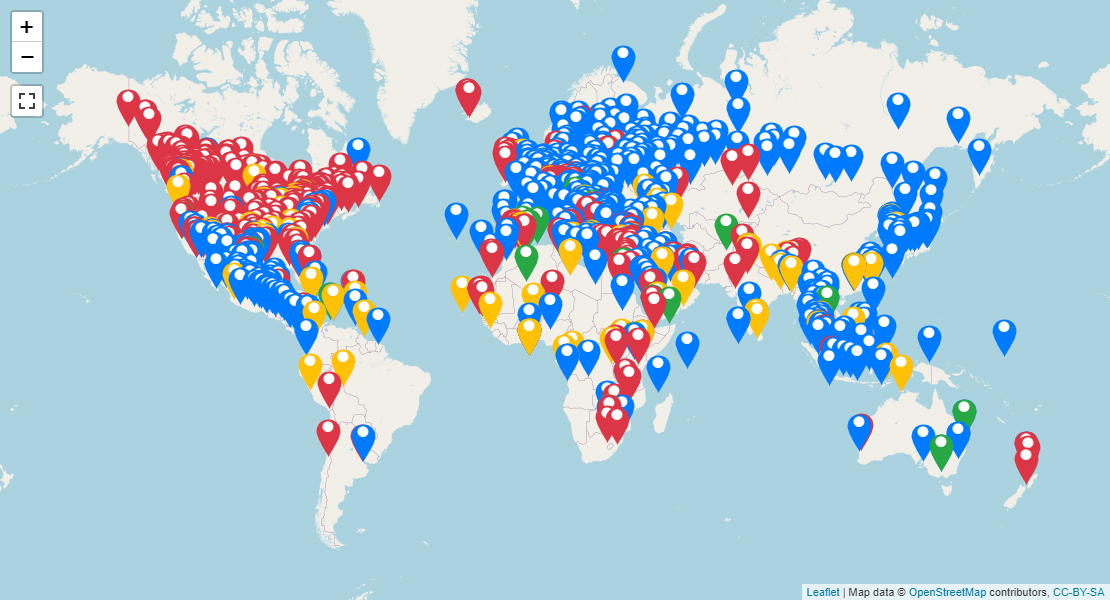
Detention infrastructure. Poland has two types of facilities used to confine non-citizens on immigration-related charges: “deportation-arrests” and “guarded centres.” The most common type of centres are the deportation-arrests, which are located in police stations and border guard units. In contrast to the guarded centres, which confine only non-citizens, deportation-arrests have been criticized for mixing administrative detainees with criminal detainees (European Parliament 2007). Asylum seekers are to be confined in deportation-arrests only when it is deemed necessary for state security or public order (Alien Protection Act); irregular migrants are to be confined in these facilities for purposes of deportation or if there is a danger that the person will not observe the rules in force at the guarded centres (Aliens Act 2003). The Global Detention Project has identified 24 deportation-arrests that have been used for immigration-related detention during the period 2007-2008 (see List of Detention Sites).
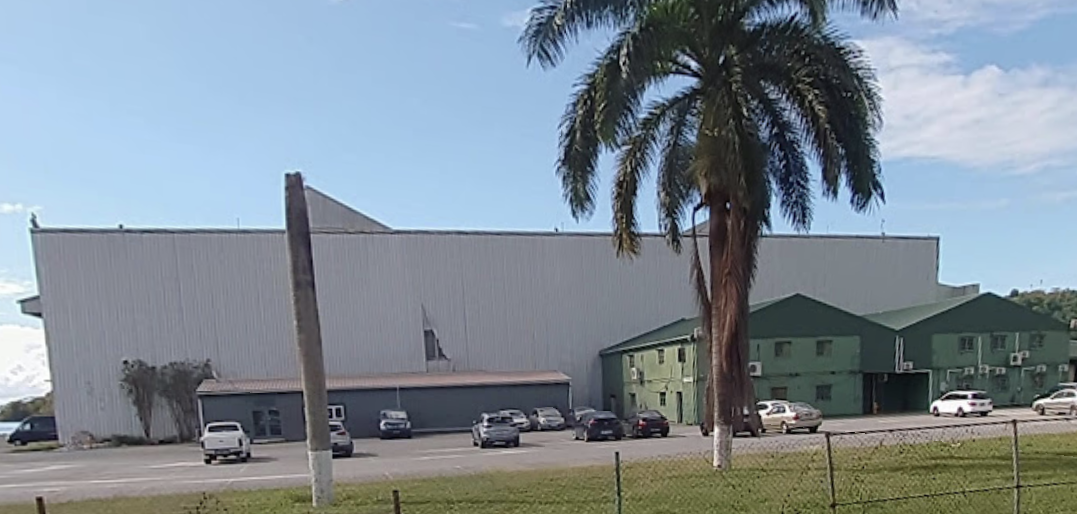
Until 2007, Poland had only one guarded centre for aliens, located in Lecznowola (The regional coalition 2006). According to data collected by the Global Detention Project, by January 2009 there were six guarded centres in operation (see List of Detention Sites). Because there were so few dedicated migrant detention sites in operation prior to 2007, courts tended to treat them the same as deportation-arrests. Consequently, non-citizens were often placed in deportation arrests even when detention in a dedicated facility would have conformed with the law (The regional coalition 2006). In preparation for Poland’s formal entry into Schengen, four new guarded centres were opened in the eastern part of the country by the end of 2007 (where most asylum seekers are apprehended): in Biala Podlaska, Bialystok, Ketrzyn, and Przemysl (JRS 2007). Construction of these centres was funded in part by the European Fund for Asylum Seekers (European Parliament 2007). In addition, the Krosno deportation arrest was converted to a guarded centre for aliens in January 2009 (Gazeta Lubuska 2008).
In a 2007 Memorandum to the Polish Government, the Council of Europe Commissioner for Human Rights welcomed the treatment of unaccompanied minors under the Aliens Protection Law. However, the commissioner raised concerns over lack of access to information, legal assistance, and translators in detention centres (Council of Europe 2007). A European Parliament report on detention centres for third-country nationals also recommended regular medical and psychological care and better access to judicial assistance for detainees (European Parliament 2007). The same report also criticized the failure to segregate criminal from administrative detainees in deportation-arrests, excessively long detention of children (for up to one year) at the Lesznowola guarded centre, and the “pathogenic nature of detention” in Poland. According to the report, “The length of detention, the lack of any social activities, the severity of the conditions, the practical impossibility of communicating with personnel, the lack of links with the exterior, are factors which create or exacerbate situations of vulnerability” (European Parliament 2007).
Facts and figures. Immigration to Poland since it joined the European Union in 2004 has been dominated by migrants coming from the countries of the former Soviet Union, particularly seasonal labourers from Ukraine and Belarus (European Parliament 2007). Poland is also a primary receiving country for asylum seekers in Europe, having received 8,517 asylum requests in 2008 (UNHCR 2009; UDSC website). More than 90 percent of asylum seekers come from the Russian Federation, mainly Chechens. Other key countries of origin include Iraq, Vietnam, Georgia, Belarus, Armenia, Ukraine, and Uzbekistan (UNHCR 2009).
In 2007, 1,253 persons were apprehended while attempting to illegally enter Poland and decisions on expulsion of irregular migrants were issued in 2,833 cases, of which 1,541 concerned Ukrainian nationals (CBCP website). In 2004, the undocumented population was estimated to be between 50,000-300,000 (HWWI website).