Amnesty International reported (24 June) that a boat carrying 94 Rohingya refugees was stranded in waters just off Aceh. In a statement, the rights group urged the Indonesian authorities to ensure the group’s rescue, disembarkation, and protection. As the Executive Director of Amnesty International Indonesia said, “In the time of COVID-19, we urge all countries […]

Indonesia: Covid-19 and Detention
Although immigration detention is no longer emphasized in Indonesia, reports suggest that refugees and asylum seekers in the country face a dire situation as it is impossible to keep any social distance as many share rooms in cramped apartments and those accommodated in IOM-operated sites live in severely overcrowded conditions. In addition, with no “rights […]

Last updated: January 2016
Indonesia Immigration Detention Profile
Although Indonesia has one of the largest populations in the world—which is spread out over a massive archipelago of thousands of islands—it hosts fewer migrants and refugees than many other countries in Southeast Asia. Foreigners represent only 0.1 percent of its total population.[1] However, the International Organization for Migration (IOM) describes Indonesia as “a key transit country for irregular migrant movements.” In 2013, the country intercepted approximately 9,000 migrants.[2]
As of 2015, Indonesia had a detention estate comprised of 13 long-term immigration detention centres (rudenim or karantina in Indonesian)[3] and 20 temporary detention facilities[4] located in 12 of the 33 provinces of the archipelago, which had a combined capacity of roughly 3,000. Like transit countries in other regions of the world, the growth of Indonesia’s detention capacities has been largely driven by the policies and practices of nearby destination countries, namely those of Australia.[5]
In addition to controversial policies like the “Pacific Solutions” that aim to prevent and deter the arrival of asylum seekers by sea by using extra-territorial (offshore) processing centres, Australia has also signed agreements with Indonesia for increased interception and detention of asylum seekers who apparently seek to make to Australia. Australian NGOs have denounced this “Indonesian Solution,” arguing that their government in effect pays Jakarta “hundreds of millions of dollars to detain and warehouse asylum seekers.”[6]
According to academic research findings, from 2011 to 2013 Australia channeled more than $90 million through the International Organization for Migration (IOM) for programmes in the region, “including the upgrade and refurbishment of existing detention facilities” in Indonesia. During the same period, Australia gave the UN High Commissioner for Refugees (UNHCR) some $12 million for protection activities in the region, including support for resettlement.[7]
Australia claims that it does not directly fund immigration detention in Indonesia and other countries. Rather, it earmarks funds under the opaque wording of “providing care and maintenance to intercepted irregular migrants in Indonesia, Papua New Guinea, and East Timor.”[8] As part of the Management and Care of Irregular Immigrants Project (MCIIP I) launched in 2007, the IOM assisted in the refurbishment of detention centres in Tanjug Pinang (capacity was increased from 100 to 400 people with a surge capacity of 600 people) and Jakarta.[9] Likewise, among the activities included in MCIIP II (2011-12) was “Quarantine Facility Renovation” in Batam, Balikpapan, and Semarang, as well as “Updating of the Standard Operations Procedures and Guidelines for Human Rights in Immigration Detention Centres.”[10]
Law Number 6 of 2011 “Concerning Immigration” provides that foreigners can be placed in immigration detention to prevent unauthorized entry, stay or exit and to effect removal.[11] There is virtually no limit to detention as Article 85 of the law allows detention for up to ten years without judicial review. There is also no legal framework regulating the detention of persons of concern to UNHCR. Nearly 6,000 refugees and asylum seekers were detained in Indonesia in 2014.[12]
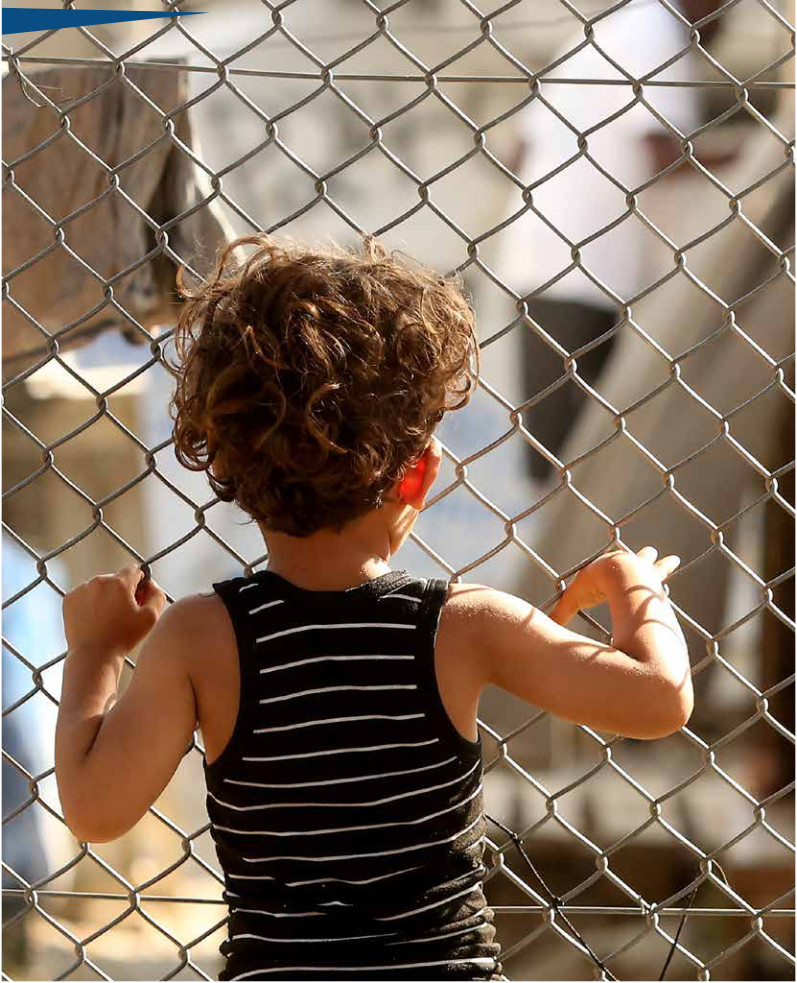
Children can be detained under Indonesian immigration law and hundreds of children are detained every year, including unaccompanied children, who are often detained with unrelated adults.[13] The UN Committee on the Rights of the Child has called on Indonesia to “Cease the administrative practice of detaining asylum-seeking and refugee children.”[14] UNHCR and numerous NGOs like Jesuit Refugee Services-Indonesia have pressured the country to end the detention of children and to ensure that alternatives to detention that meet international standards are adopted and implemented.[15]
Overcrowding in detention centres is a recurrent complaint. Conditions at facilities can also vary considerably across the archipelago. In some detention centres, migrants can freely move about while in others detainees remain locked up in cells. Human Rights Watch has described conditions as “appalling” and denounced the lack of basic sanitation and bedding. There have been numerous reports of guards physical violence abusing detainees, including unaccompanied migrant children.[16]
Despite numerous criticisms of Indonesia’s immigration detention practices as well as its role in encouraging detention in the country, the Australian government has argued that “standards of health, hygiene, human rights and security in Indonesian detention facilities are matters for the Indonesian Government.”[17]
[1] Department of Economic and Social Affairs, Population Division, United Nations, Website: http://www.un.org/en/development/desa/population/publications/, United Nations, 2015.
[2] IOM Indonesia, January 2014 Newsletter, http://www.iom.ch/files/live/sites/iom/files/Country/docs/IOM-Indonesia-Newsletter-for-January-2014.pdf.
[3] Ophelia Field and Alice Edwards, “Alternatives to Detention of Asylum Seekers and Refugees,” UNHCR, Division of International Projection Services, POLAS/2006/03, April 2006, http://www.unhcr.org/5666a2ea9.pdf .
[4] United Nations High Commissioner for Refugees, “Beyond Detention 2014-2019 – National Action Plan Indonesia,” UNHCR, November 2015, http://www.unhcr.org/5666a2ea9.pdf.
[5] Amy Nethery and Rafferty-Brown, Brynna, Taylor, Savitri, "Exporting Detention: Australia-funded Immigration Detention in Indonesia," in Journal of Refugee Studies Vol. 26, No. 1, revised March 2012. http://jrs.oxfordjournals.org/content/26/1/88.abstract; International Organisation for Migration, “Immigration and Border Management,” Factsheet, IOM Indonesia, December 2014. http://www.iom.or.id/sites/default/files/Factsheet%20-%20IBM.pdf. See also, Flynn, Michael, ”How and Why Immigration Detention Crossed the Globe,”
Global Detention Project, Working Paper No. 8. April 2014. http://www.globaldetentionproject.org/publications/working-papers/diffusion.html
[6] Refugee Action Coalition fact sheet. The Indonesian Solution. December 2009. http://www.refugeeaction.org.au/?page_id=51
[7] Amy Nethery, Brynna Rafferty-Brown, and Savitri Taylor, "At the discretion of management - Immigration detention in Indonesia," in Immigration Detention - The migration of a policy and its human impact, Nethery and Silverman (eds), 2015; Australian Immigration Department, “Answer to Question Taken on Notice, Additional Estimates Hearings,” 11 February 2013, (AE13/0279); Australian Immigration Department, “Answer to Question Taken on Notice, Budget Estimates Hearings,” 27-28 May 2013, BE13/0316.
[8] Australian Immigration Department, “Answer to Question Taken on Notice, Additional Estimates Hearings,” 11 February 2013, AE13/0279.
[9] Amy Nethery, Brynna Rafferty-Brown, and Savitri Taylor, "Exporting Detention: Australia-funded Immigration Detention in Indonesia," in Journal of Refugee Studies Vol. 26, No. 1, revised March 2012, http://jrs.oxfordjournals.org/content/26/1/88.abstract; International Organisation for Migration, “Immigration and Border Management,” Factsheet, IOM Indonesia, December 2014, http://www.iom.or.id/sites/default/files/Factsheet%20-%20IBM.pdf.
[10] IOM Indonesia, “Management & Care of Intercepted Irregular Migrants Project – MCIIP 2,” http://www.iom.or.id/what-we-do/immigration-and-border-management/mciip-2.
[11] Law of the Republic of Indonesia Number 6 of 2011 Concerning Immigration, (Undang-Undang No. 6 tahun 2011 tentang Keimigrasiaan), http://www.imigrasi.go.id/phocadownloadpap/Undang-Undang/uu%20nomor%206%20tahun%202011%20-%20%20english%20version.pdf.
[12] United Nations High Commissioner for Refugees, “Beyond Detention 2014-2019 – National Action Plan Indonesia,” UNHCR, November 2015, http://www.unhcr.org/5666a2ea9.pdf.
[13] Human Rights Watch, “Barely Surviving: Detention, Abuse, Neglect of Migrant Children in Indonesia,” HRW, 24 June 2013, https://www.hrw.org/report/2013/06/23/barely-surviving/detention-abuse-and-neglect-migrant-children-indonesia.
[14] Committee on the Rights of the Child, “Concluding observations on the combined third and fourth periodic reports of Indonesia,” United Nations, CRC/C/IDN/CO/3-4, 10 July 2014, http://uhri.ohchr.org/document/index/4cbccb2b-753b-47f5-8f0e-ab50707146f9.
[15] JRS-Indonesia, Website: Detention, http://jrs.or.id/en/campaign/detention/.
[16] Human Rights Watch, “Barely Surviving: Detention, Abuse, Neglect of Migrant Children in Indonesia,” HRW, 24 June 2013, https://www.hrw.org/report/2013/06/23/barely-surviving/detention-abuse-and-neglect-migrant-children-indonesia.
[17] Amy Nethery, Brynna Rafferty-Brown, and Savitri Taylor, "At the discretion of management - Immigration detention in Indonesia" in Immigration Detention - The migration of a policy and its human impact, Nethery and Silverman (eds), 2015.
DETAINEE DATA
DETENTION CAPACITY
ALTERNATIVES TO DETENTION
ADDITIONAL ENFORCEMENT DATA
PRISON DATA
POPULATION DATA
SOCIO-ECONOMIC DATA & POLLS
LEGAL & REGULATORY FRAMEWORK
Does the Country Have Specific Laws that Provide for Migration-Related Detention?
Regulations, Standards, Guidelines
Name
Year Published
Regulation from the Director General of Immigration Number F-1002.PR.02.10 Year 2006 concerning Procedures for the Detention of Foreigners
2015
Government Regulation of the Republic of Indonesia Number 31 of 2013 Concerning Implementing Regulation of Act Number 6 of 2011 Concerning Immigration
2013
GROUNDS FOR DETENTION
Immigration-Status-Related Grounds
Criminal Penalties for Immigration-Related Violations
Grounds for Criminal Immigration-Related Incarceration / Maximum Length of Incarceration
Children & Other Vulnerable Groups
Group
In Law
In Practice
Year
LENGTH OF DETENTION
DETENTION INSTITUTIONS
Custodial Authorities
Agency
Ministry
Typology
Year
Directorate General of Immigration
Provincial office of the Ministry for Law and Human Rights
Justice
Directorate General of Immigration
Provincial office of the Ministry for Law and Human Rights
Justice
Directorate General of Immigration
Provincial office of the Ministry for Law and Human Rights
Justice
Detention Facility Management
Entity
Type
Year
Directorate General of Immigration, Provincial office of the Ministry for Law and Human Rights
Governmental
Directorate General of Immigration, Provincial office of the Ministry for Law and Human Rights
Governmental
irectorate General of Immigration, Provincial office of the Ministry for Law and Human Rights
Governmental
Directorate General of Immigration, Provincial office of the Ministry for Law and Human Rights
Governmental
Directorate General of Immigration, Provincial office of the Ministry for Law and Human Rights
Governmental
PROCEDURAL STANDARDS & SAFEGUARDS
Procedural Standards
Name
In Law
In Practice
Year
COSTS & OUTSOURCING
Description of Foreign Assistance
"In 2011-12 and 2012-13 Australia paid 47.9 million [...] and 46 million [...] , respectively, to the IOM. Payments to the IOM are for various activities, including the upgrade and refurbishment of existing detention facilities [in Indonesia]". Nethery, Amy, Ratterty-Brown, Brynna and Taylor, Savitri. "At the discretion of management - Immigration detention in Indonesia" in Immigration Detention - The migration of a policy and its human impact. Nethery, Amy and Silverman Stephanie (eds). 2015.
COVID-19 DATA
TRANSPARENCY
MONITORING
Types of Authorised Detention Monitoring Institutions
Institution
Type
Year
National Human Rights Commission (Komnas HAM)
National Human Rights Institution (or Ombudsperson) (NHRI)
NATIONAL HUMAN RIGHTS MONITORING BODIES
NATIONAL PREVENTIVE MECHANISMS (OPTIONAL PROTOCOL TO UN CONVENTION AGAINST TORTURE)
NON-GOVERNMENTAL ORGANISATIONS (NGOS)
GOVERNMENTAL MONITORING BODIES
INTERNATIONAL TREATIES & TREATY BODIES
International Treaties Ratified
Ratification Year
Observation Date
ICRMW, International Convention on the Protection of the Rights of All Migrant Workers and Members of Their Families
2012
2012
CTOCTP, Protocol to Prevent, Suppress and Punish Trafficking in Persons, Especially Women and Children
2009
2009
CTOCSP, Protocol against the Smuggling of Migrants by Land, Sea and Air, supplementing the United Nations Convention against Transnational Organized Crime
2009
2009
CAT, Convention against Torture and Other Cruel, Inhuman or Degrading Treatment or Punishment
1998
1998
Ratio of relevant international treaties ratified
Ratio: 11/19
Relevant Recommendations or Observations Issued by Treaty Bodies
Treaty Body
Committee on Migrant Workers
Recommendation Year
2025
Recommendation Excerpt
28.......The Committee is particularly concerned that fear of detention or deportation may deter irregular migrants from reporting violations of their rights, thereby creating an environment of impunity for those who exploit or abuse vulnerable migrants. 29. The Committee recommends that the State party:
(a) Ensure that all migrants, regardless of their migration status, have effective access to all complaint mechanisms without fear of reprisals, detention or deportation and establish protocols and firewalls between immigration enforcement and complaint procedures to encourage reporting of abuse.
38. The Committee welcomes the efforts of the State party to cooperate with Malaysian Immigration to ensure adequate deportation procedures of its migrant workers. However, it is concerned that law No. 6 of 2011 allows the detention of irregular migrants and asylum seekers for up to 10 years without judicial review, that detention is not treated as a last resort and that the State party lacks updated information on the administrative and judicial remedies available in deportation procedures, as well as on the number of persons subjected to deportation. 39. The Committee recommends that the State party urgently amend Law No. 6 of 2011 to repeal all provisions allowing for immigration detention, and implement the Committee’s General Comment No. 5 (2021) through the establishment in law of a presumption in favour of freedom and ensuring that detention is a measure of last resort, strictly exceptional, necessary, proportionate, and time-limited, with mandatory judicial review within 24 hours, as well as provisions establishing community-based or non-custodial alternatives, distinguishing detention from voluntary shelter placement and ensuring that shelters are separate and non-punitive.
40. The Committee notes the State party’s efforts to improve immigration detention facilities, the monitoring visits by Komnas HAM, particularly to the Kupang detention centre in East Nusa Tenggara and the establishment of the Cooperation for the Prevention of Torture and Ill Treatment (KuPP) mechanism. (a) Persons in migration-related detention can be held in police stations or mixed with the general prison population.........41. The Committee recommends that the State Party:
(a) Ensure migrants are not held in police stations or with the general prison population;
(a) Ensure that all migrants, regardless of their migration status, have effective access to all complaint mechanisms without fear of reprisals, detention or deportation and establish protocols and firewalls between immigration enforcement and complaint procedures to encourage reporting of abuse.
38. The Committee welcomes the efforts of the State party to cooperate with Malaysian Immigration to ensure adequate deportation procedures of its migrant workers. However, it is concerned that law No. 6 of 2011 allows the detention of irregular migrants and asylum seekers for up to 10 years without judicial review, that detention is not treated as a last resort and that the State party lacks updated information on the administrative and judicial remedies available in deportation procedures, as well as on the number of persons subjected to deportation. 39. The Committee recommends that the State party urgently amend Law No. 6 of 2011 to repeal all provisions allowing for immigration detention, and implement the Committee’s General Comment No. 5 (2021) through the establishment in law of a presumption in favour of freedom and ensuring that detention is a measure of last resort, strictly exceptional, necessary, proportionate, and time-limited, with mandatory judicial review within 24 hours, as well as provisions establishing community-based or non-custodial alternatives, distinguishing detention from voluntary shelter placement and ensuring that shelters are separate and non-punitive.
40. The Committee notes the State party’s efforts to improve immigration detention facilities, the monitoring visits by Komnas HAM, particularly to the Kupang detention centre in East Nusa Tenggara and the establishment of the Cooperation for the Prevention of Torture and Ill Treatment (KuPP) mechanism. (a) Persons in migration-related detention can be held in police stations or mixed with the general prison population.........41. The Committee recommends that the State Party:
(a) Ensure migrants are not held in police stations or with the general prison population;
Sources
Committee on the Protection of the Rights of All
Migrant Workers and Members of Their Families, "Concluding observations on the second periodic report of Indonesia," 11 December 2025, United Nations General Assembly, https://tbinternet.ohchr.org/_layouts/15/treatybodyexternal/Download.aspx?symbolno=CMW%2FC%2FIDN%2FCO%2F2&Lang=en
Treaty Body
Committee on Migrant Workers
Recommendation Year
2017
Recommendation Excerpt
35. The Committee recommends that the State party:
(a) Amend Law No. 6/2011 on Immigration to ensure that administrative detention is used as a measure of last resort only and for the shortest time possible, and that non-custodial alternatives are promoted, in line with the Committee’s general comment No. 2 (2013) on the rights of migrant workers in an irregular situation and members of their families;
(b) Expeditiously and completely cease the detention of children on the basis of their or their parents’ immigration status, and allow children to remain with family members and/or guardians in non-custodial, community-based contexts while their immigration status is being resolved, in accordance with their best interests and with their rights to liberty and family life;
(c) Stipulate strict behavioural rules for guards and officials at detention facilities and ensure that the facilities are regularly assessed by an independent monitoring body;
(d) Ensure that sufficient food, clean drinking water and sanitation, as well as health care are provided in immigration detention centres;
(e) Take the steps necessary to ensure that in administrative and judicial proceedings, including detention and expulsion proceedings, migrant workers and members of their families, particularly those in an irregular situation, are guaranteed due process on an equal basis with nationals of the State party before the courts and tribunals.
(a) Amend Law No. 6/2011 on Immigration to ensure that administrative detention is used as a measure of last resort only and for the shortest time possible, and that non-custodial alternatives are promoted, in line with the Committee’s general comment No. 2 (2013) on the rights of migrant workers in an irregular situation and members of their families;
(b) Expeditiously and completely cease the detention of children on the basis of their or their parents’ immigration status, and allow children to remain with family members and/or guardians in non-custodial, community-based contexts while their immigration status is being resolved, in accordance with their best interests and with their rights to liberty and family life;
(c) Stipulate strict behavioural rules for guards and officials at detention facilities and ensure that the facilities are regularly assessed by an independent monitoring body;
(d) Ensure that sufficient food, clean drinking water and sanitation, as well as health care are provided in immigration detention centres;
(e) Take the steps necessary to ensure that in administrative and judicial proceedings, including detention and expulsion proceedings, migrant workers and members of their families, particularly those in an irregular situation, are guaranteed due process on an equal basis with nationals of the State party before the courts and tribunals.
Sources
Committee on Migrant Workers, "Concluding observations on the initial report of Indonesia," CMW/C/IDN/CO/1, 13 September 2017, https://uhri.ohchr.org/en/document/dc08bab5-4e9d-430e-9aa4-990598c0a683
Treaty Body
Committee on the Rights of the Child
Recommendation Year
2014
Recommendation Excerpt
"66. In the light of its general comment No. 6 (2005) on the treatment of unaccompanied and separated children outside their country of origin, the Committee urges the State party to bring its immigration and asylum legislation into full compliance with the Convention on the Rights of the Child and other relevant international standards. It further urges the State party to take all necessary measures to adequately address the situation of asylum-seeking children, and in particular: (a) Ensure that the best interests of the child are always given primary consideration in all immigration and asylum processes and that unaccompanied asylum-seeking children are provided with adequate guardianship and free legal representation; (b) Cease the administrative practice of detaining asylum-seeking and refugee children; (c) Stipulate strict behavioural rules for guards and officials at detention facilities and ensure that the facilities are regularly assessed by an independent monitoring body; (d) Ensure that, in all circumstances, children are separated from unrelated adults, have access to sufficient food, clean drinking water and sanitation, as well as health care, education and recreation."
Sources
Committee on the Rights of the Child. Concluding observations on the combined third and fourth periodic reports of Indonesia*. CRC/C/IDN/CO/3-4. 10 July 2014. http://tbinternet.ohchr.org/_layouts/treatybodyexternal/Download.aspx?symbolno=CRC/C/IDN/CO/3-4&Lang=En
Global Detention Project and Partner Submissions to Treaty Bodies
Treaty Body
Committee on Migrant Workers (CMW)
Session Date
6 September 2017
Submission Partners
Global Detention Project
Session Information
24 Session (11 Apr 2016 - 22 Apr 2016)
Submission Type
List of Issues Prior to Reporting
Recommendation Impact
Partially
Discussion of Impact
The Committee’s Concluding Observations partially reflected our submission’s recommendations. The Committee urged Indonesia to completely cease the detention of children on the basis of their parents’ immigration status, and it also recommended ensure administrative detention is used as a measure of last resort only and for the shortest time possible, and that non-custodial alternatives are promoted. However, the Committee failed to call on Indonesia to indicate the names and addresses of all places used for immigration-related detention (“immigration detention houses”), including their respective capacity. The Committee also did not take the recommendation on whether there is an independent review of the immigration detention order, or can immigration detainees appeal the lawfulness of detention, and do detainees have access to translation/immigration services.
Sources
Committee on the Protection of the Rights of All Migrant Workers and Members of Their Families, "Concluding observations on the initial report of Indonesia," 19 October 2017, https://tbinternet.ohchr.org/_layouts/15/treatybodyexternal/Download.aspx?symbolno=CMW%2FC%2FIDN%2FCO%2F1&Lang=en
Global detention Project, "Submission to the UN Committee on Migrant Workers: Indonesia," 24 March 2016, https://www.globaldetentionproject.org/submission-to-the-un-committee-on-migrant-workers-indonesia
> UN Special Procedures
> UN Universal Periodic Review
Relevant Recommendations or Observations from the UN Universal Periodic Review
Recommendation Issued
No
Year Issued
2008
Sources
Report of the Working Group on the Universal Periodic Review Indonesia, A/HRC/8/23, 14 May 2008, https://www.upr-info.org/sites/default/files/document/indonesia/session_1_-_april_2008/ahrc823indonesiae.pdf
Recommendation Issued
No
Year Issued
2012
Sources
Report of the Working Group on the Universal Periodic Review* Indonesia, A/HRC/21/7, 5 July 2012, https://www.upr-info.org/sites/default/files/document/indonesia/session_13_-_may_2012/ahrc217indonesiae.pdf
Recommendation Issued
No
Year Issued
2017
Sources
Report of the Working Group on the Universal Periodic Review* Indonesia, A/HRC/36/7, 14 July 2017, https://www.upr-info.org/sites/default/files/document/indonesia/session_27_-_may_2017/a_hrc_36_7_e.pdf
Global Detention Project and Partner Submissions to Universal Periodic Review
Date of Submission
2016
Link to Submission Text
Submission Partners
Global Detention Project
UPR Cycle
2nd
Were Recommendations Reflected in UPR Recommendations
Pending
Discussion of Impact
Sources
Global Detention Project, "Submission to the Universal Periodic Review (UPR): Indonesia," 22 September 2016, https://www.globaldetentionproject.org/submission-universal-periodic-review-upr-indonesia
REGIONAL HUMAN RIGHTS MECHANISMS
HEALTH CARE PROVISION
HEALTH IMPACTS
COVID-19
Country Updates
Amnesty International reported (24 June) that a boat carrying 94 Rohingya refugees was stranded in waters just off Aceh. In a statement, the rights group urged the Indonesian authorities to ensure the group’s rescue, disembarkation, and protection. As the Executive Director of Amnesty International Indonesia said, “In the time of COVID-19, we urge all countries in the region to ensure the wellbeing of refugees and not to send them back to the sea. Under international law, all countries have the obligation to protect and rescue people at risk of serious harm.” However, the Indonesian government stated that the group would be pushed back once their broken vessel is fixed. In videos shared by the Asia Pacific Refugee RIghts Network (APRRN), locals can be seen demonstrating, urging the Indonesian government to alter its policy and allow the stranded women, children, and men to disembark. Reports subsequently suggested that the local community had helped the group of refugees to land. (Numerous other countries in the Asia-Pacific region have refused to rescue Rohingya boats during the pandemic, including Malaysia and Thailand. See our updates on this platform)
Although Indonesia recognised refugees and asylum seekers as a vulnerable group during the pandemic, authorities have reportedly not conducted any practical actions to protect such communities. According to ARPPN, refugees have not been provided with protective equipment such as masks and hand sanitiser, despite many continuing to live in overcrowded and cramped apartments (see 4 April update). Information about the virus was also not delivered to refugees by the government in a language they could understand—authorities have instead relied upon NGOs to translate and relay crucial health information during the crisis. Undocumented migrants, meanwhile, many of whom have previously faced rejections from hospitals, remain unwilling to access treatment and testing. While the IOM provides some healthcare to non-nationals, this is limited to emergency care only.
Ahead of World Refugee Day on 20 June, activists called on the government to do more to uphold the rights of refugees in the country—particularly given the limited attention that authorities provided to them in their response to the pandemic. Although the country has not signed the 1951 Refugee Convention, according to UNHCR, some 13,534 refugees were registered in the country in May 2020.
Although immigration detention is no longer emphasized in Indonesia, reports suggest that refugees and asylum seekers in the country face a dire situation as it is impossible to keep any social distance as many share rooms in cramped apartments and those accommodated in IOM-operated sites live in severely overcrowded conditions. In addition, with no “rights to work, travel and use public health services, refugees and asylum seekers are further marginalised and the most vulnerable to the spread of coronavirus.”
On 31 March, according to the Jakarta Post, officials announced that they would begin barring “foreign nationals from transiting through or entering the country … as the government steps up efforts to curb the spread of COVID-19 in the country without heeding growing calls for a complete lockdown to contain the pandemic.”
The GDP has been unable to find any reports indicating whether measures have taken to assist migrants and asylum seekers held in prisons or detention centres. However, the government has begun staking steps in prisons as well as detention centres for minors, including restricting access and visits. On 31 March 2020, the government announced that it would release around 30,000 of its 270,386 prisoners to avoid a possible surge in infections in its overcrowded prisons.
According to a UNHCR-Jakarta 4 April press release, “As per the Government of Indonesia’s protocol, refugees have access to COVID-19 related services, including testing and treatment, provided by the Ministry of Health. Refugee communities throughout the country have been informed of the protocol through various communication channels and actors.” It added: “As a matter of prevention, UNHCR Indonesia is also working closely with partners and the local government to distribute sanitation kits including masks and disinfectants to refugee communities. UNHCR Indonesia provides cash assistance to those most vulnerable and at risk in this current situation to promote improved health and sanitation. With additional funding, UNHCR aims to also expand this cash assistance to more refugee families. Many refugees in Indonesia have skills and resources that can also be part of the solution. Some of the refugee women in Medan, supported by partner Mapanbumi, are producing washable face masks that will be distributed to vulnerable Indonesians and those who continue to work outside their homes in order to support themselves and their families. The refugee women aim to produce 1,000 masks for these groups of people such as becak drivers, street cleaners and the elderly in 18 sub-districts.”
Government Agencies
Directorate General of Immigration: https://www.imigrasi.go.id/
Ministry of Foreign Affairs - https://www.kemlu.go.id/
International Organisations
UNHCR - https://www.unhcr.org/where-we-work/countries/indonesia
IOM: http://indonesia.iom.int/
NGO & Research Institutions
Jesuit Refugee Service: https://jrs.net/en/country/indonesia/
Migrants Care - https://migrantcare.net/
Suaka - https://suaka.or.id/