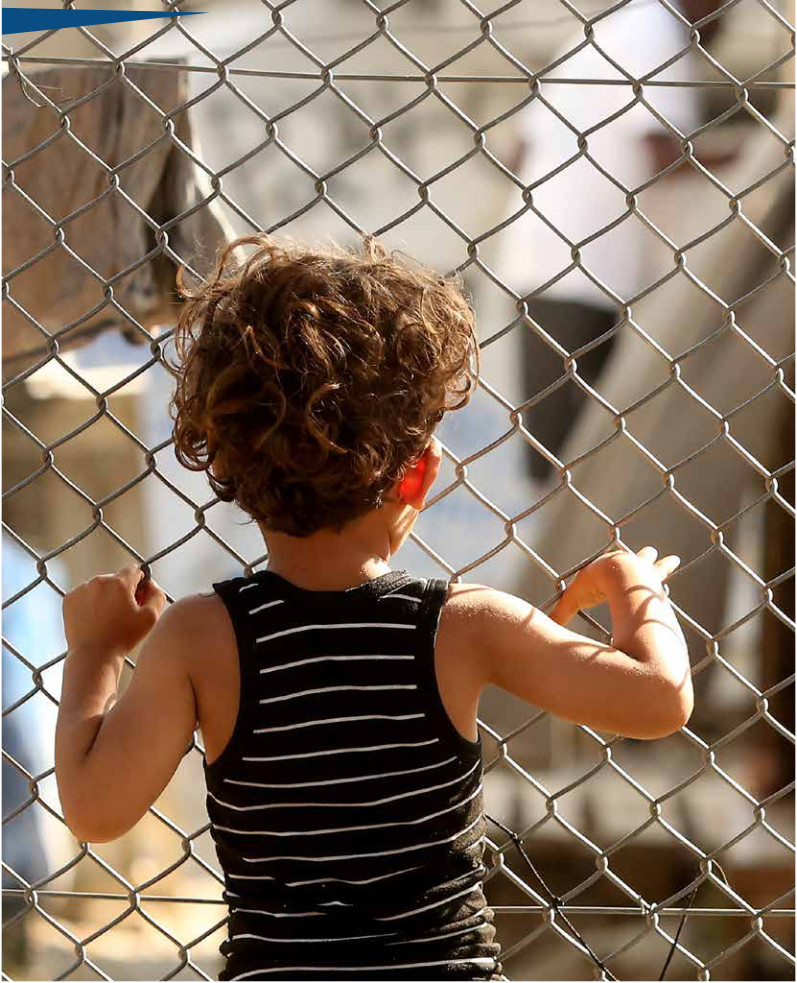
D. Illegalen Barakken Immigration Detention Facility. (read full CPT report)202. Foreign nationals held under aliens legislation in Curaçao are detained at IllegalenBarakken, an immigration detention facility located right next to SDKK. Their detention can beordered, by an inspector of the Curaçao Police Force, responsible for immigration cases. Detentionis ordered only in combination with an expulsion […]
Last updated:
Curaçao is a self-governing constituent country of the Kingdom of the Netherlands. Although not a part of the European Union and not subject to Dutch asylum law or EU directives, Curaçao is subject to the European Convention on Human Rights (ECHR). The European Committee for Prevention of Torture (CPT) undertakes monitoring visits to Curaçao, including a 2022 visit to its “Illegalen Barakken” Immigration Detention Facility whose material conditions were determined to be "very poor."
DETENTION STATISTICS
DETAINEE DATA
DETENTION CAPACITY
ALTERNATIVES TO DETENTION
ADDITIONAL ENFORCEMENT DATA
PRISON DATA
POPULATION DATA
SOCIO-ECONOMIC DATA & POLLS
LEGAL & REGULATORY FRAMEWORK
Does the Country Have Specific Laws that Provide for Migration-Related Detention?
Legal Tradition(s)
Civil law
2024
GROUNDS FOR DETENTION
Immigration-Status-Related Grounds
Non-Immigration-Status-Related Grounds in Immigration Legislation
Criminal Penalties for Immigration-Related Violations
LENGTH OF DETENTION
DETENTION INSTITUTIONS
PROCEDURAL STANDARDS & SAFEGUARDS
Procedural Standards
Name
In Law
In Practice
Year
Does the Law Stipulate Consideration of Non-Custodial Measures (ATDs) before Imposing Detention?
No
No
2023
COSTS & OUTSOURCING
Description of Foreign Assistance
The Netherlands provided financial assistance to Curaçao's "Foreigners Barracks," an immigrant detention center, up until 2021. In 2021, the Netherlands froze its assistance after reports came out regarding the treatment of migrants at the Foreigners Barrack detention center. This barrack was closed in early 2022, but a new one reopened in late 2022. It is unclear if Dutch funds helped fund and maintain this new detention center.
COVID-19 DATA
TRANSPARENCY
MONITORING
NATIONAL HUMAN RIGHTS MONITORING BODIES
NATIONAL PREVENTIVE MECHANISMS (OPTIONAL PROTOCOL TO UN CONVENTION AGAINST TORTURE)
NON-GOVERNMENTAL ORGANISATIONS (NGOS)
GOVERNMENTAL MONITORING BODIES
INTERNATIONAL DETENTION MONITORING
INTERNATIONAL TREATIES & TREATY BODIES
Ratio of relevant international treaties ratified
Ratio: 0/19
> UN Special Procedures
> UN Universal Periodic Review
> Global Compact for Migration (GCM)
> Global Compact on Refugees (GCR)
REGIONAL HUMAN RIGHTS MECHANISMS
Relevant Recommendations or Observations of Regional Human Rights Mechanisms
Regional Mechanism
European Committee for the Prevention of Torture and Inhuman or Degrading Treatment or Punishment (CPT)
Recommendation Year
2014
Recommendation Excerpt
The CPT recommends that the Curaçao authorities introduce such a legal remedy. Further, the CPT recommends that the right to inform a person of choice be guaranteed and that provision be made that costs of this notification are covered by the State.
In addition, all immigration detainees should be expressly informed of their rights and
the procedure applicable to them in a language they can understand. They should be
systematically provided with a document setting out this information; the document should be
available in the languages most commonly spoken by those concerned and, if necessary, the
services of an interpreter should be made available.
The CPT recommends that staff be selected and trained for the specific purpose of
working with irregular migrants.
The CPT recommends that systematic medical screening of all immigration detainees,
including for transmissible diseases, be introduced. Such screening should be carried out in a
way that respects medical confidentiality (see also paragraph 167).
The CPT recommends that all immigration detainees be granted the right to receive
visitors, in particular relatives and representatives of relevant organisations, throughout the
period of their detention.
In addition, all immigration detainees should be expressly informed of their rights and
the procedure applicable to them in a language they can understand. They should be
systematically provided with a document setting out this information; the document should be
available in the languages most commonly spoken by those concerned and, if necessary, the
services of an interpreter should be made available.
The CPT recommends that staff be selected and trained for the specific purpose of
working with irregular migrants.
The CPT recommends that systematic medical screening of all immigration detainees,
including for transmissible diseases, be introduced. Such screening should be carried out in a
way that respects medical confidentiality (see also paragraph 167).
The CPT recommends that all immigration detainees be granted the right to receive
visitors, in particular relatives and representatives of relevant organisations, throughout the
period of their detention.
Sources
European Committee for the Prevention of Torture and Inhuman or Degrading Treatment or Punishment (CPT), "Report
to the Government of the Netherlands
on the visit to the Caribbean part of the
Kingdom of the Netherlands carried out by the
European Committee for the Prevention of
Torture and Inhuman or Degrading Treatment
or Punishment (CPT)", 22 May 2014, https://www.coe.int/en/web/cpt/netherlands