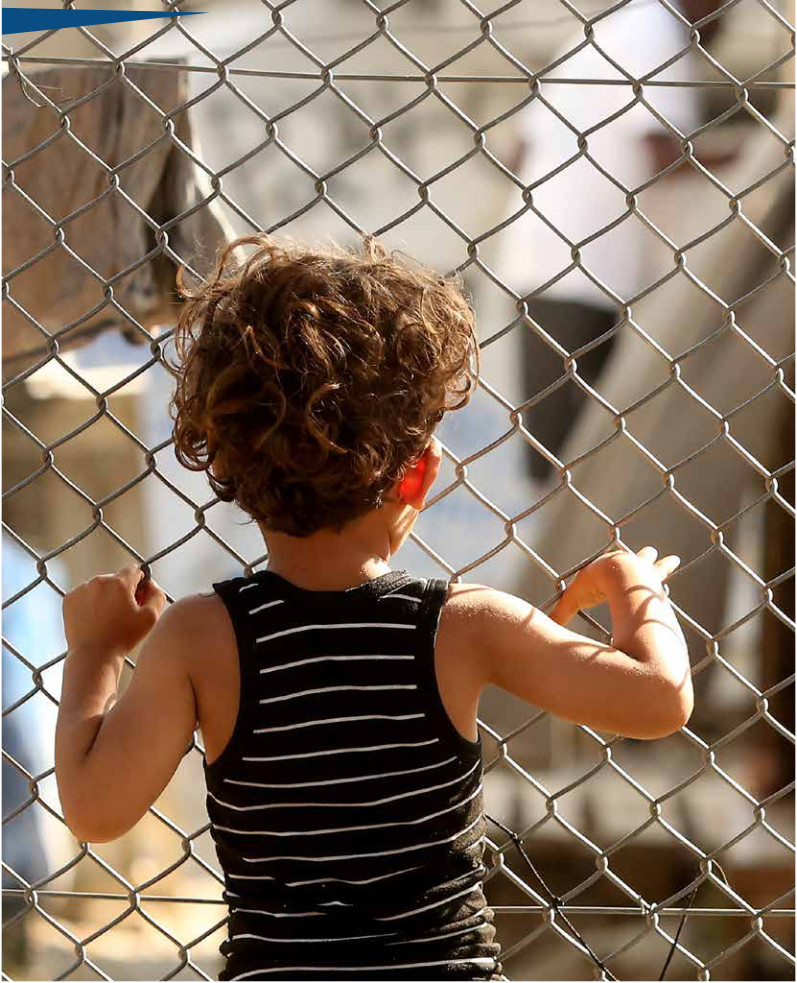
In September, Reuters reported that Ghana had agreed to accept West African nationals deported from the United States under a new agreement between the two countries–marking yet another expansion of the Trump Administration’s unprecedented efforts to summarily deport irregular migrants to third countries. Shortly after their arrival in Ghana, the deportees were reportedly expelled to Togo. Ghana was previously accused, in 2023, of unlawfully expelling refugees from Burkina Faso, undermining Ghana’s commitment to international legal standards. […]
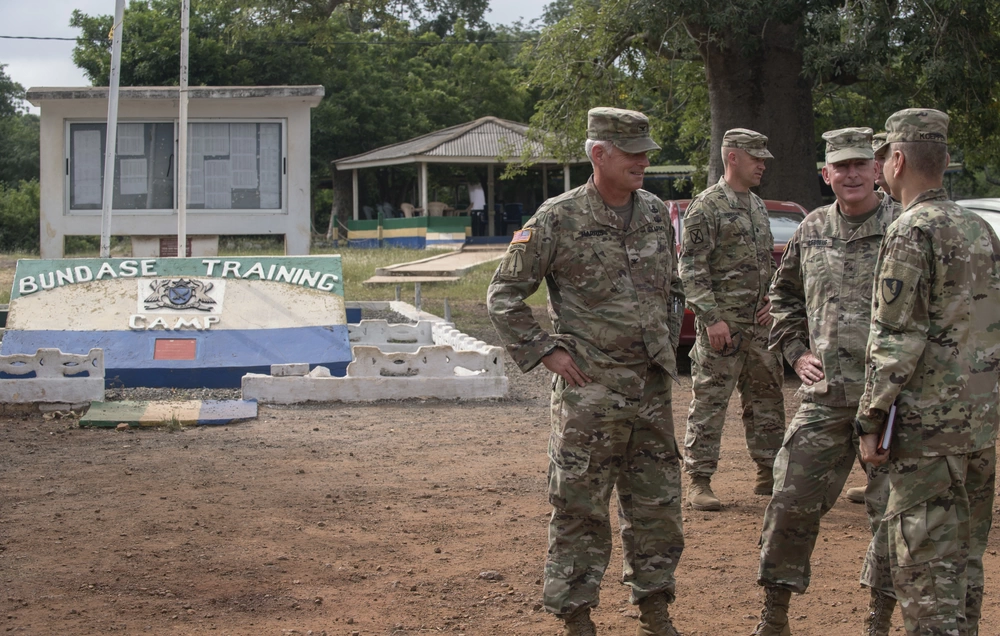
Ghana: Expelling People Fleeing Conflict in Burkina Faso
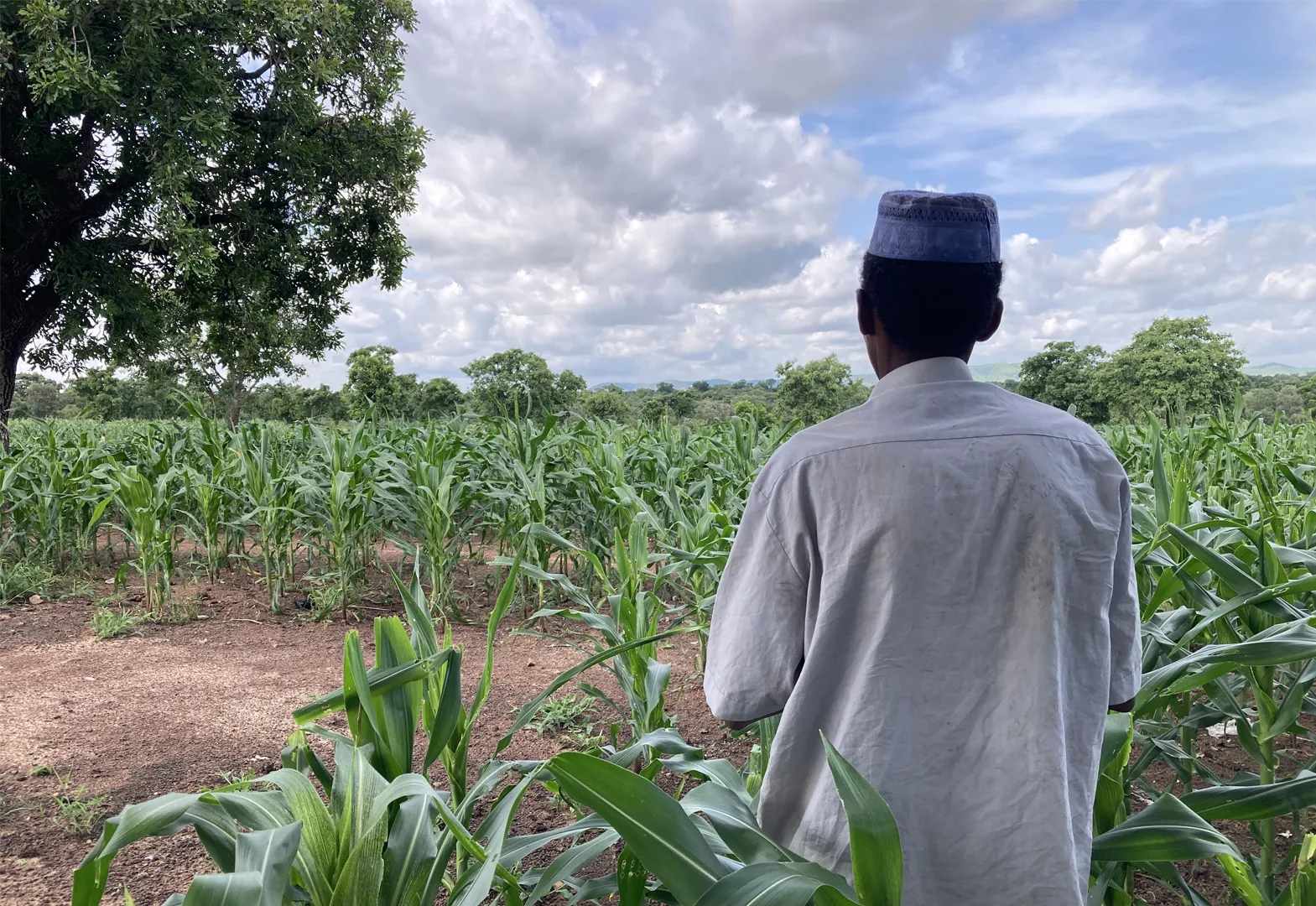
Despite calls from UNHCR and several rights groups to cease unlawful expulsions of people escaping the conflict in Burkina Faso, Ghana continues to detain and deport refugees fleeing that country’s spiralling conflict with jihadist groups. The Sahel Refugee Crisis and its Effects on Northern Ghana Since 2022, with the escalating jihadist conflict affecting the Sahel, […]
Ghana: Covid-19 and Detention
As of mid-2020, Ghana was hosting more than 12,000 registered refugees and some 400,000 migrants. The online African peace research platform Kujenga Amani reported that Ghana was “slow to recognise the scale of risks posed by restrictive measures such as a partial lockdown, stay at home and border closure, to vulnerable groups in society.” As […]

Last updated:
DETENTION STATISTICS
Administrative Migration Detainee Entries
Not Available
2019
DETENTION CAPACITY
ALTERNATIVES TO DETENTION
ADDITIONAL ENFORCEMENT DATA
PRISON DATA
POPULATION DATA
SOCIO-ECONOMIC DATA & POLLS
LEGAL & REGULATORY FRAMEWORK
Does the Country Have Specific Laws that Provide for Migration-Related Detention?
GROUNDS FOR DETENTION
Immigration-Status-Related Grounds
LENGTH OF DETENTION
DETENTION INSTITUTIONS
PROCEDURAL STANDARDS & SAFEGUARDS
COVID-19 DATA
TRANSPARENCY
MONITORING
NATIONAL HUMAN RIGHTS MONITORING BODIES
NATIONAL PREVENTIVE MECHANISMS (OPTIONAL PROTOCOL TO UN CONVENTION AGAINST TORTURE)
NON-GOVERNMENTAL ORGANISATIONS (NGOS)
GOVERNMENTAL MONITORING BODIES
INTERNATIONAL DETENTION MONITORING
INTERNATIONAL TREATIES & TREATY BODIES
International Treaties Ratified
Ratification Year
Observation Date
CAT, Convention against Torture and Other Cruel, Inhuman or Degrading Treatment or Punishment
2009
2017
ICRMW, International Convention on the Protection of the Rights of All Migrant Workers and Members of Their Families
2000
2017
CTOCSP, Protocol against the Smuggling of Migrants by Land, Sea and Air, supplementing the United Nations Convention against Transnational Organized Crime
2012
2017
CTOCTP, Protocol to Prevent, Suppress and Punish Trafficking in Persons, Especially Women and Children
2012
2017
Ratio of relevant international treaties ratified
Ratio: 13/19
Individual Complaints Procedures
Relevant Recommendations or Observations Issued by Treaty Bodies
Treaty Body
Committee on Migrant Workers
Recommendation Year
2026
Recommendation Excerpt
47. The Committee recommends that the State Party:
(a) Review and amend the Immigration Act 2000 (Act 573) to introduce
safeguards for immigration detention, including time limits, judicial oversight and
alternatives to detention, and to explicitly prohibit the immigration detention of
children and families with children, while establishing clear procedures for
identification, registration, referral and guardianship of all migrant children,
regardless of their status;
(b) Strengthen procedural guarantees under the Refugee Law 1992, ensuring
that detention or expulsion is subject to due process and judicial review;
(c) Ensure effective implementation of the principle of non-refoulement,
including through individual protection risk assessments prior to removal and access
to asylum procedures, as well as by enhancing coordination among relevant authorities
and providing training to officials on international protection obligations;
(a) Review and amend the Immigration Act 2000 (Act 573) to introduce
safeguards for immigration detention, including time limits, judicial oversight and
alternatives to detention, and to explicitly prohibit the immigration detention of
children and families with children, while establishing clear procedures for
identification, registration, referral and guardianship of all migrant children,
regardless of their status;
(b) Strengthen procedural guarantees under the Refugee Law 1992, ensuring
that detention or expulsion is subject to due process and judicial review;
(c) Ensure effective implementation of the principle of non-refoulement,
including through individual protection risk assessments prior to removal and access
to asylum procedures, as well as by enhancing coordination among relevant authorities
and providing training to officials on international protection obligations;
Sources
Committee on the Protection of the Rights of All
Migrant Workers and Members of Their Families (CMW),"
Concluding observations on the second periodic report of
Ghana," 25 June 2026, https://tbinternet.ohchr.org/_layouts/15/treatybodyexternal/SessionDetails1.aspx?SessionID=2924&Lang=en
Treaty Body
Committee on the Rights of the Child
Recommendation Year
2026
Recommendation Excerpt
Asylum-seeking, refugee and migrant children
42. The Committee welcomes the efforts made to accommodate refugee, asylum-
seeking and migrant children, including Burkinabe children, affected by the Sahel
crisis, and to strengthen its institutional framework. Noting with concern the reported
deportation of Burkinabe children; that the Immigration Act allows detention without
specifying age; that migrant children, especially those in irregular situation, rarely
benefit from protection and services....... Committee recommends that the State party: (a) Review and implement legislation to explicitly prohibit immigration detention of children and families with children and ensure family unity;
42. The Committee welcomes the efforts made to accommodate refugee, asylum-
seeking and migrant children, including Burkinabe children, affected by the Sahel
crisis, and to strengthen its institutional framework. Noting with concern the reported
deportation of Burkinabe children; that the Immigration Act allows detention without
specifying age; that migrant children, especially those in irregular situation, rarely
benefit from protection and services....... Committee recommends that the State party: (a) Review and implement legislation to explicitly prohibit immigration detention of children and families with children and ensure family unity;
Sources
Committee on the Rights of the Child (CRC), "Concluding observations on the combined sixth and seventh
periodic reports of Ghana," United Nations General Assembly, 05 February 2026, https://tbinternet.ohchr.org/_layouts/15/treatybodyexternal/Download.aspx?symbolno=CRC%20C%20GHA%20CO%206-7&Lang=en
Treaty Body
Committee on Migrant Workers
Recommendation Year
2014
Recommendation Excerpt
"the committee recalls that administrative detention should only be used as a last resort, and recommends that the state party consider alternatives to administrative detention. it further recommends that the state party:
(a) include in its second periodic report detailed disaggregated information on the number of migrant workers detained for immigration offences and the place, average duration and conditions of their detention;
(b) ensure that migrant workers detained for violations of immigration law are held in special facilities, separately from ordinary prisoners;
(c) provide updated information, including disaggregated statistics, on the numbers of expulsions as well as the procedures used;
(d) ensure that the minimum guarantees enshrined in the convention are assured with regard to criminal or administrative charges against migrant workers and members of their families."
(a) include in its second periodic report detailed disaggregated information on the number of migrant workers detained for immigration offences and the place, average duration and conditions of their detention;
(b) ensure that migrant workers detained for violations of immigration law are held in special facilities, separately from ordinary prisoners;
(c) provide updated information, including disaggregated statistics, on the numbers of expulsions as well as the procedures used;
(d) ensure that the minimum guarantees enshrined in the convention are assured with regard to criminal or administrative charges against migrant workers and members of their families."
Sources
Concluding observations on the initial report of Ghana*, CMW/C/GHA/CO/1, 26 September 2014
Global Detention Project and Partner Submissions to Treaty Bodies
Treaty Body
Committee on Migrant Workers (CMW)
Session Date
28 May 2026
Date of Submission
2026
Submission Partners
Asian Americans Advancing Justice, Democracy Hub, Global Strategic Litigation Council
Session Information
42nd Session
Submission Type
State Report
Recommendation Impact
Pending
Sources
GDP et al, "Ghana: Submission to the UN Committee on the Protection of the Rights of all Migrant Workers and Members of their Families," April 2026, https://www.globaldetentionproject.org/ghana-joint-submission-to-the-un-committee-on-migrant-workers
> UN Special Procedures
> UN Universal Periodic Review
Relevant Recommendations or Observations from the UN Universal Periodic Review
Recommendation Issued
No
Year Issued
2023
UPR Cycle
4th
Sources
Human Rights Council, "Report of the Working Group on the Universal Periodic Review* Ghana", 27 January 2023, United Nations General Assembly, https://documents.un.org/doc/undoc/gen/g23/036/11/pdf/g2303611.pdf
Recommendation Issued
No
Year Issued
2008
Sources
Report of the Working Group on the Universal Periodic Review
Ghana A/HRC/8/36, 29 May 2008, https://www.upr-info.org/sites/default/files/document/ghana/session_2_-_may_2008/ahrc836ghanae.pdf
Recommendation Issued
No
Year Issued
2012
Sources
Report of the Working Group on the Universal Periodic Review* Ghana, A/HRC/22/6, 13 December 2012, https://www.upr-info.org/sites/default/files/document/ghana/session_14_-_october_2012/ahrc226ghanae.pdf
REGIONAL HUMAN RIGHTS MECHANISMS
Regional Legal Instruments
Year of Ratification (Treaty) / Transposed (Directive) / Adoption (Regulation)
Observation Date
HEALTH CARE PROVISION
HEALTH IMPACTS
COVID-19
Country Updates
As of mid-2020, Ghana was hosting more than 12,000 registered refugees and some 400,000 migrants. The online African peace research platform Kujenga Amani reported that Ghana was “slow to recognise the scale of risks posed by restrictive measures such as a partial lockdown, stay at home and border closure, to vulnerable groups in society.” As a result, Ghana’s migrant and refugee communities, already adversely affected by socio-economic exclusion, have faced even harsher challenges during the Covid-19 crisis.
Although the Global Detention Project has not identified dedicated immigration detention sites in the country, Ghana has emphasised immigration control measures in its policy statements. After the onset of the Covid-19 pandemic, the government threatened to deport non-nationals who test positive for the disease. However, as of writing, the government does not appear to have followed through on these threats. According to media reports, for Guinean and Burkina Faso nationals, repatriation was halted due to the lack of cooperation from their respective governments. Nevertheless, the threats of deportation have caused panic among refugees and migrants, some of whom have reportedly fled isolation centres or refused offers for medical treatment.
On 17 March, prison visits were limited to one per prisoner, once per week, and two-week isolation was implemented for every new prisoner. In 2019, the country’s 44 prisons had on average a 155 percent occupancy rate. This overcrowding was denounced on 26 June by the POS foundation, which urged the government to release prisoners who had committed minor non-violent offences. The President of Ghana had pardoned 1,602 prisoners by 2 July, as a measure to reduce the overcrowding in prisons. However, several prisoners have reportedly tested positive to Covid-19 in Accra, Tamale, and Kumasi prisons. In Tamale prison, prisoners and prison staff were being randomly tested back in May, but there does not seem to be any national plan to implement sanitary measures in prisons.
Ministry of Foreign Affairs - https://mfa.gov.gh/
Ministry of Interior - https://www.mint.gov.gh/
Immigration Service - https://gis.gov.gh/
International Organisations
UNHCR - https://www.unhcr.org/where-we-work/countries/ghana
IOM - https://ghana.iom.int/
NGO & Research Institutions
Caritas - https://www.caritas.org/where-caritas-work/africa/ghana/
Amnesty - https://www.amnesty.org/en/location/africa/west-and-central-africa/ghana/
Human Right Watch - https://www.hrw.org/africa/ghana