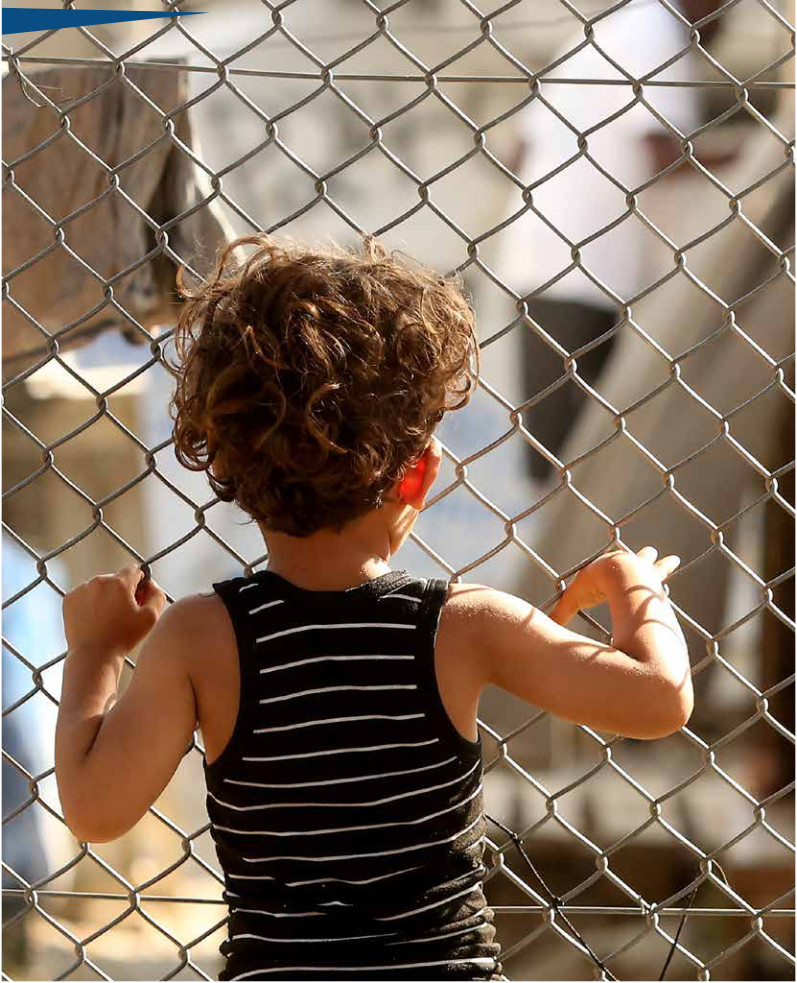
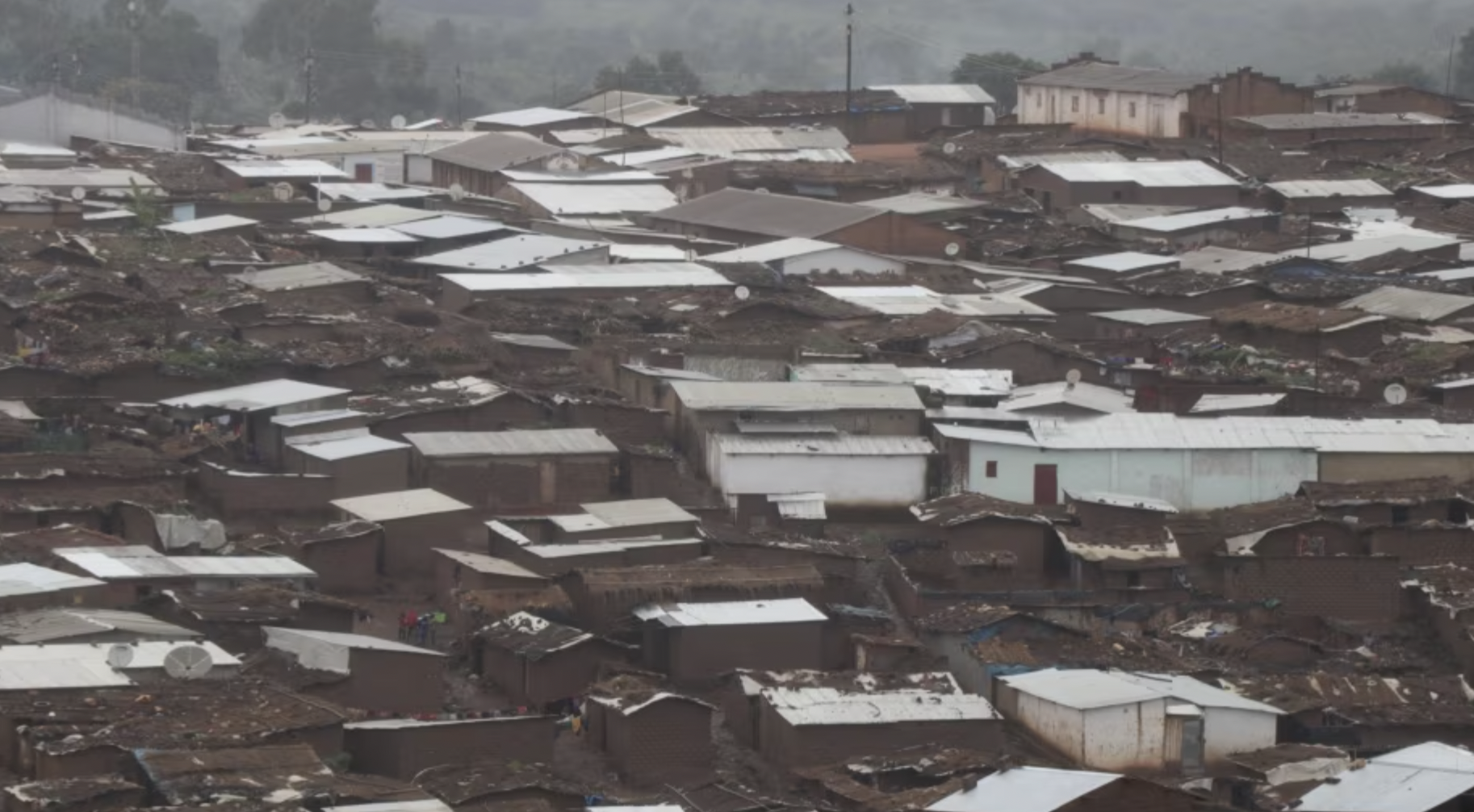
In March, the Malawi government issued a directive ordering all refugees in the country living in urban or rural areas to relocate to the country’s already overcrowded Dzaleka Refugee Camp. Since then, authorities have forcibly relocated thousands to the camp, often detaining them temporarily in prison. Forced relocation According to the 27 March directive, all […]
Malawi: Covid-19 and Detention
As of 19 April Malawi did not have any reported cases of Covid-19. The country has also not taken any measures to lockdown businesses as the country’s High Court blocked such measures in a ruling on 19 April. However, there are growing concerns among civil society organizations about the impact the virus could have in […]

Last updated:
DETENTION STATISTICS
DETAINEE DATA
DETENTION CAPACITY
ALTERNATIVES TO DETENTION
ADDITIONAL ENFORCEMENT DATA
PRISON DATA
POPULATION DATA
SOCIO-ECONOMIC DATA & POLLS
LEGAL & REGULATORY FRAMEWORK
Does the Country Have Specific Laws that Provide for Migration-Related Detention?
GROUNDS FOR DETENTION
Immigration-Status-Related Grounds
Non-Immigration-Status-Related Grounds in Immigration Legislation
Criminal Penalties for Immigration-Related Violations
Grounds for Criminal Immigration-Related Incarceration / Maximum Length of Incarceration
Has the Country Decriminalised Immigration-Related Violations?
LENGTH OF DETENTION
Maximum Length of Incarceration for Immigration-Related Criminal Conviction
DETENTION INSTITUTIONS
PROCEDURAL STANDARDS & SAFEGUARDS
Impact of Legal ATDs on Overall Detention Rates
Impact
Nature
Year
Decreased
"To help deal with prison overcrowding, Malawi instituted a community service order plan in 2000. By late September 2004, Malawi had placed 5,225 offenders on community service orders. They performed 838,000 hours of work, and completed 87 per cent of the tasks assigned. For offenders who completed their community service obligation, the rate of re-offending fell to 0.25 per cent, or just one of out of every 400 offenders. In addition, the Malawi government saved $227,717 by using community service rather than imprisonment."
COSTS & OUTSOURCING
COVID-19 DATA
TRANSPARENCY
Transparency Score on Migration-Related Detention
MONITORING
Types of Authorised Detention Monitoring Institutions
Institution
Type
Year
NATIONAL HUMAN RIGHTS MONITORING BODIES
NATIONAL PREVENTIVE MECHANISMS (OPTIONAL PROTOCOL TO UN CONVENTION AGAINST TORTURE)
NON-GOVERNMENTAL ORGANISATIONS (NGOS)
GOVERNMENTAL MONITORING BODIES
Parliamentary or congressional monitoring reports on migration-related detention
INTERNATIONAL TREATIES & TREATY BODIES
International Treaties Ratified
Ratification Year
Observation Date
ICPED, International Convention for the Protection of All Persons from Enforced Disappearance
2017
2018
CAT, Convention against Torture and Other Cruel, Inhuman or Degrading Treatment or Punishment
1996
2017
CTOCTP, Protocol to Prevent, Suppress and Punish Trafficking in Persons, Especially Women and Children
2005
2017
CTOCSP, Protocol against the Smuggling of Migrants by Land, Sea and Air, supplementing the United Nations Convention against Transnational Organized Crime
2005
2017
Ratio of relevant international treaties ratified
Ratio: 14/19
Relevant Recommendations or Observations Issued by Treaty Bodies
Treaty Body
Committee on Enforced Disappearance
Recommendation Year
2026
Recommendation Excerpt
29......The Committee is concerned about allegations received that, between 2022 and 2025, migrants including children have been held incommunicado in the Kamuzu military barracks by the Malawi Defence Force in poor conditions, without proper registration, putting them at risk of enforced disappearance. It is also concerned about reports documenting widespread exploitation, coercion, and concealment of victims within trafficking networks at the Dzaleka Refugee Camp, where individuals, including children, have been subjected to forced labour, sexual exploitation, and clandestine transfers. 30....the Committee recommends that the State Party: (b) Prevent and eradicate all forms of incommunicado detention of migrants, ensuring the systematic registration of any deprivation of liberty and ensuring the full respect of the best interest of the child;
(c) Ensure that all allegations of disappearance in the context of trafficking in persons and migration are thoroughly investigated, taking into account that the alleged acts may constitute enforced disappearance;
(c) Ensure that all allegations of disappearance in the context of trafficking in persons and migration are thoroughly investigated, taking into account that the alleged acts may constitute enforced disappearance;
Sources
Committee on Enforced Disappearances, "Concluding observations on the report submitted by Malawi under article 29 (1) of the Convention*," 18 March 2026, https://tbinternet.ohchr.org/_layouts/15/treatybodyexternal/SessionDetails1.aspx?SessionID=2893&Lang=en
Treaty Body
Committee against Torture
Recommendation Year
2022
Recommendation Excerpt
37. It is further concerned about reports suggesting that migrant children are placed in detention, often with adults, in poor living conditions and with no access to appropriate assistance to take account of their vulnerable situation (arts. 2–3 and 16). 38. It should immediately address the precarious conditions in the Dzaleka camp, ensure that migrant children are not detained solely because of their immigration status and are not detained with adults, other than their family members, and adopt security measures to protect all persons placed in camps....
Sources
Committee against Torture, "Concluding observations on the initial report of Malawi", United Nations General Assembly, 21 November 2022, https://uhri.ohchr.org/en/document/9a7c9e7e-7f81-46ec-bac5-469e2637bed1
Treaty Body
Committee on the Rights of the Child
Recommendation Year
2017
Recommendation Excerpt
§ 39. "The Committee recommends that the State party:
(a) Review its child refugee management policies, followed by sufficient awareness-raising on the existence and scope of the policy;
(b) Scale up the support and facilities for children in refugee camps, particularly by addressing the shortage of sanitation, education facilities, leisure activities and medical services and by providing children with the opportunity to continue higher education and have access to employment;
(c) Provide migrant and refugee children with adequate support, including safe homes, in conditions that meet their special protection and assistance needs;
(d) Put in place measures for family tracing and reunification;
(e) Consider withdrawing reservations to the 1951 Convention relating to the Status of Refugees, particularly on the right of association (art. 15), which limits the freedom of movement and place of residence, on public education (art. 22) and on naturalization (art. 34), which has been used to deny most of the applications by refugees to residence permits."
(a) Review its child refugee management policies, followed by sufficient awareness-raising on the existence and scope of the policy;
(b) Scale up the support and facilities for children in refugee camps, particularly by addressing the shortage of sanitation, education facilities, leisure activities and medical services and by providing children with the opportunity to continue higher education and have access to employment;
(c) Provide migrant and refugee children with adequate support, including safe homes, in conditions that meet their special protection and assistance needs;
(d) Put in place measures for family tracing and reunification;
(e) Consider withdrawing reservations to the 1951 Convention relating to the Status of Refugees, particularly on the right of association (art. 15), which limits the freedom of movement and place of residence, on public education (art. 22) and on naturalization (art. 34), which has been used to deny most of the applications by refugees to residence permits."
Sources
Committee on the Rights of the Child, "Concluding Observations on the Combined Third to Fifth Periodic Reports of Malawi," CRC/C/MWI/CO/3-5, 6 March 2017, https://tbinternet.ohchr.org/_layouts/15/treatybodyexternal/Download.aspx?symbolno=CRC%2fC%2fMWI%2fCO%2f3-5&Lang=en
> UN Special Procedures
> UN Universal Periodic Review
Relevant Recommendations or Observations from the UN Universal Periodic Review
Recommendation Issued
No
Year Issued
2011
Sources
Report of the Working Group on the Universal Periodic Review* Malawi A/HRC/16/4 4 January 2011 https://www.upr-info.org/sites/default/files/document/malawi/session_9_-_november_2010/ahrc164malawie.pdf
Recommendation Issued
No
Year Issued
2015
Sources
Report of the Working Group on the Universal Periodic Review* Malawi, A/HRC/30/5, 20 July 2015 https://www.upr-info.org/sites/default/files/document/malawi/session_22_-_may_2015/a_hrc_30_5_en.pdf
Recommendation Issued
Yes
Year Issued
2020
Sources
Human Rights Council, "Report of the Working Group on the Universal Periodic Review: Malawi," A/HRC/46/7, 23 December 2020, https://uhri.ohchr.org/Document/File/e95315ec-af5a-4519-aeb6-bc103f1c538b/EBEC810B-87D6-4F18-90C3-678AB2FEC01C
REGIONAL HUMAN RIGHTS MECHANISMS
Regional Legal Instruments
Year of Ratification (Treaty) / Transposed (Directive) / Adoption (Regulation)
Observation Date
HEALTH CARE PROVISION
HEALTH IMPACTS
COVID-19
Country Updates
As of 19 April Malawi did not have any reported cases of Covid-19. The country has also not taken any measures to lockdown businesses as the country’s High Court blocked such measures in a ruling on 19 April. However, there are growing concerns among civil society organisations about the impact the virus could have in the country’s overcrowded prisons, which also house immigration detainees. Malawi’s prisons reportedly confine more than 14,000 prisoners despite having a capacity of only 5,000.
A joint statement issued by the Centre for Human Rights Advice Assistance and Education, Youth Watch Society, Paralegal Resource Centre, Southern Africa Litigation Centre and Child Rights Advocacy and Paralegal Aid Centre called on the country’s president to “release all prisoners who are serving time for minor offences including contempt of court, being idle and disorderly, being a rogue and vagabond, common nuisance and breach of the peace.” The statement also urges that priority be given “to those that are terminally ill, older persons, persons with TB and others chronic illnesses and those who have served a substantial part of their sentences” and urges “ the President to prevent the detention in prison of all migrants who are detained on immigration-related charges.”
According to the International Detention Coalition (IDC), its local members in Malawi have raised concerns about migrants being “swept up” in four detention centres that were reportedly opened for quarantine purposes. After 14 days, migrants are to be transferred to immigration detention centres and prisons. IDC members have mentioned that conditions in Malawi’s detention centres are inhumane and inadequate as there is a lack of access to water or soap in the cells where migrants are being forced to stay.
On 9 April 2020, a visit to Zomba Central Prison revealed that the facility has six buckets used by thousands of prisoners who wash their hands without soap. It is reported that new inmates are only being screened for HIV and TB but not Covid-19, which increases the risk of spread of Covid-19. One of the inmates expressed concern about the situation: “We were warned about coronavirus by the prison authorities. They advised us that we must wash hands regularly. My duty is to see that new detainees wash their hands before being admitted to the facility. There are no coronavirus testing kits at the clinic. After they are tested for TB and HIV, the new inmates are admitted and sent to the various blocks.” Malawi’s president also announced that his administration is to decongest the prisons by releasing prisoners and juveniles who committed petty offences and those having served a significant portion of their sentences for moderate crimes.
Government Agencies
Ministry of foreign affairs - https://malawi.gov.mw/
Department of Immigration - https://epermit.gov.mw/
International Organisations
UNHCR - https://www.unhcr.org/where-we-work/countries/malawi
IOM - https://www.iom.int/countries/malawi
NGO & Research Institutions
Amnesty International - https://www.amnesty.org/en/location/africa/southern-africa/malawi/
Human Rights Watch - https://www.hrw.org/africa/malawi
Caritas - https://www.caritas.org/where-caritas-work/africa/malawi/