In its response to the CMW’s List of Issues, Niger fails to adequately address several issues concerning Articles 16-22, while also confirming practices which specifically violate the Convention. […]
Niger: Covid-19 and Detention
Niger’s Covid-19 situation has been directly impacted by measures taken in neighbouring countries, including in particular Libya, whose push backs of migrants into Niger has forced the country to set up quarantines. As of 31 March, 34 people had tested positive for Covid-19 in Niger. The government has taken certain measures to avoid the spread […]
![Migrants receive assistance in Madama, a military outpost close to the border between Niger and Libya [Courtesy: IOM Niger]](https://globaldetentionproject.org:3000/api/gdpUploadFiles/sources/download/Madama-military-outpost-Niger-Libya.jpeg)
Last updated: March 2019
DETENTION STATISTICS
DETAINEE DATA
ALTERNATIVES TO DETENTION
ADDITIONAL ENFORCEMENT DATA
PRISON DATA
POPULATION DATA
SOCIO-ECONOMIC DATA & POLLS
LEGAL & REGULATORY FRAMEWORK
Does the Country Have Specific Laws that Provide for Migration-Related Detention?
Detention-Related Legislation
Name
Year Adopted
Last Amended
Law No. 40 on the Entry and Stay of Foreigners (Ordonnance N° 81-40 relative à l'entrée et au séjour des étrangers au Niger)
1981
GROUNDS FOR DETENTION
Immigration-Status-Related Grounds
Criminal Penalties for Immigration-Related Violations
Grounds for Criminal Immigration-Related Incarceration / Maximum Length of Incarceration
LENGTH OF DETENTION
DETENTION INSTITUTIONS
PROCEDURAL STANDARDS & SAFEGUARDS
COSTS & OUTSOURCING
Description of Foreign Assistance
From the EU Emergency Trust Fund for Africa: 6 million EUR for the establishment of a joint investigation team to combat irregular migration, human trafficking, and people smuggling
From the EU Emergency Trust Fund for Africa: 30 million EUR to support Niger in its fight against organised crime, smuggling, and human trafficking (AJUSEN)
From the EU Emergency Trust Fund for Africa: 7 million EUR for the response mechanism and resources for migrants (MRRM)
COVID-19 DATA
TRANSPARENCY
MONITORING
NATIONAL HUMAN RIGHTS MONITORING BODIES
NHRI Monitoring Reports
Contribution de la Commission Nationale des Droits Humains (CNDH) sur la mise en œuvre de la Convention Internationale sur la protection des droits de tous les travailleurs migrants et les membres de leur famille [Contribution of the National Human Rights Commission (CNDH) on the implementation of the International Convention on the Protection of the Rights of All Migrant Workers and Members of Their Families]
2023
NATIONAL PREVENTIVE MECHANISMS (OPTIONAL PROTOCOL TO UN CONVENTION AGAINST TORTURE)
NON-GOVERNMENTAL ORGANISATIONS (NGOS)
GOVERNMENTAL MONITORING BODIES
INTERNATIONAL DETENTION MONITORING
INTERNATIONAL TREATIES & TREATY BODIES
International Treaties Ratified
Ratification Year
Observation Date
OPCAT, Optional Protocol to the Convention against Torture and Other Cruel, Inhuman or Degrading Treatment or Punishment
2014
2019
OP ICESCR, Optional Protocol to the International Covenant on Economic, Social and Cultural Rights
2014
2018
CAT, Convention against Torture and Other Cruel, Inhuman or Degrading Treatment or Punishment
1998
2017
ICRMW, International Convention on the Protection of the Rights of All Migrant Workers and Members of Their Families
2009
2017
ICPED, International Convention for the Protection of All Persons from Enforced Disappearance
2015
2017
CTOCTP, Protocol to Prevent, Suppress and Punish Trafficking in Persons, Especially Women and Children
2004
2017
CTOCSP, Protocol against the Smuggling of Migrants by Land, Sea and Air, supplementing the United Nations Convention against Transnational Organized Crime
2009
2017
Ratio of relevant international treaties ratified
Ratio: 18/19
Individual Complaints Procedures
Acceptance Year
ICCPR, First Optional Protocol to the International Covenant on Civil and Political Rights, 19661986
1986
CEDAW, Optional Protocol to the Convention on the Elimination of Discrimination against Women, 19992004
2004
Relevant Recommendations or Observations Issued by Treaty Bodies
Treaty Body
Committee on Migrant Workers
Recommendation Year
2025
Recommendation Excerpt
Committee recommends that the State party;
(c) To ensure that detention of migrant workers and members of their families for immigration violations is imposed only as a last resort and for the shortest possible time, and to develop alternatives to immigration detention;.....(d) In exceptional circumstances where detention cannot be avoided, to ensure that adequate and decent conditions are provided in places of detention, including psychosocial support; to ensure that migrant workers and members of their families are informed of their rights and of the procedures in the context of detention, in a language they understand; to ensure that, where appropriate, migrants in administrative detention are effectively segregated from those who.......(f) Cease immediately the detention of migrant children, whether unaccompanied, separated from their parents or in the company of their families, and other persons belonging to vulnerable groups of migrant workers and members of their families, as well as asylum-seekers, refugees and stateless persons; and ensure that children are not separated from their parents when an expulsion order is issued against them.......(g) To strengthen mechanisms for the regular monitoring of living conditions in migrant detention centers and to grant human rights observers, including humanitarian agencies, the national human rights observatory and non-governmental organizations, full access to all migrant detention centers, and authorize them to carry out unannounced visits.
(c) To ensure that detention of migrant workers and members of their families for immigration violations is imposed only as a last resort and for the shortest possible time, and to develop alternatives to immigration detention;.....(d) In exceptional circumstances where detention cannot be avoided, to ensure that adequate and decent conditions are provided in places of detention, including psychosocial support; to ensure that migrant workers and members of their families are informed of their rights and of the procedures in the context of detention, in a language they understand; to ensure that, where appropriate, migrants in administrative detention are effectively segregated from those who.......(f) Cease immediately the detention of migrant children, whether unaccompanied, separated from their parents or in the company of their families, and other persons belonging to vulnerable groups of migrant workers and members of their families, as well as asylum-seekers, refugees and stateless persons; and ensure that children are not separated from their parents when an expulsion order is issued against them.......(g) To strengthen mechanisms for the regular monitoring of living conditions in migrant detention centers and to grant human rights observers, including humanitarian agencies, the national human rights observatory and non-governmental organizations, full access to all migrant detention centers, and authorize them to carry out unannounced visits.
Sources
Comité pour la protection des droits de tous les travailleurs migrants et des membres de leur famille, "Observations finales concernant le deuxième rapport périodique du Niger", 17 April 2025, United nations General Assembly, https://tbinternet.ohchr.org/_layouts/15/treatybodyexternal/SessionDetails1.aspx?SessionID=2830&Lang=en
Recommendation Year
2023
Recommendation Excerpt
5. While recognizing the challenges posed by the security crisis that it is facing, the
Committee recommends that the State party strengthen efforts to guarantee the
enjoyment of human rights, particularly those set out in the Convention, by the people
living in affected regions, including ethnic minorities, migrants, asylum-seekers and
refugees. ..
29. The Committee recommends that the State party continue its efforts to establish
a migration policy that respects the human rights of migrants by implementing its
comprehensive migration management strategy, building the capacity of those tasked
with implementation and taking into account the specific needs of migrants in
vulnerable situations, in particular children. The Committee also recommends that the
State party revise the Smuggling of Migrants Act to bring it into line with international
human rights standards. The Committee invites the State party to implement the
recommendations issued by the Special Rapporteur on the human rights of migrants
following his visit to the Niger in October 2018.6
Committee recommends that the State party strengthen efforts to guarantee the
enjoyment of human rights, particularly those set out in the Convention, by the people
living in affected regions, including ethnic minorities, migrants, asylum-seekers and
refugees. ..
29. The Committee recommends that the State party continue its efforts to establish
a migration policy that respects the human rights of migrants by implementing its
comprehensive migration management strategy, building the capacity of those tasked
with implementation and taking into account the specific needs of migrants in
vulnerable situations, in particular children. The Committee also recommends that the
State party revise the Smuggling of Migrants Act to bring it into line with international
human rights standards. The Committee invites the State party to implement the
recommendations issued by the Special Rapporteur on the human rights of migrants
following his visit to the Niger in October 2018.6
Treaty Body
Committee on Enforced Disappearance
Recommendation Year
2022
Recommendation Excerpt
26. The Committee is concerned about allegations that individuals have been removed from the Niger, in accordance with administrative or extradition procedures,despite the proven risk that they could be subjected to torture or ill-treatment in the country of return.9 It is also concerned about reports that the punitive approach adopted in some provisions of Act No. 2015-36 of 26 May 2015 on the smuggling of migrants encourages migrants to go into hiding in conditions that expose them to numerous abuses, which could include the risk of being a victim of enforced disappearance. In this regard, the Committee notes with satisfaction that, according to the State party, this law is being revised (art. 16). 27. The Committee recommends that the State party ensure that the principle of non-refoulement enshrined in article 16 (1) of the Convention is strictly observed in all circumstances. In particular, the Committee recommends that the State party:
Sources
Committee on Enforced Disappearances, "Concluding observations on the report submitted by the Niger under article 29 (1) of the Convention", United Nations General Assembly, 30 March 2022, https://uhri.ohchr.org/en/document/96a06005-ca56-4d39-884d-ec98d81a5419
Treaty Body
Committee on Migrant Workers
Recommendation Year
2016
Recommendation Excerpt
§ 33. In the light of the Committee’s general comment No. 2 (2013) on the rights of migrant workers in an irregular situation and members of their families, the Committee recalls that administrative detention should be used only as a last resort and that children should never be detained solely for immigration-related reasons. It recommends that the State party consider alternatives to administrative detention. The Committee also recommends that the State party:
(a) Include detailed, disaggregated information in its second periodic report on the number of migrant workers detained for immigration offences and the place, average duration and conditions of their detention;
(b) Ensure that migrant workers detained for violations of immigration law are not held together with persons accused or convicted of a criminal offence; […]
(a) Include detailed, disaggregated information in its second periodic report on the number of migrant workers detained for immigration offences and the place, average duration and conditions of their detention;
(b) Ensure that migrant workers detained for violations of immigration law are not held together with persons accused or convicted of a criminal offence; […]
Sources
UNCMW, "Concluding observations on the initial report of the Niger," October 11, 2016, http://uhri.ohchr.org/document/index/BC8DE2B7-73EA-4C65-952F-8E4781326F29
Treaty Body
Committee against Torture
Recommendation Year
2019
Recommendation Excerpt
§ 26. The State party should: (a) Ensure that all allegations of acts of violence or excessive use of force against migrants and asylum seekers are investigated promptly, thoroughly and impartially and that perpetrators are prosecuted and punished; (b) Take the necessary measures to ensure safe and decent reception conditions for asylum seekers and migrants in an irregular situation; (c) Formulate clear guidelines and related training programs on the identification of asylum seekers and migrants who are in need of international protection, including victims of torture, ill-treatment and trafficking; (d) Place migrants in detention only as a measure of last resort, in accordance with the revised deliberation No. 5 of the Working Group on Arbitrary Detention, on deprivation of liberty of migrants (2018).
Sources
Committee against Torture, "Concluding observations on the initial report of the Niger," CAT/C/NER/CO/1, 20 December 2019, https://uhri.ohchr.org/Document/File/6d1a9b6c-309a-412a-b5f5-7d2a42b9fa72/D38D7FD9-49F5-4DE6-879A-608514DDB7F1
Global Detention Project and Partner Submissions to Treaty Bodies
Treaty Body
Committee on Migrant Workers (CMW)
Session Date
7 April 2025
Session Information
40
Submission Type
State Report
Recommendation Impact
Yes
Discussion of Impact
The Committee’s Concluding Observations largely reflected the GDP’s key recommendations. Noting that Ordinance No. 2025-02 criminalises irregular entry and stay, it urged Niger to decriminalise irregular migration (43(a)), and to ensure that “migrants in administrative detention are effectively segregated from those under criminal investigation” (although the Committee stopped short of calling on the State Party to cease the use of criminal facilities for migration-related detention). The Committee also demanded that the country “immediately cease migration detention of children” (43(f)). While it noted our concern regarding the absence of statistical data on the number of persons detained for immigration-related offences (42), it did not call on the country to ensure full transparency surrounding its detention operations.
Sources
Committee on the Protection of the Rights of All Migrant Workers and Members of Their Families, "Concluding observations on the second periodic report of the Niger, " 14 May 2025, https://tbinternet.ohchr.org/_layouts/15/treatybodyexternal/SessionDetails1.aspx?SessionID=2830&Lang=en
Global Detention Project, "The GDP Addresses the UN Committee on Migrant Workers: Mexico, Jamaica, Niger," 07 April 2025, https://www.globaldetentionproject.org/the-gdp-addresses-the-un-committee-on-migrant-workers-mexico-jamaica-niger
Treaty Body
Committee on the Rights of the Child (CRC)
Session Date
25 September 2018
Session Information
79 Pre-Sessional Working Group (05 Feb 2018 - 09 Feb 2018)
Submission Type
State Report
Recommendation Impact
No
Discussion of Impact
The Committee’s Concluding Observations failed to raise several of our submission recommendations. It did not call on the State party to clarify whether non-citizens who have been forcibly refouled or “pushed back” across neighbouring borders are detained, where such detention takes place, whether children are detained in these circumstances, and, if not, where they are placed or what arrangements ensure that their best interests are considered. It also failed to recommend the to State provide information on the increase in the number of non-citizen adults and minors held in criminal detention or other facilities since the introduction of Law No. or on the criminalization of people smuggling. Nor did it call on Niger to explain its intention to create 29 juvenile units in short-stay prisons said to be “specially equipped” for children, or whether these units will also hold non-citizen children in migration-related procedures.
Sources
Committee on the Rights of the Child, "Concluding observations on the combined third to fifth periodic reports of the Niger," 21 November 2018, https://tbinternet.ohchr.org/_layouts/15/treatybodyexternal/Download.aspx?symbolno=CRC%2FC%2FNER%2FCO%2F3-5&Lang=en
Global Detention Project, "Submission to the UN Committee on the Rights of the Child: Niger" 08 July 2018, https://www.globaldetentionproject.org/submission-to-the-un-committee-on-the-rights-of-the-child-niger
> UN Special Procedures
Relevant Recommendations or Observations by UN Special Procedures
Treaty Body
Special Rapporteur on the human rights of migrants
Decision Date
2019
Case Details
§ 72. The Government: (a) Ratify the Second Optional Protocol to the International Covenant on Civil and Political Rights, aiming at the abolition of the death penalty, the Optional Protocol to the Convention on the Rights of the Child on the sale of children, child prostitution and child pornography, the Protocol against the Smuggling of Migrants by Land, Sea and Air, supplementing the United Nations Convention against Transnational Organized Crime and the Protocol to the African Charter on Human and Peoples ’ Rights on the Rights of Women in Africa; (b) Reform the Law on the Illicit Smuggling of Migrants to clarify its purpose and provisions, ensuring that it does not criminalize or victimize migrant persons and is fully in line with international human rights standards, strengthen provisions on prevention (e.g., through awareness-raising and training of State officials), clearly state the competences of pertinent authorities and ensure the protection of migrants, including victims of illicit smuggling (e.g., by prohibiting the detention of migrants and victims of illicit smuggling, including children, adopting specific measures for the protection of non-accompanied children and establishing accessible complaint mechanisms); (c) Adopt a comprehensive national migration management strategy that is child-sensitive, gender responsive and fully respects the human rights of migrants, and that sets the framework for the implementation of the Global Compact for Migration and the Sustainable Development Goals as well as regional and international cooperation for this purpose; ...(k) Never detain children based on their migration status but adopt non-custodial care and community responses instead. Unaccompanied children should only be returned when it has been determined to be in their best interests through an appropriate procedure before a competent institution that includes their proper representation; (l) Establish accessible complaint mechanisms for migrants, including child-friendly complaint mechanisms for children, as well as legal information and aid in a language that they understand, ensuring their access to justice for violations of their human rights ; (m) Ensure prompt, impartial and independent investigations of violations of the human rights of migrants ; (n) Promote regular intraregional and interregional channels for migration and labour mobility, ensure that regular, safe, accessible and affordable channels for migration are available, decriminalize illegal border crossings and combat the stigma and discrimination associated with irregular migration; (o) Take appropriate legislative, policy and practical measures to ensure that border management and measures aimed at addressing irregular migration and combating smuggling activities are in line with international human rights law, following the guidance provided by the OHCHR Recommended Principles and Guidelines on Human Rights at International Borders; §75. The Government of Algeria stop with immediate effect the collective expulsions of migrant persons to the Niger and their intimidation, harassment, detention and ill-treatment based on racial discrimination, and ensure access of migrants to justice and remedies, including reparations, for violations of their human rights. § 76. The Libyan authorities: (a) Release all migrants and refugees detained arbitrarily, prioritizing persons in vulnerable situations, including children, and persons in need of international refugee protection ; (b) End the practice of mandatory or automatic detention of migrants... §78. The IOM increase the access of United Nations humanitarian and human rights actors to IOM transit centres to identify and provide specialized assistance to migrants, including children, victims of human rights violations and others in vulnerable situations. IOM should strengthen cooperation and complementarity with United Nations partners to ensure access to migrants in its centres and external monitoring, for example to address migrants ’ complaints, which could be done, for instance, by opening UNHCR and UNICEF offices in IOM centres. § 79. The international community, donors and United Nations agencies, funds and programmes: (a) Increase coordination among United Nations actors and with international and local NGOs to ensure that all migrants, and especially the most vulnerable, including children, are able to exercise their human rights; (b) Strengthen identification, assistance and human rights protection programmes for migrants in vulnerable situations who are outside IOM transit centres ; (c) Set up mechanisms for the identification, assistance and appropriate referral of migrants in vulnerable situations, following the conceptualization and guidance provided by the Global Migration Group Principles and Guidelines, Supported by Practical Guidance, on the Human Rights Protection of Migrants in Vulnerable Situations; (d) Collect and analyse data on remigration to assess the effectiveness of migration policies and programmes, including the assisted voluntary return programme ; (e) Develop a joint United Nations fundraising strategy for projects related to migration and ensure the added value of each United Nations actor and their mandates is reflected therein and is grounded on a human rights-based approach to migration.
Sources
Special Rapporteur on the human rights of migrants," Visit to the Niger, Report of the Special Rapporteur on the human rights of migrants," A/HRC/41/38/Add.1, 16 May 2019, https://uhri.ohchr.org/Document/File/d2d261b6-b2ae-47d9-908d-16e115668ed9/F04CE1EB-7B80-42F2-8208-EFA770D8FA3F
> UN Universal Periodic Review
Relevant Recommendations or Observations from the UN Universal Periodic Review
Recommendation Issued
No
Year Issued
2011
Sources
Report of the Working Group on the Universal Periodic Review* Niger A/HRC/17/15, 25 March 2011, https://www.upr-info.org/sites/default/files/document/niger/session_10_-_january_2011/ahrc1715nigere.pdf
Recommendation Issued
No
Year Issued
2016
Sources
Report of the Working Group on the Universal Periodic Review* Niger, A/HRC/32/5, 12 April 2016, https://www.upr-info.org/sites/default/files/document/niger/session_24_-_january_2016/a-hrc-32-5-e.pdf
Global Detention Project and Partner Submissions to Universal Periodic Review
Date of Submission
2025
Link to Submission Text
Submission Partners
JMED, REMIDDH
UPR Cycle
4th
Were Recommendations Reflected in UPR Recommendations
Pending
Discussion of Impact
Date of Submission
2021
Link to Submission Text
Submission Partners
Global Detention Project
UPR Cycle
3rd
Were Recommendations Reflected in UPR Recommendations
Pending
Discussion of Impact
HEALTH CARE PROVISION
HEALTH IMPACTS
COVID-19
Country Updates
Niger’s Covid-19 situation has been directly impacted by measures taken in neighbouring countries, including in particular Libya, whose push backs of migrants into Niger has forced the country to set up quarantines.
As of 31 March, 34 people had tested positive for Covid-19 in Niger. The government has taken certain measures to avoid the spread of the virus, including border closures, curfews, travel bans within the country, and a mandatory two-week quarantine for people arriving in the country.
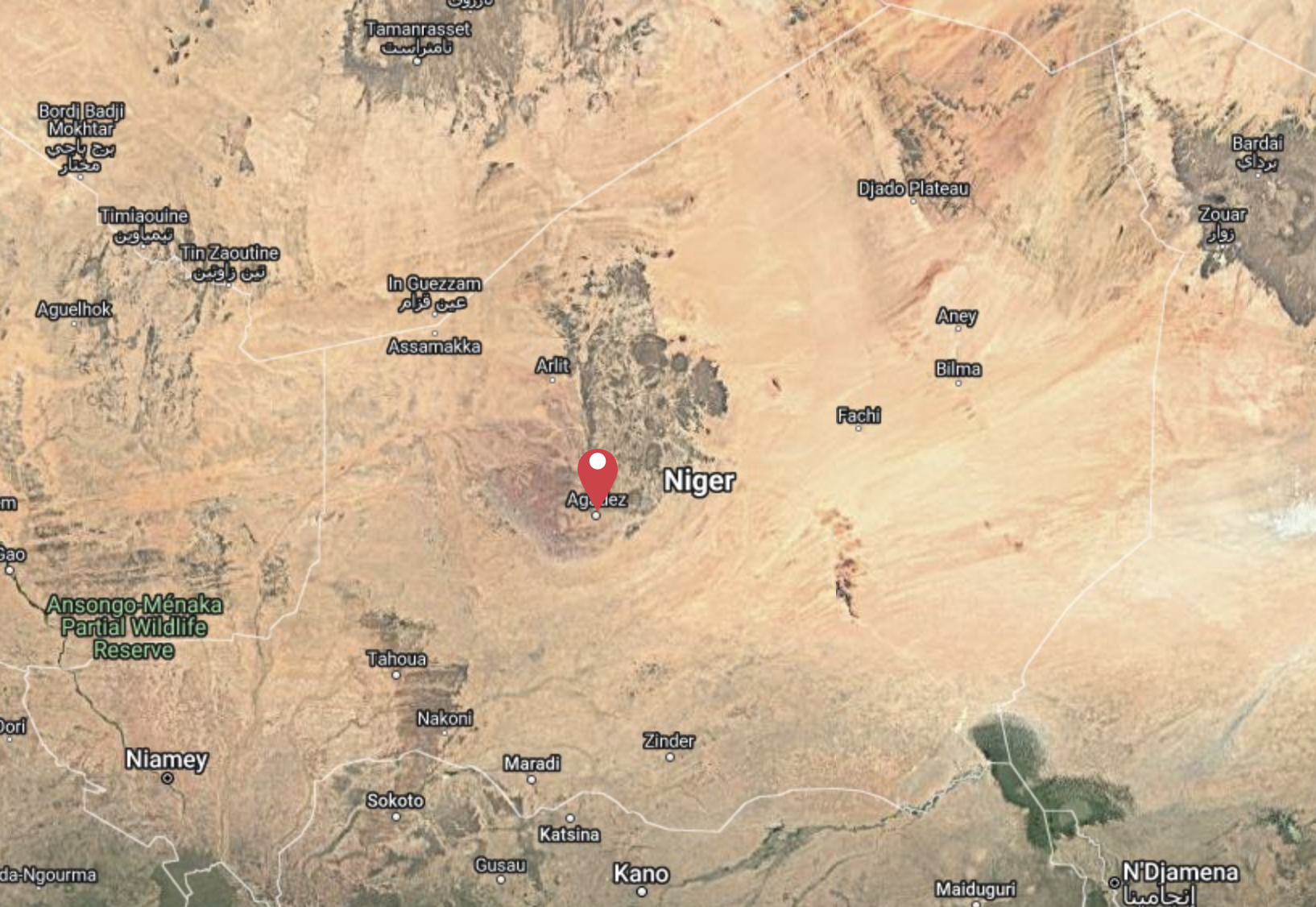
However, this situation has led to hundreds of women, men and children being stuck in Niger. In particular, people returned from Algeria to Niger are now forced to quarantine in tent facilities set up in the border post of Assamaka or in the city of Arlit. The mayor of Arlit stated that “despite the border closure, we see that movements are continuing: People travel through minor routes to avoid border controls and reach Arlit without going through the quarantine.”
Also, in March, a convoy of pick-up cars carrying 256 people was pushed-back into Niger by Libyan armed forces, leaving migrants in the heat of the desert for days before receiving humanitarian assistance by the IOM and Niger’s Civil Protection Department. A transfer to Agadez was organised and people were placed in a quarantine centre in the town set up by the IOM. Subsequently, on 4 and 5 April, 44 people were found at Assamaka and brought to the IOM quarantine site. Organisations such as Doctors Without Borders and the International Federation of the Red Cross have been providing medical and psychological assistance within the centre. In all six IOM operated transit centres in Niger, hand-washing stations have been installed and regular checks for Covid-19 symptoms are undertaken. However, as the centres are operating at their full capacity, the IOM is concerned about a possible outbreak of the virus.
On 27 March 2020, President Mahamadou Issoufou announced that 1,540 prisoners would be released due to the Covid-19 crisis and the risk of contagion within prisons. Priority would be given to older prisoners, prisoners with chronic diseases and all of those sentenced to less than 9 months in prison.
Government Agencies
Ministère de la Justice - https://www.gouv.ne
International Organisations
UNHCR - https://www.unhcr.org/where-we-work/countries/niger
IOM - https://niger.iom.int/
ILO - https://www.ilo.org/regions-and-countries/africa/niger
NGO & Research Institutions
Caritas - https://www.caritas.org/where-caritas-work/africa/niger/
Catholic Relief Service - https://www.crs.org/where-we-work/africa/niger