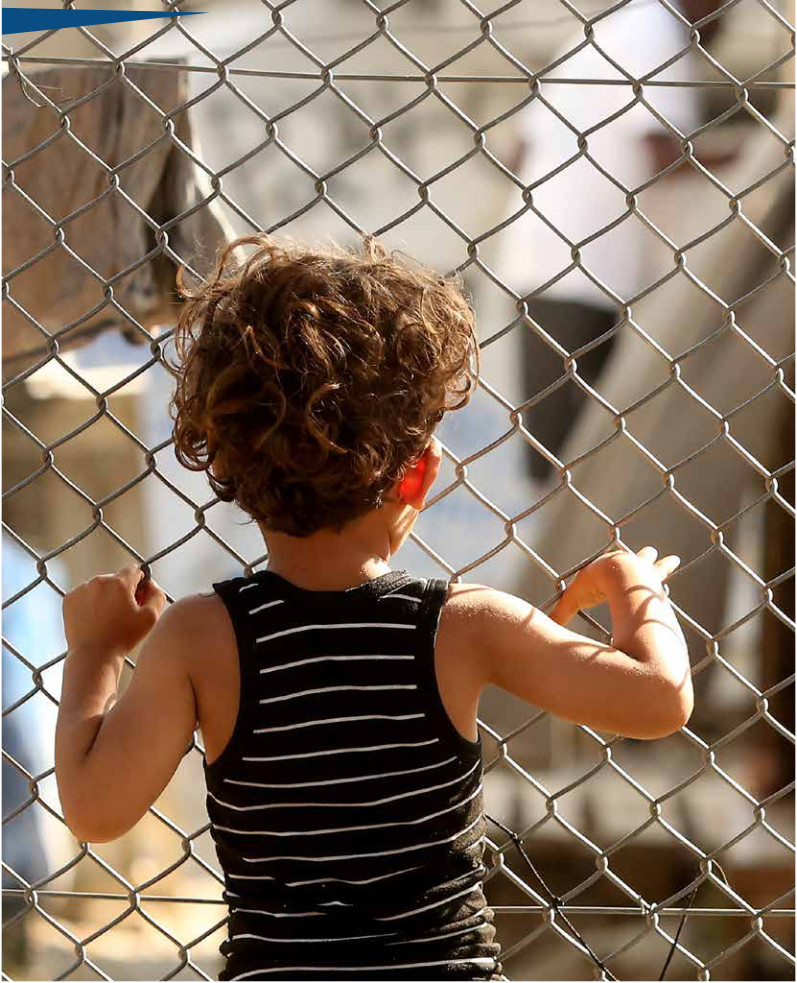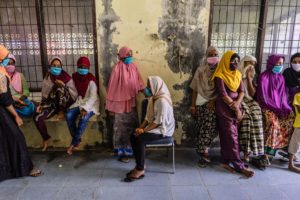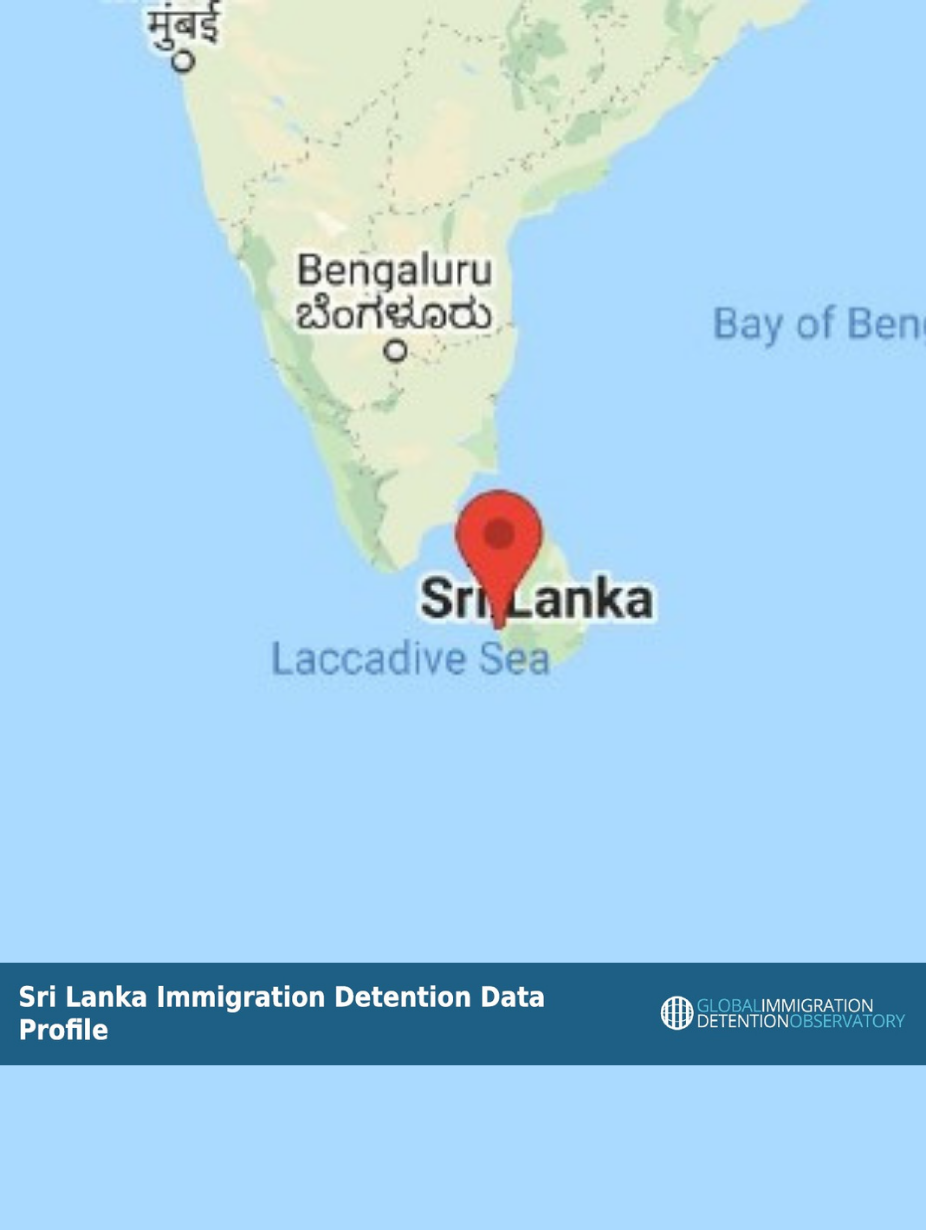
In recent weeks, the Global Detention Project has received several testimonies from a group of people held in immigration detention in Sri Lanka, depicting troubling detention conditions and instances of indefinite immigration detention. The accounts of their treatment at the Welisara Detention Centre reflect wider concerns about the treatment of migrants and asylum seekers in the country, including the arbitrary detention of children and asylum seekers. […]
Rohingya Refugees Detained in Sri Lanka
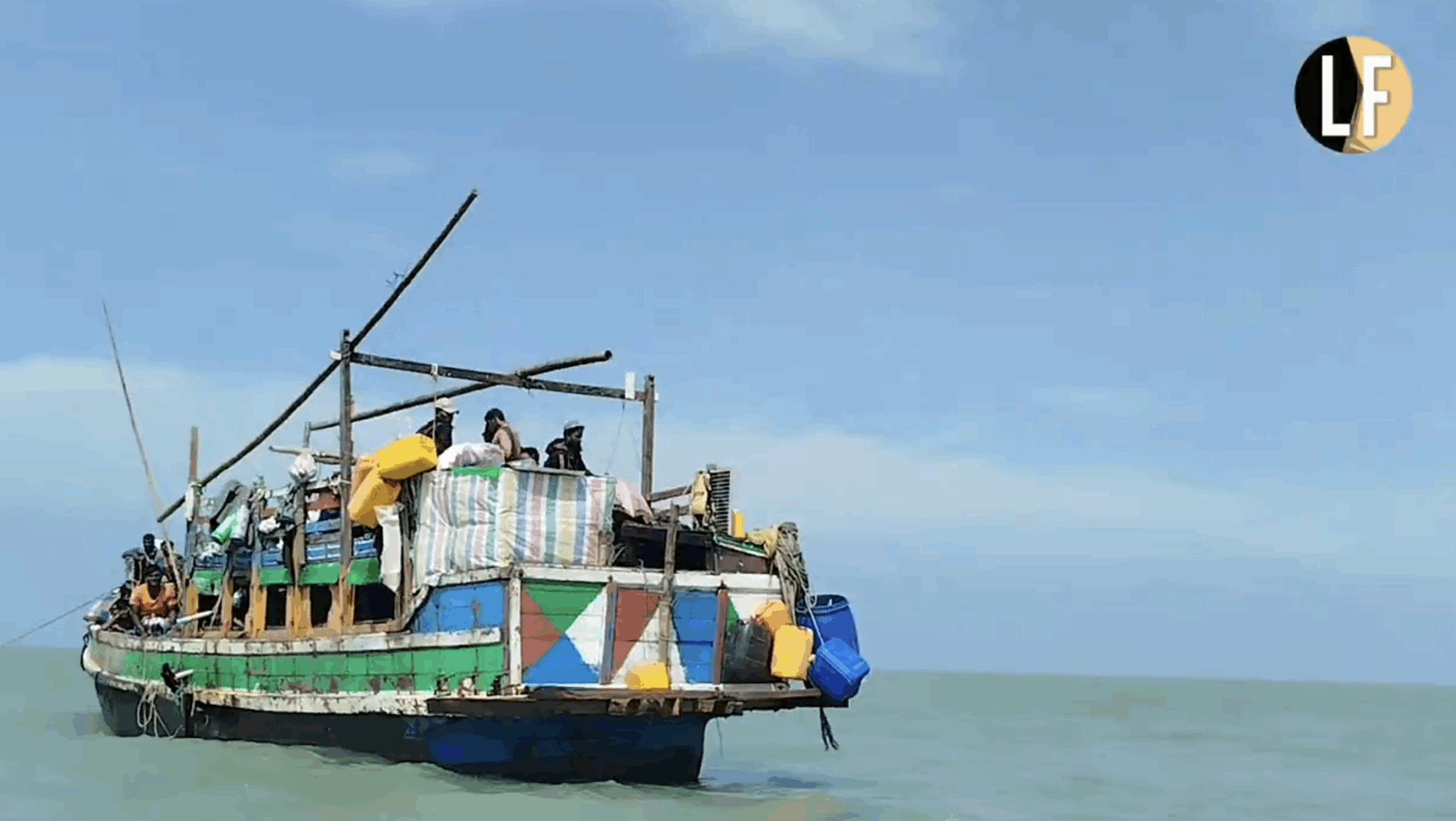
In December, Sri Lankan authorities were praised for their quick and successful rescue of 104 Rohingya refugees, stranded at sea when their boat encountered mechanical difficulties. The GDP is concerned to learn, however, that soon after they were brought to dry land, the refugees were placed in two immigration detention facilities in Colombo–one of which […]

Sri Lanka: Covid-19 and Detention
As of 28 September, Sri Lanka, with a population of 21.5 million, had detected only 3,360 cases of COVID-19. Although the country has been lauded for its containment of the virus, members of Sri Lanka’s Muslim minority have allegedly become stigmatised as carriers of the virus. There is also little information available concerning the impact […]

Last updated: July 2024
DETENTION CAPACITY
ALTERNATIVES TO DETENTION
ADDITIONAL ENFORCEMENT DATA
PRISON DATA
POPULATION DATA
LEGAL & REGULATORY FRAMEWORK
Does the Country Have Specific Laws that Provide for Migration-Related Detention?
GROUNDS FOR DETENTION
Immigration-Status-Related Grounds
Non-Immigration-Status-Related Grounds in Immigration Legislation
Criminal Penalties for Immigration-Related Violations
Grounds for Criminal Immigration-Related Incarceration / Maximum Length of Incarceration
Has the Country Decriminalised Immigration-Related Violations?
LENGTH OF DETENTION
DETENTION INSTITUTIONS
PROCEDURAL STANDARDS & SAFEGUARDS
COSTS & OUTSOURCING
COVID-19 DATA
TRANSPARENCY
MONITORING
Types of Authorised Detention Monitoring Institutions
Institution
Type
Year
Human Rights Commission of Sri Lanka
National Human Rights Institution (or Ombudsperson) (NHRI)
2025
NATIONAL HUMAN RIGHTS MONITORING BODIES
NATIONAL PREVENTIVE MECHANISMS (OPTIONAL PROTOCOL TO UN CONVENTION AGAINST TORTURE)
NON-GOVERNMENTAL ORGANISATIONS (NGOS)
GOVERNMENTAL MONITORING BODIES
INTERNATIONAL TREATIES & TREATY BODIES
International Treaties Ratified
Ratification Year
Observation Date
ICPED, International Convention for the Protection of All Persons from Enforced Disappearance
2016
2018
OPCAT, Optional Protocol to the Convention against Torture and Other Cruel, Inhuman or Degrading Treatment or Punishment
2017
2017
CAT, Convention against Torture and Other Cruel, Inhuman or Degrading Treatment or Punishment
1994
2017
ICRMW, International Convention on the Protection of the Rights of All Migrant Workers and Members of Their Families
1996
2017
Ratio of relevant international treaties ratified
Ratio: 12/19
Individual Complaints Procedures
Relevant Recommendations or Observations Issued by Treaty Bodies
Treaty Body
Committee on Enforced Disappearance
Recommendation Year
2025
Recommendation Excerpt
50. The Committee recommends that the State Party ensure systematic and strict
respect for the principle of non-refoulement. In that regard, the State Party should:
(a) Enact specific legislation on the rights of refugees and asylum-seekers, in
conformity with international standards, including the principle of non-refoulement,27
explicitly prohibiting any expulsion, return, surrender or extradition when there are
substantial grounds for believing that the person concerned may be in danger of being
subjected to enforced disappearance;
(b) Adopt clear criteria and procedures for assessing and verifying the risk of
being subjected to enforced disappearance and, where there is such a risk, ensure that
the person concerned is not expelled, returned, surrendered or extradited, and conduct
an individual analysis in the case of the 116 asylum-seekers from the Rohingya
community in Myanmar who arrived in the State Party in 2024;
(c) Guarantee that any decision authorizing expulsion, return, surrender or
extradition can be appealed within a reasonable deadline and that such an appeal has a
suspensive effect........
respect for the principle of non-refoulement. In that regard, the State Party should:
(a) Enact specific legislation on the rights of refugees and asylum-seekers, in
conformity with international standards, including the principle of non-refoulement,27
explicitly prohibiting any expulsion, return, surrender or extradition when there are
substantial grounds for believing that the person concerned may be in danger of being
subjected to enforced disappearance;
(b) Adopt clear criteria and procedures for assessing and verifying the risk of
being subjected to enforced disappearance and, where there is such a risk, ensure that
the person concerned is not expelled, returned, surrendered or extradited, and conduct
an individual analysis in the case of the 116 asylum-seekers from the Rohingya
community in Myanmar who arrived in the State Party in 2024;
(c) Guarantee that any decision authorizing expulsion, return, surrender or
extradition can be appealed within a reasonable deadline and that such an appeal has a
suspensive effect........
Sources
Committee on Enforced Disappearances, " Concluding observations on the report submitted by
Sri Lanka under article 29 (1) of the Convention*," 03 November 2025, https://docs.un.org/en/CED/C/LKA/CO/1
Treaty Body
Human Rights Committee
Recommendation Year
2023
Recommendation Excerpt
Treatment of refugees and asylum-seekers
36. While noting the State party’s information on protection measures taken for refugees and asylum-seekers in the immediate aftermath of the Easter Sunday bombings in 2019, the Committee remains concerned about reports that refugees and asylum-seekers face increased discrimination and hostility, continue to be subjected to arbitrary arrest, detention, and deportation and are not provided with sufficient protection (arts. 2, 7, 12 and 26).
(a) Introduce dedicated legislation governing the rights of refugees and
asylum-seekers and relevant procedures, in conformity with the Covenant and other international standards, including the principle of non-refoulement, and consider ratifying the Convention relating to the Status of Refugees and the Convention on the Reduction of Statelessness
36. While noting the State party’s information on protection measures taken for refugees and asylum-seekers in the immediate aftermath of the Easter Sunday bombings in 2019, the Committee remains concerned about reports that refugees and asylum-seekers face increased discrimination and hostility, continue to be subjected to arbitrary arrest, detention, and deportation and are not provided with sufficient protection (arts. 2, 7, 12 and 26).
(a) Introduce dedicated legislation governing the rights of refugees and
asylum-seekers and relevant procedures, in conformity with the Covenant and other international standards, including the principle of non-refoulement, and consider ratifying the Convention relating to the Status of Refugees and the Convention on the Reduction of Statelessness
Sources
Human Rights Committee, "Concluding observations on the sixth periodic report of Sri Lanka," 09 March 2023, United Nations General Assembly, https://uhri.ohchr.org/en/document/33048607-5946-4bec-b32b-ea60dd2c0bc9
Treaty Body
Committee against Torture
Recommendation Year
2017
Recommendation Excerpt
§ 44. The State party should: […] (c) Ensure that persons in need of international protection are not detained or that detention is used only as a measure of last resort, after alternatives have been duly examined and exhausted, and for the shortest possible time, in detention centres that are suitable for their purpose and whose regime is different from that of penal institutions;
(d) Consider ratifying the 1951 Convention relating to the Status of Refugees and the 1967 Protocol thereto.
(d) Consider ratifying the 1951 Convention relating to the Status of Refugees and the 1967 Protocol thereto.
Sources
UNCAT, "Concluding observations on the fifth periodic report of Sri Lanka," January 27, 2017, http://uhri.ohchr.org/document/index/9C1E353F-6408-4F8B-BA00-6E0700654F3B
Treaty Body
Committee on Migrant Workers
Recommendation Year
2016
Recommendation Excerpt
§ 33. The Committee recommends that the State party:
(a) Ensure that administrative detention is used as a measure of last resort only and that non-custodial alternatives are promoted, in line with the Committee’s general comment No. 2 (2013) on the rights of migrant workers in an irregular situation and members of their families;
(b) Expeditiously and completely cease the detention of children on the basis of their or their parents’ immigration status, and allow children to remain with family members and/or guardians in non-custodial, community-based contexts while their immigration status is being resolved, in accordance with their best interests and with their rights to liberty and family life;
(c) Refrain from detaining migrants with specific needs, particularly women, children, the elderly and persons with physical or mental disabilities, and where detention of migrants in these categories does take place, ensure that there is a specific policy in place for their detention and safe, gender-responsive and adequate detention facilities, including access to sexual and reproductive health care;
(d) Take the steps necessary to ensure that in administrative and judicial proceedings, including detention and expulsion proceedings, migrant workers and members of their families, particularly those in an irregular situation, are guaranteed due process on an equal basis with nationals of the State party before the courts and tribunals;
§ 35. The Committee recommends that the State party: […] (e) Ensure that diplomatic missions in States of employment have specific policies that address prevention of and response to arbitrary detention and sexual and gender-based violence, including having female officers to deal with cases of sexual abuse, a local 24/7 hotline free of charge, a roster of competent local lawyers able to help the State party’s migrant workers with legal issues, and that they conduct frequent visits to migrant detention centres; […],
§59. The Committee recommends that the State party: […], (e) Take measures to properly identify victims of trafficking and to protect them from prosecution, detention or punishment for activities in which they were involved as a direct consequence of their situation as trafficked persons;
(a) Ensure that administrative detention is used as a measure of last resort only and that non-custodial alternatives are promoted, in line with the Committee’s general comment No. 2 (2013) on the rights of migrant workers in an irregular situation and members of their families;
(b) Expeditiously and completely cease the detention of children on the basis of their or their parents’ immigration status, and allow children to remain with family members and/or guardians in non-custodial, community-based contexts while their immigration status is being resolved, in accordance with their best interests and with their rights to liberty and family life;
(c) Refrain from detaining migrants with specific needs, particularly women, children, the elderly and persons with physical or mental disabilities, and where detention of migrants in these categories does take place, ensure that there is a specific policy in place for their detention and safe, gender-responsive and adequate detention facilities, including access to sexual and reproductive health care;
(d) Take the steps necessary to ensure that in administrative and judicial proceedings, including detention and expulsion proceedings, migrant workers and members of their families, particularly those in an irregular situation, are guaranteed due process on an equal basis with nationals of the State party before the courts and tribunals;
§ 35. The Committee recommends that the State party: […] (e) Ensure that diplomatic missions in States of employment have specific policies that address prevention of and response to arbitrary detention and sexual and gender-based violence, including having female officers to deal with cases of sexual abuse, a local 24/7 hotline free of charge, a roster of competent local lawyers able to help the State party’s migrant workers with legal issues, and that they conduct frequent visits to migrant detention centres; […],
§59. The Committee recommends that the State party: […], (e) Take measures to properly identify victims of trafficking and to protect them from prosecution, detention or punishment for activities in which they were involved as a direct consequence of their situation as trafficked persons;
Sources
Committee on Migrant Workers, "Concluding observations on the second periodic report of Sri Lanka," 11 October 2016, http://uhri.ohchr.org/document/index/16632918-E4C3-4B97-B872-2F27D2750511
> UN Special Procedures
Relevant Recommendations or Observations by UN Special Procedures
Treaty Body
Special Rapporteur on the human rights of migrants
Decision Date
2014
Case Details
(ff)Decriminalize irregular departures from Sri Lanka, as irregular migration should only be seen as an administrative offence; and refrain from detaining returned Sri Lankans who have migrated irregularly; (gg)Detain migrants in an irregular situation in Sri Lanka only as a measure of last resort, for as short a period as possible, and systematically apply alternatives to detention, particularly for families and children, who should never be detained; in that respect, consider the recommendations made by the Special Rapporteur in his report on the detention of migrants in an irregular situation and alternatives to detention (A/HRC/20/24); (f)Detain migrants in an irregular situation only as a measure of last resort, for as short a period as possible, systematically apply alternatives to detention, refrain from detaining children and families, and give particular attention to supporting migrants who have escaped from abusive employers;
Sources
Human Rights Council "Report of the Special Rapporteur on the human rights of migrants, François Crépeau, on his mission to Sri Lanka", United Nations General Assembly, 26 May 2014, https://uhri.ohchr.org/en/document/a3a9eac6-d0e2-4616-bf55-a1799508f006 )
Treaty Body
Working Group on arbitrary detention
Decision Date
2018
Case Details
91 (b) Enact legislation that would specify that any detention in the course of migration proceedings must be exceptional, ordered by a judicial authority only in cases when specifically prescribed by law and assessed as necessary and proportionate in individual cases; [...]
(d) Ensure that alternatives to detention in the context of migration, which
are accessible and realistic, are deployed;
(e) Cease holding migrants in Mirihana immigration detention facility
immediately as it is entirely inappropriate for such purposes.
(d) Ensure that alternatives to detention in the context of migration, which
are accessible and realistic, are deployed;
(e) Cease holding migrants in Mirihana immigration detention facility
immediately as it is entirely inappropriate for such purposes.
Sources
UN Working Group on Arbitrary Detention, “Report of the Working Group on Arbitrary Detention on its Visit to Sri Lanka, A/HRC/39/45/Add.2,” 23 July 2018, https://documents-dds-ny.un.org/doc/UNDOC/GEN/G18/231/56/PDF/G1823156.pdf?OpenElement
> UN Universal Periodic Review
Relevant Recommendations or Observations from the UN Universal Periodic Review
Recommendation Issued
No
Year Issued
2023
UPR Cycle
4th
Sources
Human Rights Council, "Report of the Working Group on the Universal Periodic
Review: Sri Lanka", 03 February 2023, United Nations General Assembly, https://documents.un.org/doc/undoc/gen/g23/036/66/pdf/g2303666.pdf
Recommendation Issued
Yes
Year Issued
2017
UPR Cycle
3rd
Recommendation Excerpt
116.174 Apply alternatives to detention of irregular migrants, in particular for families and children (Portugal).
Sources
Working Group on the Universal Periodic Review, "Report of the Working Group on the Universal Periodic Review Sri Lanka, 3rd cycle, session 28", united nations, 17 November 2017, https://uhri.ohchr.org/en/document/2c89679d-93a5-4fea-9178-9201f5352605 )
Recommendation Issued
No
Year Issued
2008
Sources
Report of the Working Group on the Universal Periodic Review Sri Lanka, A/HRC/8/46, 5 June 2008, https://www.upr-info.org/sites/default/files/document/sri_lanka/session_2_-_may_2008/ahrc846srilankae.pdf
Recommendation Issued
No
Year Issued
2012
Sources
Report of the Working Group on the Universal Periodic Review* Sri Lanka, A/HRC/22/16, 18 December 2012, https://www.upr-info.org/sites/default/files/document/sri_lanka/session_14_-_october_2012/ahrc2216srilankae.pdf
REGIONAL HUMAN RIGHTS MECHANISMS
HEALTH CARE PROVISION
HEALTH IMPACTS
COVID-19
Country Updates
In December, Sri Lankan authorities were praised for their quick and successful rescue of 104 Rohingya refugees, stranded at sea when their boat encountered mechanical difficulties. The GDP is concerned to learn, however, that soon after they were brought to dry land, the refugees were placed in two immigration detention facilities in Colombo–one of which was previously slammed by the UN Working Group on Arbitrary Detention for holding non-nationals in “dire” conditions.
According to reports, the group of refugees–amongst them 46 children, many unaccompanied–left Bangladesh on 3 December and were at sea until their rescue by the Sri Lankan navy on 18 December. The UN’s Special Rapporteur on Myanmar welcomed the group’s rescue: “I wholeheartedly thank the Government of Sri Lanka for this intervention to rescue these vulnerable Rohingya refugees.” UNHCR’s Director for Asia and the Pacific similarly praised the Navy’s actions: “This is an example in humanity that all States in the region must follow to promptly and swiftly act to prevent the tragic loss of life at sea.” Other countries in the region, including Indonesia and Malaysia, have been reluctant to rescue boats carrying refugees–often leaving them drifting at sea for weeks on end.
However, shortly after their rescue, the group are reported to have been placed in a prison in Jaffna before then being moved to the Mirihana and Welisara immigration detention centres in the Sri Lankan capital.
A Sri Lankan human rights defender, Ruki Fernando, visited those detained in Mirihana on 27 December, distributed food items and toys, and spoke to several detainees through a barbed wire fence. Fernando also attempted to speak to those detained in Welisara the same day, but was prevented by centre management. According to him: “they were not too keen to allow interactions and discouraged visitors, although they did allow us some minimal interactions. This is surprising since even suspects of crimes in Sri Lankan prisons can receive visitors six days a week.”
According to Fernando, as of 2 February the refugees remained detained in the two detention facilities. "They may be released in few weeks, but there is no clear sign yet. Our concern is that even if they are released, they would end up on the streets without food or other assistance, as the State does not provide housing, food, education for kids etc."
In 2017, the UN Working Group on Arbitrary Detention visited Mirihana and described the conditions as “dire.” In particular, the monitoring group reported severe overcrowding, poor shower and bathroom facilities, and a lack of any recreational activities for detainees. The group noted: “As a former police station, the facility is entirely inappropriate for holding people for prolonged periods” and recommended that Sri Lanka “cease holding migrants in Mirihana immigration detention facility immediately as it is entirely inappropriate for such purposes."
2022 saw a significant increase in the number of Rohingya refugees embarking on perilous journeys across the Bay of Bengal and Andaman Sea in search of safety and security. According to UNHCR, more than 3,500 attempted sea crossings in 39 boats in 2022–a 360 percent increase on the number attempting the journey in 2021. UNHCR has also reported an alarming rise in the death toll on the route–at least 348 individuals went missing or died at sea during the year.
Sri Lanka’s detention of the Rohingya refugees mirrors the “reception” that many Rohingya refugees have faced across the region. In India, Malaysia, and Thailand, thousands have been locked up in overcrowded facilities before being summarily deported to Myanmar, where they face extreme dangers and risk to life.
Rohingya have faced repression and discrimination in Myanmar for decades. Since August 2017, thousands have fled to escape what human rights experts have descrived as crimes against humanity and acts of genocide perpetrated by the country’s military regime. Rohingya who remain in the country are confined to villages and camps by the military and face constant persecution.
As of 28 September, Sri Lanka, with a population of 21.5 million, had detected only 3,360 cases of COVID-19. Although the country has been lauded for its containment of the virus, members of Sri Lanka’s Muslim minority have allegedly become stigmatised as carriers of the virus. There is also little information available concerning the impact of the virus on displaced populations, including migrants and refugees.
Sri Lanka is not a signatory to the Refugee Convention. With no national asylum framework, asylum seekers and refugees are treated as irregular immigrants and may be subject to arrest, detention, and deportation under the Immigrants and Emigrants Act. In 2005, UNHCR signed a Memorandum of Understanding with the Sri Lankan government allowing UNHCR to pursue its protection mandate for asylum seekers, refugees, and internally-displaced people. In 2019, UNHCR reported that there were 37,947 persons of concern in the country.
Sri Lankan immigration detention facilities are known to subject detainees to poor living conditions, raising concerns for the welfare of detainees during the pandemic. In 2017, the Working Group on Arbitrary Detention visited Mirihana detention facility, and noted extreme overcrowding, poor shower and bathroom facilities, and lack of recreational activities. The group urged Sri Lankan authorities to “Cease holding migrants in Mirihana immigration detention facility immediately as it is entirely inappropriate for such purposes.” However, as of at least February 2020 the facility remained open.
Civil society organisations have criticised Sri Lanka’s prison conditions for being overcrowded, sometimes housing 5,000 inmates in a facility made for 800 people. On 7 July, an inmate at Sri Lanka’s largest prison, Welikada Remand Prison, tested positive for COVID-19. Subsequently, all inmates and staff members at the prison were tested for the virus, and all wards were cleansed and sanitised. The infected inmate had been transferred into the Prison from a drug rehabilitation centre in Kandakadu in Polonnaruwa district, located in Sri Lanka North Central Province. Shortly afterwards, it was reported that a cluster of at least 340 cases of COVID-19 had emerged from the Kandakadu centre. On 8 July, the government banned personal prison visits to prevent the spread of COVID-19.
Government Agencies
Ministry of foreign affairs - https://mfa.gov.lk/
Ministry of Internal & Home - https://mpclg.gov.lk/
Departement of Immgration & Emigration - https://www.immigration.gov.lk/
International Organisations
UNHCR Office - https://www.unhcr.org/where-we-work/countries/sri-lanka
IOM Office - https://srilanka.iom.int/
ILO Office - https://www.ilo.org/regions-and-countries/asia-and-pacific/sri-lanka
NGO & Research Institutions
Caritas office - https://www.caritas.org/where-caritas-work/asia/sri-lanka/
Amnesty Office - https://www.amnesty.org/en/location/asia-and-the-pacific/south-asia/sri-lanka/
Save The Children - https://www.savethechildren.net/sri-lanka