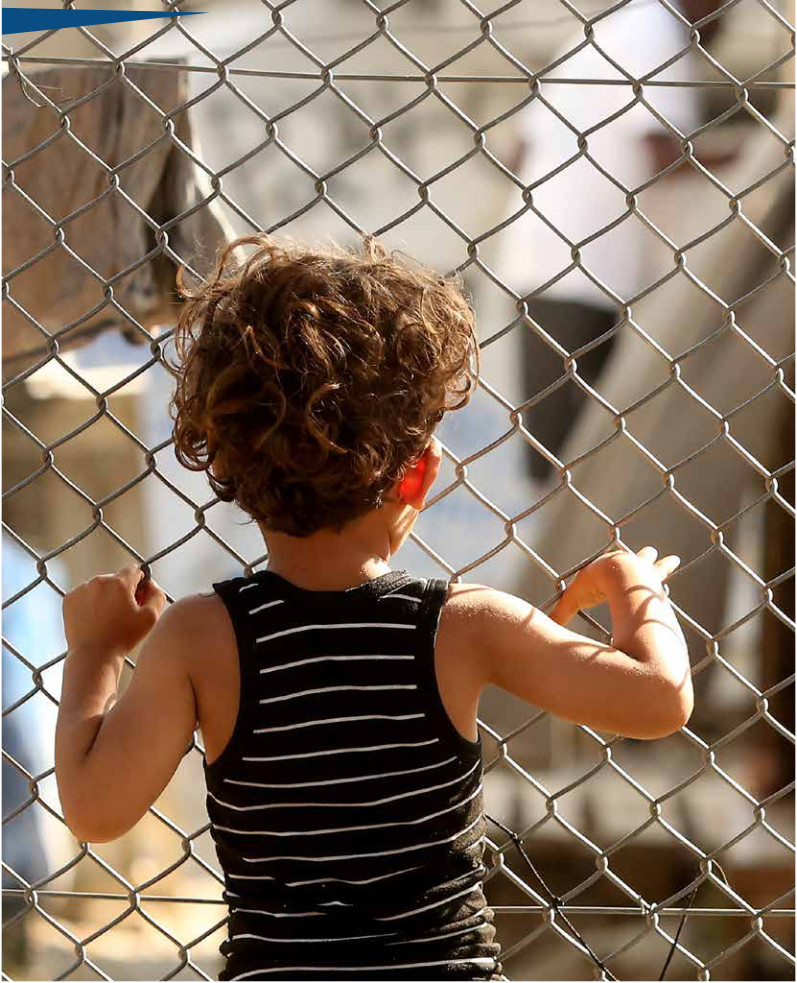
On 7 July, the GDP’s Refugee Advocacy Coordinator spoke at a UNHCR-led event on the harmful impacts of immigration detention, as well as the emergence and on-going challenge of ‘alternatives to detention’ (ATDs) and how we might reframe ATDs from a harm-reduction point of view. The event, “From Pledges to Practice: Scaling Up Responses on Alternatives to Detention, Protection at Sea and Trafficking,” took stock of the progress made on implementing the Multistakeholder Pledges on Alternatives to Detention, Trafficking, and Protection at Sea in advance of the GRF review process in December 2025.
“I would like to thank UNHCR for inviting me to participate in this important event aimed at rolling back the use of immigration detention across the globe. As a refugee who spent many years in immigration detention as well as in “alternatives to detention,” I have experienced firsthand the harms – psychological, physical, and emotional – that detention and restrictions of liberty can have on people who have been forced to flee their homes. Thus, I feel an important responsibility in speaking to you today about the need for us to find ways to encourage governments to adopt policies that limit the damaging impact of migration control measures. I would like to address three inter-related issues:
- The human cost of detention;
- The emergence and ongoing challenges of ATDs;
- Reframing ATDS from a harm-reduction point of view.
- The Human Cost of Detention
The human cost of restrictive migration control policies is becoming increasingly visible and devastating. At the Global Detention Project, we have documented the alarming growth of detention and deportation measures across the globe, which have recently seemed to expand exponentially, especially with the policies of the Trump administration in the United States. We have built data documenting how people seeking protection are subjected to prolonged and often arbitrary detention in facilities that lack transparency, oversight, or adequate safeguards. This includes:
- The inhumane conditions of many immigration detention facilities;
- The lack of access detained refugees have to legal counsel and due process;
- The persistence of family separation practices, including in countries in both the Global North and the Global South;
- The physical and psychological harms in detention, including sexual violence, torture, and neglect in detention centers;
- The growing use of detention at borders, including in uncharted border crossings, in airport transit zones, ferry terminals, medical wards, and u offshore detention.
From my own personal experience as a detainee in Australia’s offshore detention site in Manus Island, I can attest to the extreme trauma of detention, especially for people fleeing conflict, which is compounded by sometimes indefinite detention timelines, solitary confinement, and separation from families. The cost is not just measured in suffering; it’s measured in lives lost, futures derailed, and communities fractured. For example, in Manus Island, eight asylum seekers died in detention after authorities failed to protect their health. This is not an isolated case; it’s emblematic of a broader systemic failure.
- The emergence and challenges of Alternatives to Detention (ATD)
Over the last two decades, there has been a growing global movement to convince governments to adopt alternatives to detention in order to limit the harms of immigration detention. This movement has been enshrined in both the Compact for Refugees and the Compact on Migration, both of which call on member states to adopt ATDs.
Nevertheless, despite growing numbers of commitments from states to adopt ATDs, these tools remain underutilized and often poorly implemented. Many countries still resort to immigration detention as a default rather than a last resort, even for vulnerable groups like unaccompanied children or trafficking survivors. These developments highlight several key challenges, including:
- Even when states adopt ATDs, this rarely impacts the use of detention;
- In some cases, ATDs appear to lead to more harms, including widespread implementation of programs like ankle bracelets as ATDs even as immigration detention numbers grow;
- The failure in many countries to legally codify ATDs, making them inconsistent and at risk of rollback.
- ATDs are often limited to reporting requirements or house arrest, without broader support like legal aid, case management, or community-based housing.
- The path forward on harm-reduction and ATDs
At the heart of the ATD movement is the effort to prevent harms to people fleeing across borders to find safe haven abroad. However, at the GDP, we have yet to see convincing evidence that states are implementing ATDs in a way to ensure that people are not arbitrarily detained. If we accept, as most human rights monitoring bodies have now concluded, that immigration detention is inherently harmful to vulnerable and at-risk people—including children, trafficking victims, torture survivors, stateless persons, and others—our task is clear: we must convince governments to detain less. ATDs can play an important role in this effort. However, to realize this potential, the GDP thinks the following tasks and causes must be pursued:
- States must agree to tie ATDs to decreasing use of detention, especially for specific at-risk groups like children. Only by agreeing to such limits can ATDs realise their full harm-reducing potential. Absent such commitments from governments, ATDs all too often merely become a form of increased state surveillance and limits on refugee freedom.
- For ATDs to be used in harm-reducing way, states must also implement effective screening mechanisms at borders and during migration and asylum proceedings, to ensure that all at-risk individuals are never detained.
- For refugee advocates, there must be a conscientious shift to observe ATDs not as an end in themselves, but rather as a means to less detention and more liberty for refugees, asylum seekers, and all vulnerable people on the move.
To conclude: If we are serious about addressing the human cost of displacement, we must always keep front and center in our minds that all forms of deprivation of liberty harm refugees, and that all of our advocacy programs must be designed with the goal of reducing harms.
Thank you.”