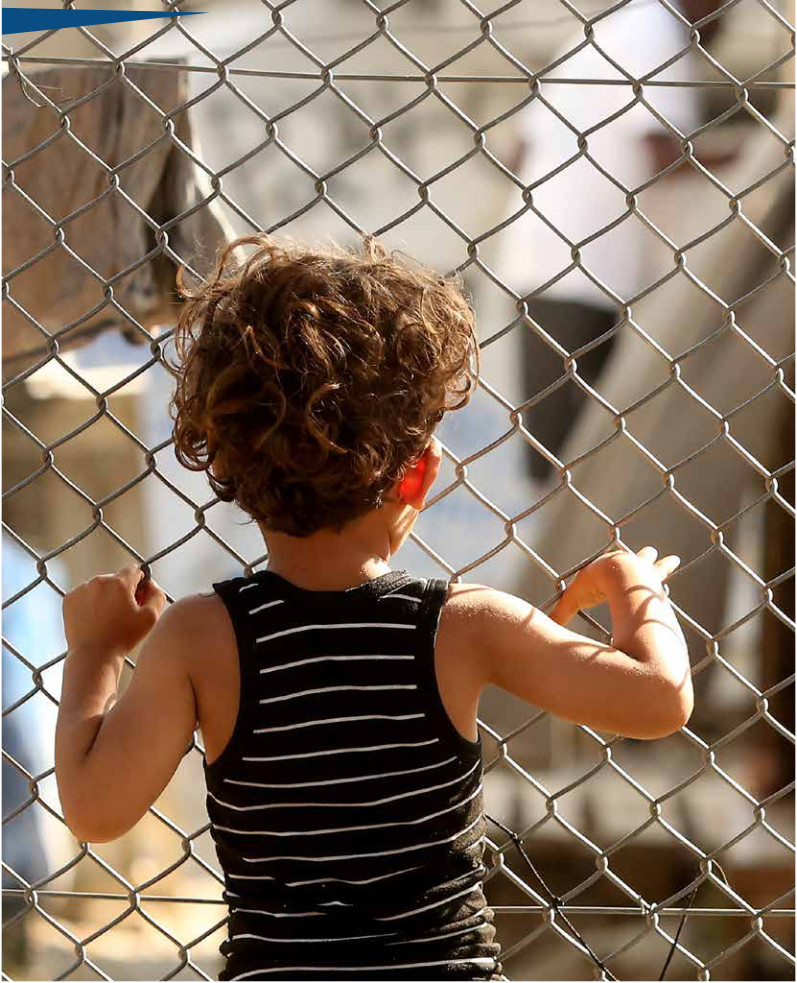
Tajikistan has served as a refuge for several waves of refugees from Afghanistan–such as those fleeing the civil war of the 1990s and the U.S invasion in the 2000s. Amid the Taliban’s rapid territorial advances in Afghanistan in 2021, and concerns about a potential influx of people fleeing the country, the Tajik government announced in July 2021 that it would accept up to 100,000 Afghan refugees. However, this commitment was never realised following the Taliban’s takeover in August. Instead, access to Tajik territory has remained severely restricted, and regular reports have documented Tajik authorities arresting, detaining, and forcibly returning Afghan refugees—including children.
In partnership with the International Legal Initiative (ILI), the GDP has submitted information to the UN Committee on the Rights of the Child (CRC) highlighting the country’s detention and deportation of child refugees and asylum seekers. This submission was prepared ahead of the CRC’s upcoming 101st session, due to be held in August-September 2026.
A core consideration for making this submission has been the Committee’s crucial and transformative support for the norm prohibiting the immigration detention of children. The Committee’s position is cogently laid out in the Joint General Comment (No. 23/No.4), issued with the Committee on Migrant Workers in 2017, which affirms that detention of children for immigration purposes is never in their best interests and thus represents a child rights violation in every instance, with no exceptions.
Legislative Concerns
Tajikistan’s legal framework governing migrants, refugees, and asylum seekers does not provide adequate safeguards to protect children from immigration detention or removal proceedings, nor does it ensure that the best interests of the child are a primary consideration in such proceedings.
- Although the 2014 Law on Refugees recognises in principle the need to prioritise protection of vulnerable persons, identifying this as one of the guiding principles governing work with asylum seekers and refugees under Article 3.1, it fails to provide sufficient protections to ensure child refugees and asylum seekers are not detained or deported due to their immigration status.
- Article 5(2) of the law authorises the detention of asylum seekers entering “without a permit,” and provides for deportation following the rejection of an asylum application or the cancellation or cessation of refugee status. Although the same article requires the principle of non-refoulement to be observed, it does not establish safeguards for children, or prohibit their detention or removal.
- The 2018 Law on the Legal Status of Foreign Citizens and Stateless Persons further provides for the administrative detention and expulsion of foreign nationals, and similarly fails to provide provisions addressing the specific rights and vulnerabilities of children in immigration proceedings
The Detention and Deportation of Afghan Children and Families
Since 2021, there have been regular reports of Tajik authorities arresting, detaining, and forcibly deporting Afghan refugees–amongst them children–as well as reports of non-admission and pushbacks, in violation of both national and international law. Despite repeated calls from international bodies urging Tajikistan to immediately halt deportations to Afghanistan, such campaigns have not only continued, but intensified in the past two years. Between October 2024 and July 2025, at least 485 Afghans–amongst them 334 refugees and asylum seekers–were deported.
According to the reports documented by the GDP and ILI, Tajik law enforcement agents typically arrest refugees in their homes and workplaces, briefly detain them, and conduct swift deportations–denying refugees the opportunity to even inform their relatives or gather their belongings. These removals do not appear to include individual assessments of protection needs or the right to access justice, and have affected recognised refugees in possession of UNHCR documentation, as well as children and other vulnerable groups.
Children have often been amongst those detained and removed. Alleged cases include:
- In August 2021, a group of 80 asylum seekers–amongst them 32 children–were denied entry to Tajikistan, beaten, and forcibly relocated to an island in the Amu Darya River, between the Afghan and Tajik borders. The group were denied access to vital resources including clean water, food, clothes, and shelter. UN experts, including the Special Rapporteur on torture, Special Rapporteur on migrants, and the Working Group on arbitrary detention noted grave concerns regarding the case, arguing that such conditions would amount to deprivation of liberty, as well as torture or other cruel, inhuman or degrading treatment of punishment.
- In May 2026, 42 families (totalling 168 Afghan refugees, amongst them children), were deported to Afghanistan from Jabbor Rasulov district in North Tajikistan, where they had lived for more than 20 years. They were unable to take all of their belongings. At a press conference on 27 July, a local government stated that “the reasons for the departure of Afghan citizens were their illegal residence, violation of residence and migration regulations, non-compliance with Tajik law, and the commission of particularly serious crimes.”
Recommendations
Amongst numerous recommendations, the GDP and ILI urged the CRC to recommend that Tajikistan:
- Immediately cease the arrest, detention, and deportation of refugee and asylum-seeking children.
- Investigate allegations of arbitrary detention, ill treatment, unlawful deportations, and pushbacks of refugee and asylum-seeking children and their families.
- Amend both the 2014 Law on Refugees and 2018 Law on the Legal Status of Foreign Citizens and Stateless persons to explicitly prohibit the immigration detention of all children–both accompanied and unaccompanied–to ensure that children are never deprived of their liberty on the basis of their or their parents’ migration status.