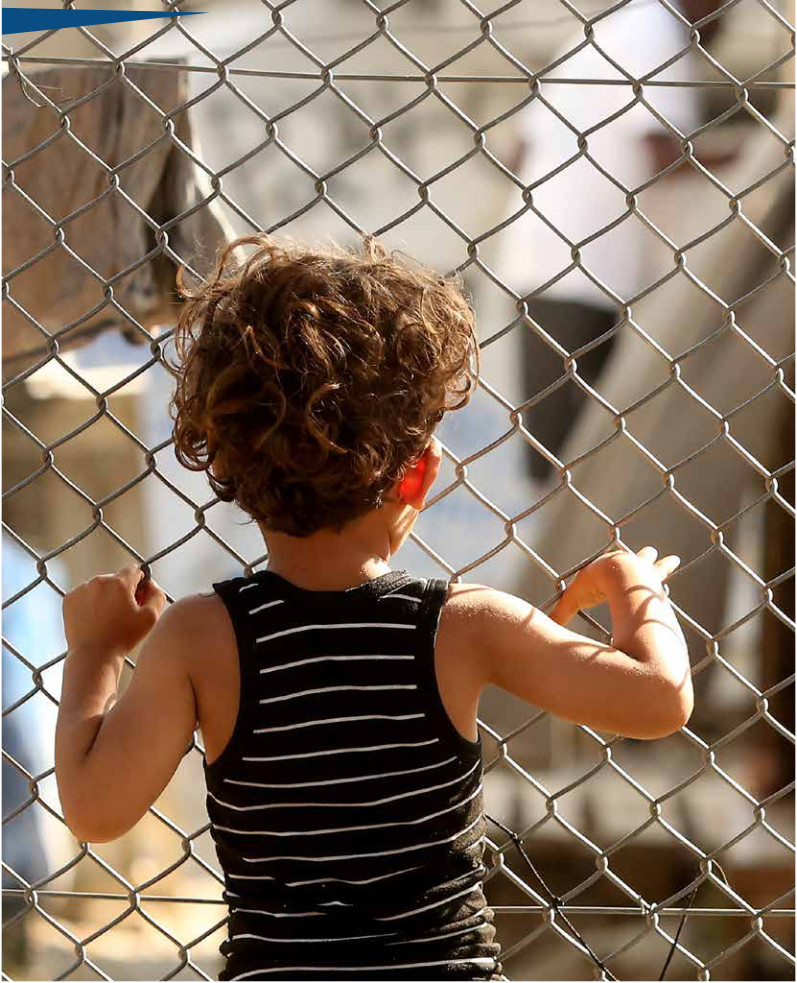
Despite legal safeguards and stated commitments to protect migrants, refugees, and asylum seekers—including those in detention—Thailand’s treatment of these groups continues to fall short of international standards. Together with our partner, the Cross Cultural Foundation, we raised multiple concerns with the Universal Periodic Review’s Working Group, urging critical reforms to the country’s detention policies and practices and broader compliance with its international human rights obligations.
Since Thailand’s third periodic review in 2021, the country has introduced important new legislation such as the Prevention and Suppression of Torture and Enforced Disappearance Act. As well as criminalising torture; cruel, inhuman, or degrading treatment of punishment; and enforced disappearance, the law also introduced various safeguards such as the requirement to record detentions and codified the principle of non-refoulement. Previously, in 2019, it also introduced Guidelines on Admission, Control, and Supervision of Foreign Nationals–drafted to ensure the treatment of detainees meets UN standards and complies with the country’s Royal Decree on Good Governance, providing important rights and protections for immigration detainees.
However, the country’s treatment of migrants, refugees, and asylum seekers continues to fall short of international standards. Serious concerns persist regarding detention conditions, with reports of inadequate medical care and observers describing conditions in some facilities as “life-threatening.” The absence of a comprehensive asylum law leaves refugees and asylum seekers in legal limbo, exposing them to arrest, prolonged or indefinite detention, and vulnerability to abuse. This is further compounded by continued forced removals and refoulement, including to Myanmar and China, despite well-documented risks of persecution. Recently, there have been rising concerns regarding the country’s facilitation of transnational repression through and within detention settings.
Together with our partner in Thailand, the Cross Cultural Foundation, we highlighted these concerns to the UPR Working group, calling for urgent action to address systemic failures in detention practices and for the country to ensure full compliance with international human rights obligations.
Amongst our recommendations, we called on Thailand to:
- Ensure that immigration detention is only used as a measure of last resort, when it is necessary and proportionate, and for the shortest period of time.
- Take legislative measures to ensure that vulnerable individuals–including asylum seekers, refugees, children, and victims of trafficking–are not detained as a result of their migration status. Authorities should also amend the Immigration Law to decriminalise irregular entry and stay.
- Amend the Immigration Act to establish a statutory maximum period for immigration detention. In cases where deportation is not possible within a reasonable timeframe–particularly for refugees and stateless persons–authorities must order their release into the community with appropriate legal status.
- Ensure that all persons seeking asylum are guaranteed unhindered access to asylum procedures and appropriate reception systems. Authorities must also cease all forced removals and pushbacks to countries where individuals may face persecution, torture, or other serious human rights violations, in line with the principle of non-refoulement.
- Address, as a matter of urgent priority, conditions concerns in all immigration detention facilities, ensuring that detainees have adequate access to health care services and that conditions comply with international standards.