Since the fall of the Albanian Communist Party in 1991, Albania has gained a reputation as a country of emigration. Significant numbers left the country soon after the regime collapsed amidst political instability and economic crash, and again following the collapse of several pyramid investment schemes in 1997. According to the country’s 2023 census, published in July 2024, the country’s population shrank by 14 percent in 12 years (from approximately 2.8 million to around 2.4 million).
At the same time, however, Albania has increasingly become an important transit country for many migrants and asylum seekers attempting to reach the EU via the Western Balkans–with a significant number entering irregularly from Greece. In light of this, the country has been a particular focus for “border outsourcing” efforts by the EU. In 2018 for example, the EU and Albania signed a Status Agreement (which entered into force on 1 May 2019) allowing for the deployment of Frontex teams–with Frontex quickly thereafter deploying 50 officers from EU states to the Albania-Greece border and the Adriatic Sea to control migratory flows. This was its first full-fledged joint operation outside the EU. The arrangement was significantly enhanced in September 2023 by way of a revised status agreement granting Frontex broader powers and scope within Albania.
The actions of both Frontex officers and Albanian border guards along the country’s border with Greece has drawn significant criticism. Testimonies collected by the Border Violence Monitoring Network (BVMN) for example, reveal officers denying arrivals the right to apply for violence and arbitrarily pushing them back across the border–with individuals reporting being beaten with batons and kicked during the process, before being left abandoned between Albania and Greece. In 2025, Frontex’s Consultative Forum on Fundamental Rights also noted concerning practices including the returns of people to Greece without removal orders; the placement of unaccompanied children alongside unrelated adults in reception centres; and the reliance upon self-declaration for age-assessments.
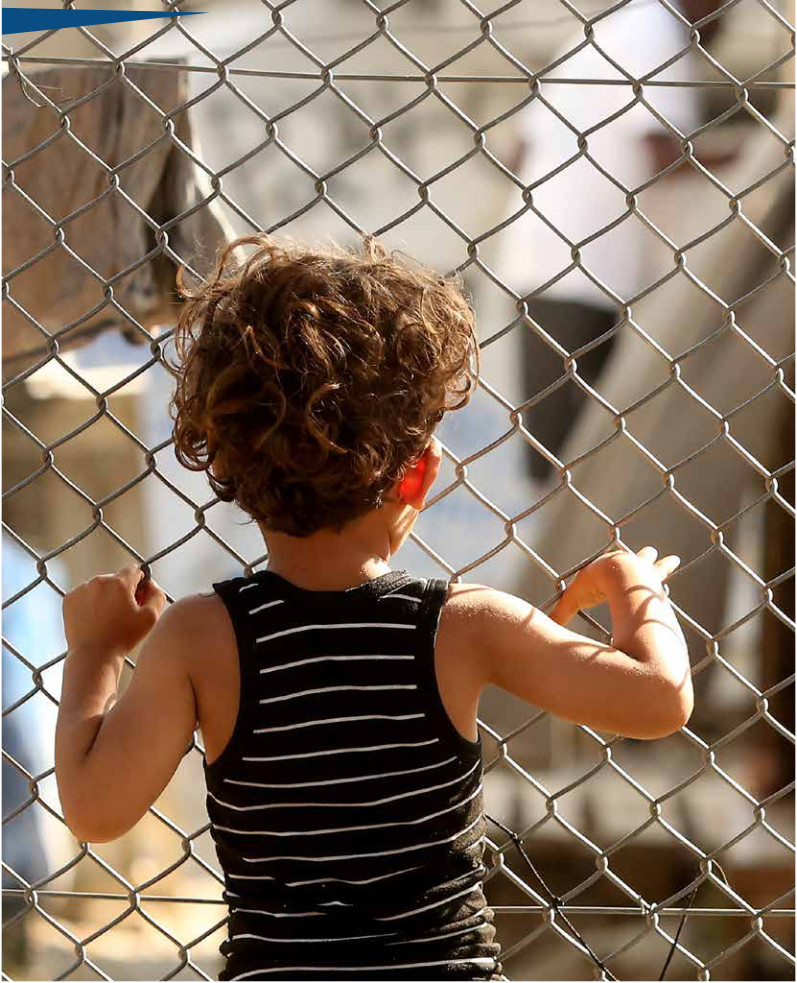
Albania operates one dedicated immigration detention centre–the Karreç Detention Centre, about 20km northwest of Tirana. The centre currently has capacity for 100 people. In a submission to the UN Committee against Torture (83rd Session, November 2025), the GDP has highlighted concerns regarding the country’s immigration detention policies and practices. Amongst these concerns:
- Lack of protections against detention for vulnerable groups within Albanian legislation;
- Long-standing concerns regarding conditions in the country’s sole dedicated immigration detention facility (Karreç Detention Centre);
- Reported use of ad hoc sites for detaining migrants and refugees, including facilities near the Greek border, and a police station in Durrës port;
- The facilitation of Italian-managed migrant detention centres on its territory.
In light of these concerns, the GDP encouraged the Committee to recommend the following:
- Ensure that any deprivation of liberty, including de facto detention at the border or in police stations, is based on an individual legal assessment of each case and is subject to judicial review.
- Ensure that deprivation of liberty is only used as a measure of last resort, when determined to be strictly necessary and proportionate in the light of an individual’s circumstance and for as short a period as possible.
- Amend national legislation to ensure vulnerable groups such as unaccompanied minors are protected from detention.
- Take urgent steps to ensure that conditions in facilities where migrants, refugees, and asylum seekers are detained meet international standards.
- Immediately cease the conduct of pushbacks, and ensure that any removal of a person from the country is subject to judicial order and review.
- Publish regularly updated and disaggregated statistics on the number of people who are detained for migration-related reasons.
- Remind the State Party that even though it has outsourced detention facilities to Italy for immigration detention reasons, it is equally responsible for any violations committed against these detainees during detention and removal proceedings taking place on its territory.