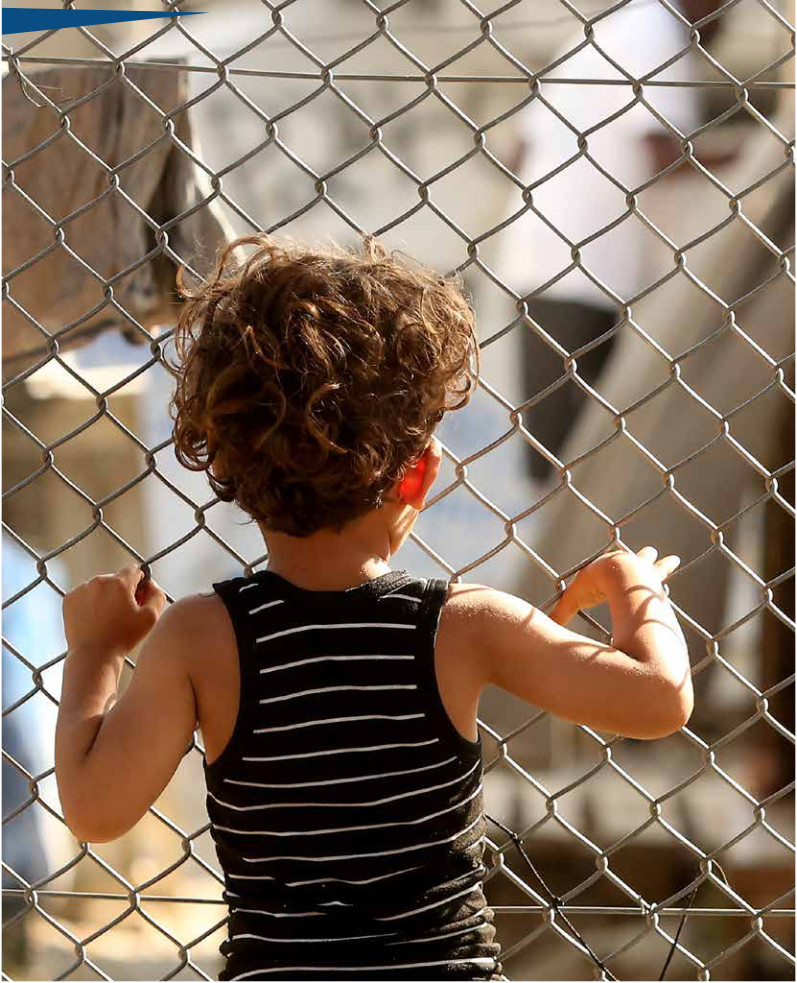
In a joint submission to the UN Committee on the Rights of the Child, the GDP and the Lebanese Center for Human Rights (CLDH) raise concerns regarding the treatment of children deprived of their liberty in the country–including detained migrant, refugees, and asylum-seeking children.
Migrants, refugees, and asylum seekers can be detained and deported through both criminal and administrative procedures stemming from their migratory status in Lebanon. The Law on the Entry and Stay of Foreigners in Lebanon and their Exit from the Country (1962), which provides the legal framework for immigration enforcement, applies to migrants as well as refugees and asylum seekers, as there is currently no asylum legislation in place. Critically, this law does not provide any protections for children, leaving them vulnerable to detention, imprisonment, and expulsion.
The issue of immigration detention of children in Lebanon is long-standing. In 2018, the UN Human Rights Committee highlighted in its Concluding Observations on the State Report for Lebanon that it had received “Reports of the prolonged administrative detention of asylum seekers and refugees other than Syrian nationals, including that of children, without due process, and their expulsion.” The 2019 UN-mandated Global Study on Children Deprived of Liberty reported Lebanon as one of a several countries where this practice was widespread.
CLDH and the GDP have also documented numerous more recent reports of children being detained for immigration-related reasons. In mid-April 2023, for example, during a major crackdown on Syrian refugees by Lebanese authorities, thousands of refugees were detained and deported, without being afforded the opportunity to challenge their removal or seek protection. Syrian child refugees were amongst those apprehended by security forces in raids, transported to barracks and other military units where many were interrogated and subjected to ill-treatment including bullying, abuse, and harassment, before they were handed to Lebanese soldiers at the border with Syria.
Lebanon has only one dedicated retention facility for foreigners—the General Security Detention Centre—which is used primarily for migrants detained for administrative reasons, particularly residency violations. Individuals who complete a criminal sentence in prison are transferred to the General Security Detention Centre afterward for immigration procedures. Therefore, when a person (including a child) is held in prison, it is generally because they have committed an offense, not merely for administrative reasons.
Mixing of adults and children is not systematic across all prisons. It tends to occur mainly during the initial stages of arrest or in certain security or military agency facilities, rather than being a uniform practice across the entire prison system.
On average, children as well as adults spend more than a month in pre-trial detention within Lebanese prisons, although some are held for up to a year. In general, prisons do not separate administrative and criminal detainees, and minors are often insufficiently separated from adults.