Introduction
The Global Detention Project (GDP) welcomes the opportunity to provide input to the Special Rapporteur on the Situation of Human Rights in the Islamic Republic of Iran ahead of her upcoming report. This submission addresses the Special Rapporteur’s request for information on “any significant developments regarding the human rights situation concerning Iran since 1 January 2025,” and examines in particular the situation faced by undocumented Afghan refugees in the country.
The GDP is an independent research centre based in Geneva that investigates migration-related detention laws, policies, and practices across the globe to foster adherence to human rights in the treatment of detained migrants, asylum seekers, refugees, and stateless persons.
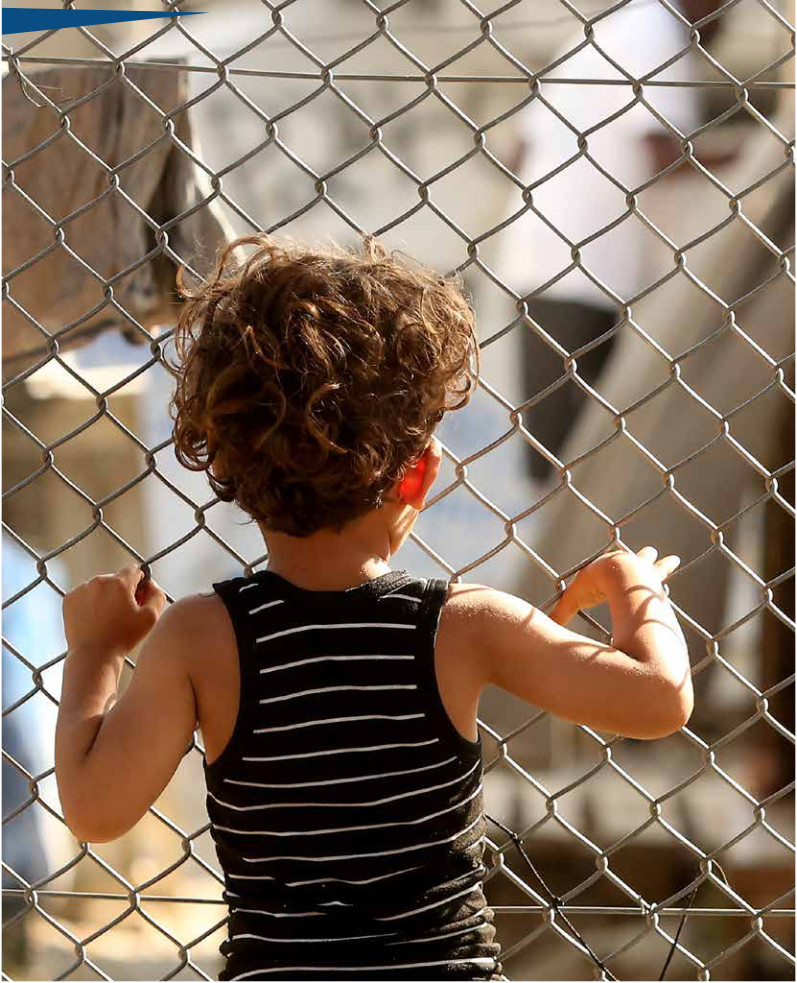
There are many critical human rights issues in Iran that must be addressed by both Iran and the international community. However, we urge the Special Rapporteur not to overlook the plight of the millions of undocumented Afghan refugees in the country, whose plight often gets overlooked amidst the surge of conflicts, tragedies, and humanitarian crises afflicting the greater Middle East today. Adding urgency to this plea are recent UN reports revealing that Iran has expelled more than half a million Afghan refugees since late June, coinciding with the end of Iran’s brief war with Israel.[1]
Context
Home to an estimated 3.49 million refugees and individuals in refugee-like settings, Iran is one of the world’s largest refugee-hosting countries. The majority of refugees in the country come from Afghanistan. Following the Taliban’s takeover of Afghanistan in August 2021, large numbers of Afghans fled to the country. UNHCR estimates that as many as one million fled across the border, joining those already in the country–such as the Afghan refugees who fled following the Soviet invasion of Afghanistan in 1979.[2]
While the government has historically welcomed refugees, the country has grown increasingly restrictive in recent decades, starting long before the Taliban takeover of Afghanistan. Since 2007, for example, Afghans have been banned from living in specific cities and provinces designated as “no go zones” unless they are residing within a specific settlement or married to an Iranian national.[3] During the peak of the COVID-19 pandemic, there were numerous reports of Iranian border guards beating, torturing, and forcibly returning Afghans. There were also reports of security forces forcing Afghans into the Harirud River to prevent them from entering the country from Afghanistan’s Herat Province, where many people drowned.[4]
The Taliban takeover of Afghanistan in 2021 led to a new humanitarian crisis in Iran, which spurred the country to adopt measures providing temporary status for some of the newly arriving refugees. Refugees who have been officially recognised by the government are given Amayesh cards (for Afghans) or Hoviat cards (for Iraqis) by the Bureau for Aliens and Foreign Immigrant Affairs (BAFIA). As of April 2025, only 770,000 people—a mere fraction of the country’s total refugee population—were in possession of this paperwork.[5] Entitling refugees to access basic services, they also serve as a safeguard against detention and deportation. According to UNHCR, these cards “effectively translate” into refugee status.”[6]
However, the situation of the more than two million undocumented refugees residing in the country is much more precarious. In 2022, the government launched the Conditional Protection Preparation Process in which it provided temporary protection cards to Afghans who arrived after August 2021. These registration cards–known as bargeh sarshomari–required a fee and temporarily formalised they stay in the country, granting them some access to services and protecting against deportation. By the end of 2022, 2.2 million Afghans had been registered and received residency slips.[7] In February 2025, however, the Interior Ministry confirmed that these cards would only remain valid until the end of the Iranian year (20 March 2025) and would not be extended again[8]–stripping millions of their semi-regularised status and leaving them at risk of detention and deportation.
The treatment of these undocumented refugees has become one of the world’s more important—though less widely acknowledged—human rights challenges. Helping underscore these challenges is a recent report by the International Organisation for Migration (IOM), published on 30 June 2025, which states: “In total, IOM has recorded 714,572 Afghan migrants who returned from Iran between 1 January and 29 June 2025. Of these, 99 per cent were undocumented and 70 per cent were forcibly returned. A growing concern is the rise in families being deported, marking a shift from previous months when most returnees were single young men.”[9]
Evidence of Collective Expulsions
Since 2021, Tehran has intensified efforts to crackdown on undocumented migration and anti-migrant sentiment has grown increasingly visible within state and public discourse. As Iranwire notes: “Today, social media buzzes with hostile comments towards Afghan immigrants, while violent attacks have become increasingly common. The murder of Elias Mohammadi, a 19-year-old cleaner thrown off a bridge on suspicion of “insulting the flag of the Islamic Republic,” is perhaps the most tragic example of this escalation.”[10]
Despite UNHCR issuing a non-return advisory issued in 2021, authorities have deported hundreds of thousands of Afghans since this date–and the numbers being removed are rapidly increasing. On 20 March 2025, Tehran set a deadline of 6 July for Afghans irregularly in the country to leave. Failure to do so will, Tehran stated, result in arrest. Some have since left voluntarily, but many have also been forcefully expelled. According to UNHCR, by 28 June over 640,000 Afghans had returned to Afghanistan–more than 366,000 of whom had been deported.[11]
Removal efforts involve widespread raids on homes and workplaces, even targeting children on the way to school, whereupon undocumented Afghans are arrested and detained. Reports indicate that even those with paperwork have been apprehended.[12] The Global Detention Project has been unable to ascertain the precise location of the detention facilities being used, however we have documented a facility referred to as the “Karaj Camp” near Tehran, and the “Askarabad Detention Camp” 57 kilometres southeast of Tehran. The Danish Refugee Council also refers to a “desert camp” near the border, where deportees can be held.[13]
Among the key concerns regarding the detention and deportation of Afghans:
- Testimonies indicate that those forcefully removed have been denied any access to legal recourse or an individualised review of their case–thus amounting to collective expulsion, in violation of Article 13 of the International Covenant on Civil and Political Rights, to which Iran is party.
- Reports suggest that an increasing number of women are amongst those being forcibly expelled into Afghanistan–despite the significant risks they face there. Notably, some unaccompanied women have reportedly been deported, even though Taliban law strictly prohibits women from travelling alone.
- Inhuman detention conditions, and allegations of violence against detainees–such as beatings, including with metal batons, and lack of food, water, and blankets.[14] In Askarabad Camp, detainees are reported to be moved to the basement at night, “which is a cramped, dark, unsanitary space,” and testimonies from 2020 allege that detainees are forced to pay for their own food, and have to remain stood upright all night.[15] Former detainees also report extortion, with detainees ordered to pay for their release.[16]
- Allegations of physical and verbal abuse during deportation, as well as extortion.[17]
Intertwining Security-Based Crackdown with Wider Deportation Campaign
During the recent Israel-Iran war, reports indicate that authorities significantly increased the rate at which they deported Afghans. UNHCR estimated that each day during the war, Iran deported more than 30,000 Afghans on a daily basis.[18] Indicating a wider intertwining of security-led operations with the country’s wider deportation campaign, a government spokesman was quoted by Reuters saying: “national security is a priority, and naturally illegal nationals must return.” [19]
Dozens, if not hundreds, of non-nationals were arrested and detained during the war on accusations of espionage. Afghans have been particularly targeted in these arrests– in several instances, authorities released videos of (reportedly) “forced confessions” recorded in police stations[20]–but observers have described many of the charges as “baseless.”[21]
In a joint statement concerning the situation after the start of its conflict in Israel, several UN experts—including the Special Rapporteur on Iran—expressed concern regarding these arrests, noting: “Post-conflict situations must not be used as an opportunity to suppress dissent and increase repression.” These experts highlighted the particular impact the crackdown has had on refugees, saying: “The conflict has also substantially exacerbated Afghan deportations from Iran, with 256,000 returned in June alone amid serious refoulement concerns.” They note that Afghans as well as members of other ethnic and religious minorities have been detained on accusations of “collaboration” or “espionage.”[22]
Recommendations
In light of the above considerations, we urge the Special Rapporteur to recommend that Iran:
- Abide by its non-refoulement obligations and cease all deportations of refugees and asylum seekers to Afghanistan.
- Indefinitely extend the validity of temporary protection cards issued to all Afghan refugees.
- De-emphasise enforcement mechanisms aimed at coercing vulnerable refugees to return to situations of harm or persecution and instead work with UNHCR and other humanitarian actors to prioritize community-based protections that enable refugees to live in safety and security as they await durable solutions.
- Work carefully with UNHCR to develop sustainable and equitable treatment of all refugees in Iran, and follow UNHCR advice on voluntary, safe, and dignified returns, taking into account the enormous challenges that many returned refugees have faced upon arrival in Afghanistan.
- End arbitrary detention of refugees and asylum seekers, and provide international monitoring bodies access to all detention sites holding undocumented Afghan refugees.
- Ensure that immigration detainees are able to challenge the grounds of their detention and/or removal before a court or other competent, independent, and impartial authority, and provided access to legal aid.
- Adopt the UN Convention on the Human Rights of All Migrants Workers and Their Families, which provides specific detention-related rights to people living outside their home countries, which can benefit both Iranians living aboard as well as non-citizens, including refugees, residing in Iran.
- Publish regularly updated and disaggregated statistics on the numbers of people who are detained for migration or asylum related reasons, including details about the detention centres that are used for these purposes.
- Cease discriminatory practices targeting Afghan and other minorities with unfounded accusations of espionage.
[1] CNN, “Iran expels half a million Afghans in 16-day stretch since recent conflict with Israel, UN says,” 11 July 2025, https://edition.cnn.com/2025/07/11/world/iran-expels-afghans-un-intl ; Al Jazeera, “Nearly half a million Afghans return from Iran after crackdown,” 8 July 2025, https://www.aljazeera.com/gallery/2025/7/8/nearly-half-a-million-afghans-return-from-iran-amid-crackdown
[2] UNHCR, “Iran,” https://www.unhcr.org/ir/refugees-iran
[3] Migration Policy Institute, “One of the World’s Largest Refugee Populations, Afghans Have Faced Increasing Restrictions in Iran,” 7 January 2025, https://www.migrationpolicy.org/article/afghan-refugees-iran
[4] Al Jazeera, “Afghanistan probes report Iran guards forced migrants into river,” 3 May 2020, https://www.aljazeera.com/news/2020/5/3/afghanistan-probes-report-iran-guards-forced-migrants-into-river
[5] UNHCR, “Operational Data Portal: Iran,” https://data.unhcr.org/en/country/irn
[6] UNHCR, “Are you a person that UNHCR Iran can support?” https://help.unhcr.org/iran/en/what-are-the-main-services-for-asylum-seekers-and-refugees-in-iran/are-you-a-person-that-unhcr-iran-can-support/
[7] European Union Agency for Asylum, “Iran – Situation of Afghan Refugees,” December 2022, https://euaa.europa.eu/sites/default/files/publications/2023-01/2023_01_COI_Report_Iran_Afghans_Refugees_EN.pdf
[8] 8am Media, “The census form for Afghan refugees in Iran is valid until the end of this year and will not be extended,” 23 February 2025, https://8am.media/fa/the-census-sheet-of-afghan-immigrants-in-iran-is-valid-until-the-end-of-this-year-and-will-not-be-renewed/
[9] IOM, 30 June 2025, https://www.iom.int/news/record-256000-afghan-migrants-return-iran-iom-warns-dire-funding-shortfall
[10] Iranwire, “How Persian Social Media Turned Against Afghan Refugees,” 3 June 2025, https://iranwire.com/en/features/141726-how-persian-social-media-turned-against-afghan-refugees/
[11] UNHCR, “UNHCR see sharp increase of Afghan returns in adverse circumstances from Iran to Afghanistan,” 28 June 2025, https://www.unhcr.org/news/press-releases/unhcr-sees-sharp-increase-afghan-returns-adverse-circumstances-iran-afghanistan
[12] Zan Times, “What happens inside an Iranian refugee detention centre?” 26 May 2025, https://zantimes.com/2025/05/26/if-he-returns-the-taliban-will-kill-him/
[13] Danish Refugee Council, “Afghans increasingly forced to return from Iran, an overlooked population in dire need of protection,” 7 May 2024, https://drc.ngo/resources/news/afghans-increasingly-forced-to-return-from-iran-an-overlooked-population-in-dire-need-of-protection/
[14] Danish Refugee Council, “Afghans increasingly forced to return from Iran, an overlooked population in dire need of protection,” 7 May 2024, https://drc.ngo/resources/news/afghans-increasingly-forced-to-return-from-iran-an-overlooked-population-in-dire-need-of-protection/
[15] Iranwire, “An Afghan’s Horrifying Memory of a Refugee Camp in Iran,” 23 November 2020, https://iranwire.com/en/features/68099/
[16] Zan Times, “What happens inside an Iranian refugee detention centre?” 26 May 2025, https://zantimes.com/2025/05/26/if-he-returns-the-taliban-will-kill-him/
[17] Radio Zamaneh, “How does the machine for “monsterizing” Afghan immigrants work?” https://www.radiozamaneh.com/830218/
[18] Al Jazeera, “Iran Tells Million sof Afghans to Leave or Face Arrest on Day of Deadlines,” 6 July 2025, https://www.aljazeera.com/news/2025/7/6/iran-tells-millions-of-afghans-to-leave-or-face-arrest-on-day-of-deadline
[19] Reuters, “Surge in Afghans Driven from Iran in Spy Hunt After Israel Attacks,” 2 July 2025, https://www.reuters.com/world/asia-pacific/surge-afghans-driven-iran-spy-hunt-after-israel-attacks-2025-07-02/
[20] M. Wafayee, “Accused of Spying for Mossad: Afghan Migrants Targeted by Iran’s Security Agencies,” 3 July 2025, https://www.wafayee.com/2025/07/accused-of-spying-for-mossad-afghan.html
[21] See: Center for Human Rights in Iran, “Iran Forcibly Deports Nearly 600,000 Afghan Migrants Amid Post-War Crackdown,” 9 July 2025, https://iranhumanrights.org/2025/07/iran-forcibly-deports-nearly-600000-afghan-migrants-amid-post-war-crackdown/
[22] OHCHR, “UN Experts Urge Iran to Choose Protection Over Repression After Ceasefire,” 4 July 2025, https://www.ohchr.org/en/press-releases/2025/07/un-experts-urge-iran-choose-protection-over-repression-after-ceasefire