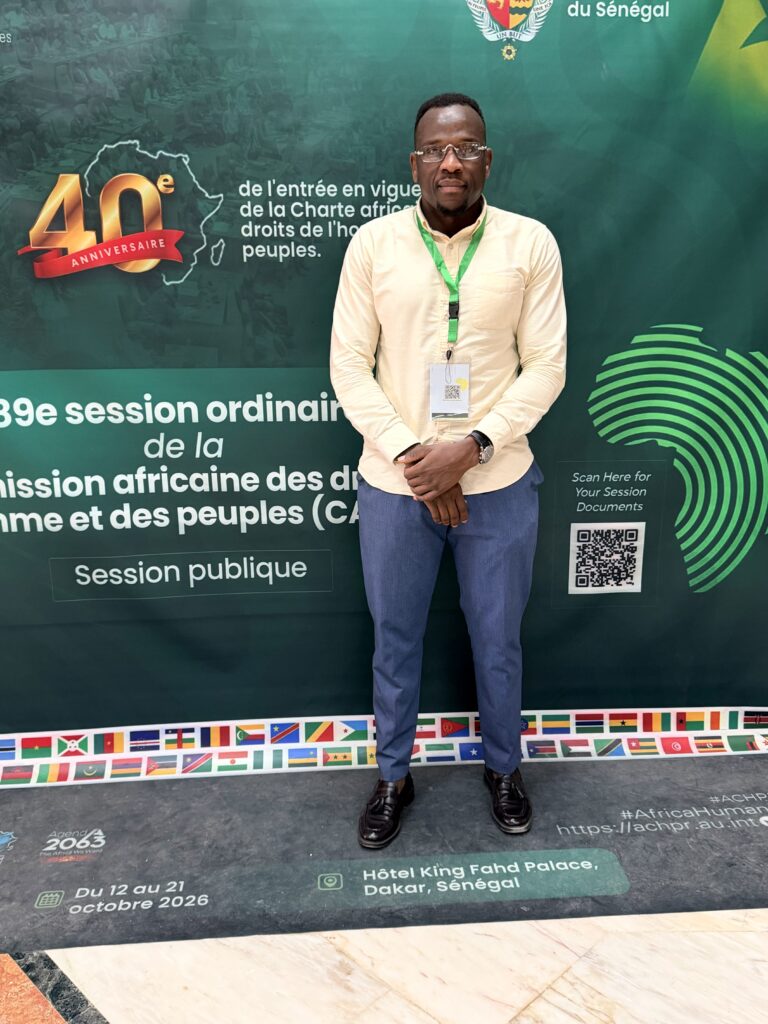
In October, the Global Detention Project (GDP) attended the 89th Ordinary Session of the African Commission on Human and Peoples’ Rights, held in Dakar, Senegal. Our participation provided an opportunity to advance advocacy on immigration detention and migrant protection, contribute to discussions on the growing practice of removing third-country nationals from the United States to African states, and strengthen our partnerships with organisations and human rights actors across the continent.
Representing the GDP, our Refugee Advocacy Coordinator Abdelaziz Muhamat participated in a range of sessions including a side event organised by Senegal’s National Human Rights Commission (CNDH), entitled “Migrants in Conflict with the Law: State of Play and Priority Actions.” Responding to a discussion of expulsions to Senegal, he raised wider concerns regarding the willingness of several African countries to accept third-country nationals deported by the Trump administration, and asked how African states can reconcile the acceptance of persons deported from the United States with their obligations under the African Charter and international human rights law.
Attending the presentation of the intersession activity report by the African Commission’s Special Rapporteur on Refugees, Asylum Seekers, Internally Displaced Persons and Migrants in Africa, he also heard the Rapporteur’s assessment of key developments and human rights concerns affecting refugees and migrants across the continent. The report addressed, among other issues, the US administration’s expulsions of African and non-African migrants to African countries and the continuation of migration agreements between the United States and several African states. It also highlighted concerns relating to immigration detention and collective expulsions.
The session also provided valuable opportunities to meet with civil society organisations, regional partners, and other human rights actors working on migration and refugee protection across Africa. These exchanges helped strengthen existing relationships, identify areas for future collaboration, and explore opportunities for joint advocacy.