Argentina, like much of South America, has historically not employed detention as an immigration enforcement tool and has recognised migration as a fundamental right. In recent years, however, the country has shifted towards a more restrictive approach. Under the populist firebrand President Javier Milei, this shift has accelerated considerably, including by amending the country’s legal framework to emphasise national security, encouraging Argentinians to report “illegal immigrants,” and issuing controversial decrees boosting the country’s detention and deportation powers.
Migration as a Human Right
For many years, Argentina prided itself for welcoming immigrants. The Constitution explicitly encourages immigration, and the country has maintained a relatively inclusive migration framework, granting foreign nationals broad rights and access to essential services, including healthcare and public education.
This approach was consolidated through the adoption of Migration Law No. 25,871 (Ley de Migraciones) in 2003, which replaced a more restrictive migration regime with a rights-based model. Article 4 of the law recognises that “the right to migrate is essential and inalienable to the person” and establishes that the Republic of Argentina guarantees this right “on the basis of equality and universality.” The law also provided the right to education (Article 7), health and social services (Article 8), and to vote in local elections (Article 11) regardless of status.
However, following the election of a centre-right coalition government in 2015, Argentina adopted a more restrictive approach to migration with the adoption of Decree No. 70/2017, which provided for expedited removals and new categories of inadmissibility. Although this decree was later repealed in 2021, it marked a significant shift towards a more security-oriented approach to migration.
Milei: A Securitised Approach to Migration
This approach has intensified significantly under President Milei, a close ally of US President Donald Trump who has issued a number of decrees and legal reforms that embrace a hardline and xenophobic approach to migration matters.
Since the beginning of Milei’s presidency in 2023, migration has increasingly been framed through the language of security, sovereignty, and the protection of public resources. The government has broadcast fearmongering claims that migrants are abusing Argentina’s healthcare system and that its migration system has allowed people with criminal backgrounds to enter and remain in the country. “Argentina will not be fertile ground for criminals,” announced a government spokesperson in mid-2025. Argentinians, for example, have been encouraged to use the Línea 134 hotline–originally established as a security mechanism–to report “illegal immigrants,” contributing to the conflation of irregular migration with criminality and reinforcing stigma surrounding migrant communities.
In May 2025, Milei issued an emergency decree (366/2025) curbing immigration and making it easier for authorities to deport irregular migrants and those who commit crimes. The decree states that “any uncontrolled influx of large numbers of immigrants into the country can pose a threat to national public security.”
Decree No. 366/2025 introduced amendments to Argentina’s Migration Law No. 25,871. Among the changes were expanded grounds for deportation; the establishment of a border rejection mechanism; new restrictions on access to judicial review; provisions for expedited removals; restrictions on access to healthcare and higher education; and the introduction of new requirements for obtaining permanent residence, which will likely push more people into irregularity.
The decree also expanded the country’s immigration detention regime. Under Article 70 of Law 25,871, detention was permitted where an expulsion order was final. However, the decree amended this article to permit the detention for reasons of public security, national defence, or public health even when there is no final expulsion order in place. Article 78 was also amended to permit a person’s detention at any stage of the judicial process, before an expulsion order is issued. Further, the decree increased the maximum length of detention to 60 days (an initial 30 days, extendable for an additional 30 days.)) The decree also strengthened the link between criminal proceedings and migration detention, ordering that when a foreign national is serving a sentence and courts have not ordered their expulsion, the National Directorate of Migration must instead “immediately request the issuance of a detention [retención] measure.”
Pablo Ceriani Cernadas, a scholar at Lanus University in Buenos Aires and former vice-chair of the UN Committee on Migrant Workers, told the Global Detention Project that the changes to Article 78 are particularly “alarming.” He said that permitting detention before an expulsion order is issued amounts to a form of “preventive immigration detention” that is “unsupported by any justifying requirement.” The extension of the detention time limit, according to Ceriani, also undermines Argentina’s commitments to international standards that require detention time periods be kept to an “absolute minimum.”
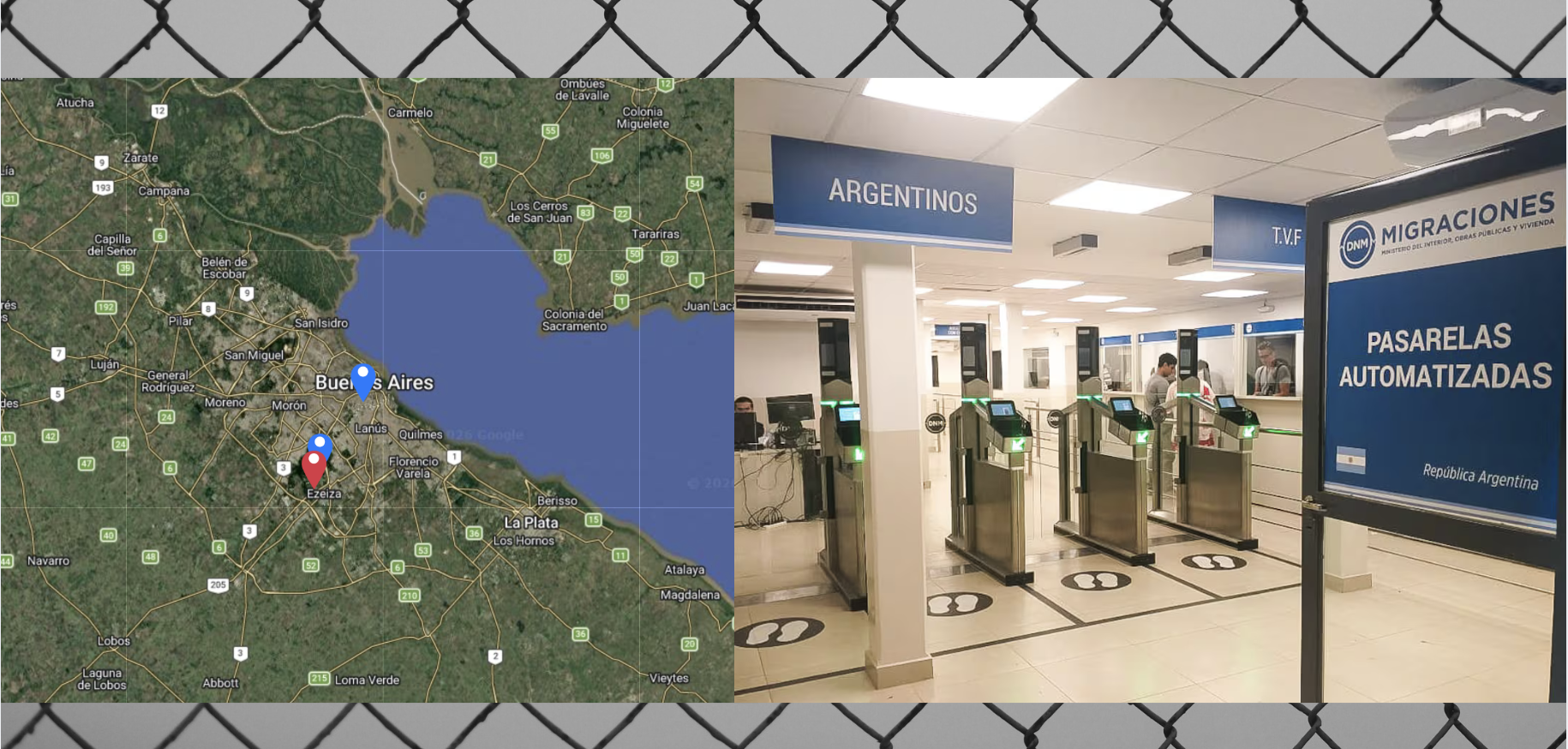
Importantly, however, the full impact of these changes on the ground remain difficult to assess because the government does not disclose data on the number of people detained. However, observers have reported increasing numbers of migrants being detained in Buenos Aires and at international airports.
Growing Criticism
Challenging the decree, the Inter-American Commission for Human Rights noted: “The IACHR stresses that migrant detention must be a measure of last resort and should never involve conditions that amount to cruel, inhuman, or degrading treatment. The IACHR warns that Decree No. 366 restricts access to rights including the rights to health, education, justice, employment, social security, and social services, which Argentina previously recognized for immigrants as it does for Argentine citizens.”
According to Cernadas, the decree itself is arbitrary and unconstitutional, as the government failed to satisfy the constitutional requirements for a Decree of Necessity and Urgency (DNU). The decree improperly replaced the ordinary legislative role of parliament in enacting far-reaching reforms to the Migration Law, without establishing that the ordinary legislative process could not be followed.
“Fake news was used to justify emergency reforms,” he explained to the GDP. The decree cites, among its justifications, the prospect that large numbers of migrants deported from the United States may seek to settle in Argentina–a claim, he notes, that is “closer to a fable” than reality.
The decree also cites claims of a “massive influx” of migrants. However, Argentina’s foreign-born population has shrunk significantly in the past century. According to census data, immigrants accounted for almost 30 percent of Argentina’s population in 1914. In contrast however, by 2022 they represented approximately 4.2 percent. As Cernadas notes: “there is no situation whatsoever that evidences or suggests a massive influx or large-scale arrival of migrants.”
Further, he argues, the decree violates several specific constitutional protections, such as the right to health and education. Article 3 of the decree, for example, which limits public healthcare access to permanent residents, is deemed unconstitutional: “The right to health is guaranteed to every person under a State’s jurisdiction—without any discrimination—in various human rights treaties that hold constitutional status.”
More Decrees
The Milei government has not stopped here. In September 2025, it adopted Decree No. 646/2025, regulating the General Law on the Recognition and Protection of Refugees (Law 26,165). The decree provides accelerated asylum decisions at the border (the admissibility of applications must be determined within 72 hours); and the authorisation of asylum request rejections when the relevant authority considers them “manifestly inadmissible”–such as if the application is “based on reasons of economic convenience” or allegations are “incoherent.”
Previously, in 2024, Decree No. 819 had amended the composition of the National Commission for Refugees (CONARE), to include a representative of the Ministry of Security, and Decree No. 942 had expanded the grounds for rejecting requests for international protection, reduced the time frame for filing appeals against decisions, and classified as criminal offenses certain actions that are not explicitly defined as unlawful under national legislation.
Responding to Decree No. 646, the Inter-American Commission on Human Rights criticised the decree, stressing that “even when dealing with groundless or abusive requests for international protection, States must grant the affected individuals a hearing and adequate review of the decision to reject their requests.”
More recently, in late July 2026 Milei signed a Decree of Necessity and Urgency enabling the government to bar, deport, or revoke the visas of foreigners who express hate or hostility towards Argentina or its national symbols. Reportedly, the decree was introduced in response to what the Milei administration perceived as a wave of hatred following Argentina’s participation in the World Cup, which intensified after Argentinian players and staff became involved in a post-match brawl with Spanish opponents after the World Cup Final.
“In light of recent displays of hostility toward the Argentine Republic and Argentines, the national government reaffirms that the defense of the nation, its citizens and its symbols is non-negotiable,” said the President’s office. “Anyone who attacks the Argentine Republic is not welcome in our country.”