Despite decades of reports documenting concerns about the operation and impact of its detention system, the UK is currently seeking to massively expand its immigration detention capacity. A recent report from His Majesty’s Inspectorate of Prisons highlights serious shortcomings in the treatment of female immigration detainees across the country.
Detention Capacity Expansion Plans
The UK government is currently pursuing a major expansion of the country’s immigration detention estate by up to 40 percent. In December 2025, Campsfield House Immigration Removal Centre (IRC) in Oxfordshire was reopened with capacity for 160 people, and the Home Office is now seeking to more than double its capacity to 400 beds. The facility had previously been closed down in 2018 in line with the then-Conservative government’s commitment to cutting the UK’s detention estate by 40 percent–a response to the Shaw Review, which had highlighted the serious harms detention causes to vulnerable people.
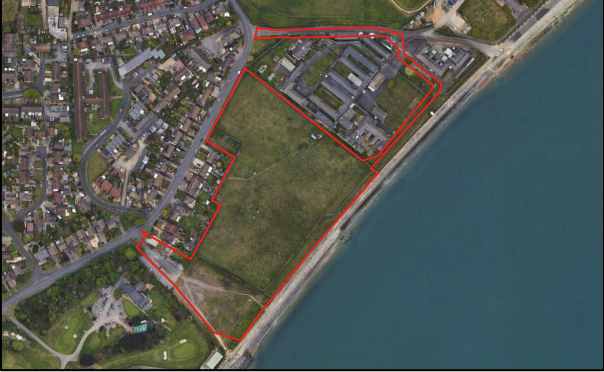
The government is also seeking to expand Haslar IRC, which is due to reopen in 2027, from 130 to 600 places. This centre was previously closed in 2015, its history plagued by reports of mistreatment and inhumane conditions. In 2011, a report by the HM Chief Inspector of Prisons (HMIP) described the centre as having “some of the worst accommodation in the immigration estate. Open, noisy dormitory units had contributed to tensions among detainees and provided an unacceptable environment.”
Deemed to be a matter of “national importance,” Haslar’s redevelopment plans have been pursued through the Crown Development route, under which applications are made directly to the Secretary of State via the national Planning Inspectorate, rather than being routed through the usual local planning authority process. Local councillors have expressed their opposition to the process, arguing that it provides insufficient space for local voices to be heard and lacks full transparency.
The plans to expand both facilities have been met with considerable backlash from civil society. In a public Objection to the proposed expansion of Campsfield House IRC, Right to Remain notes that “the Home Office submitted documents which present the expansion as neutral infrastructure and do not acknowledge the well-documented harm that immigration detention causes to the people held there.”
The Home Office has claimed that “Insufficient detention capacity is a critical bottleneck in the immigration system, reducing the Home Office’s ability to enforce more returns” (2026 Statement of National Importance), and stated that the expansion of these IRCs will translate to “more offenders and illegal migrants removed from our country.” However, as Amnesty International notes in its response to the public consultation on the proposed expansion of Campsfield IRC, in the majority of cases in the UK “the use of immigration detention ends with someone’s release into the community. The most recent release of immigration statistics confirms this, identifying that only 44% of people leaving detention were removed from the UK over the year ending March 2026.”
Ongoing Concerns
For decades, serious concerns have been raised about the UK’s immigration detention policies and practices, particularly regarding the absence of a statutory time limit on detention, safeguarding gaps, and the particular harm this causes vulnerable people. In 2023 whilst 65 percent of people were detained for under 29 days and 83 percent for under 2 months; 2 percent spent from 6 months to a year detained and 1 percent were detained for over a year. The potentially indefinite nature of immigration detention can itself be a significant source of psychological distress, as detainees may have no clear indication of when they will be released and can remain in a prolonged state of uncertainty.
The risks associated with prolonged and indefinite detention are particularly concerning given the vulnerability of many people detained in the UK. A recent HMIP report examining women’s experiences of detention identifies that: “40% of women detained in IRCs on 19 August 2025 were assessed to be an [Adult At Risk]. This assessment includes, but is not limited to, torture victims, potential victims of trafficking.”
According to Medical Justice, clinical safeguards designed to identify and protect vulnerable people continue to fail. Rule 35 of the Detention Centre Rules 2001, for example, provides for an IRC doctor to report if a detainee has a health condition that is likely to be adversely affected by detention (35(1)), is suspected of having suicidal intentions (35(2)), or may have been a victim of torture (35(3)). Such reports are intended to trigger a review of their continued detention. However, the numbers of these reports remain extremely low—particularly 35(1) and 35(2) reports. In 2023 for example, Medical Justice analysed 66 clients–and found that all of them were likely to experience further harm if they remained in detention. However, only 5 of them had a Rule 35(1) report. Of these, only 2 were released. More recently, in 2025, of 2,761 Rule 35 reports, only 222 were Rule 35(1) and (2) reports.
Vulnerable groups face particular trauma as a result of shortcomings in safeguarding measures within the UK’s detention estate. An insufficient number of female detention staff in some centres like Derwentside IRC, for example, has resulted in male staff conducting night checks on sleeping women–including women who had previously experienced male violence–which can be extremely distressing.
HMIP also highlights the fact that in centres where women are detained alongside men, women have faced restrictions on their movement and access to facilities as a means of managing risks posed by male detainees. Of particular concern, HMIP notes that women have been held alongside men who pose a known risk of sexual and gender-based violence. Regarding Dungavel House IRC, it notes: “At the time of our inspection, the centre held a male detainee assessed to pose a risk of harm to women, and we also discovered a male detainee with impending prosecutions for sexual offences had been held for over a year until shortly before our inspection.”
Support for Outsourcing of Detention
The UK’s efforts to expand immigration detention is not only domestic. Increasingly, externalisation is becoming embedded within political approaches to migration control. In a December 2025 asylum and returns policy statement (“Restoring Order and Control”), the Home Office stated that: “We will continue to explore the use of ‘return hubs’ which are safe third countries that failed asylum seekers can be sent to instead of their country of origin. Negotiations with a number of countries are ongoing.”
Notably, in May this year, the UK joined 45 other Council of Europe countries in endorsing “third-country return hubs,” framing these as part of states’ “undeniable sovereign right” to control borders (the Chisinau Declaration).
The Western Balkans have become a key target in the UK’s externalisation efforts. In May 2025, during an official visit to Albania, then Prime Minister Starmer announced that the UK was in discussions with “a number of countries” regarding the establishment of return hubs. While no such agreements are yet in place, a recent report by Collective Aid points to the UK’s efforts to “relocate enforcement away from its own borders” through security cooperation, border-control capacity building, intelligence sharing, and the deployment of UK border officers in the region. The report places such efforts within a broader sequence that is designed to end in the formalisation of return hub agreements: Stage 1) Capacity building/security cooperation; Stage 2) Security infrastructure development; Stage 3) Migration and return agreements; Stage 4) Return hub negotiations; Stage 5) Formalisation.
The GDP and other observers have repeatedly expressed concerns about immigration detention in countries like Serbia and Bosnia and Herzegovina, pointing to evidence revealing poor detention conditions, mistreatment of detainees, and arbitrary enforcement practices, which are enabled by inadequate monitoring, oversight, and legal safeguards. As Anna Gruber, Advocacy Manager at Collective Aid, explains: “Our documentation shows that return hub infrastructure is being built on systems already producing arbitrary detention, blocked asylum access, and documented violence against people detained. Formalising return hubs would not introduce safeguards, it would legitimise systems that fail to meet international protection.”