Since May, Sierra Leone has received two groups of third country nationals, deported from the United States under an agreement between the two countries, adding yet another to the growing list of third country deportation schemes orchestrated by the Trump administration. While government representatives in Freetown have described deportees being “checked into their hosting facilities,” observers have reported that arrivals have been held in de facto detention, with authorities restricting information about the location and conditions of this detention, and that they face undue pressure to return to their countries of origin.
The Agreement
In a Note Verbale written in November 2025 but published by the U.S State Department in April 2026, Sierra Leone expressed its willingness to accept up to 300 ECOWAS (Economic Community of West African States) citizens from the United States each year.
According to Third Country Detention Watch, this deal was agreed on the basis that the Trump administration would lift the visa ban on Sierra Leonean nationals–a promise that so far remains unfulfilled. The platform also notes that “in late 2025, the Trump administration pledged $129 million dollars in funding to Sierra Leone’s public health system, which may have influenced negotiations over the third country national deportation agreement.” Local media, however, cited the country’s Minister of Information and Civic Education, Chernor Bah, who stressed that “there’s no overt quid pro quo,” and that the arrangement is not linked to any direct concessions from Washington, including visa changes.
Numerous media outlets have reported that under the agreement, an organisation called “Kenvah Solutions (SL) Limited” has been contracted–backed by a 1.5million USD grant from the U.S government–to deliver key services such as temporary accommodation and humanitarian assistance for individuals deported to Sierra Leone under the scheme. Public information about this organisation, however, remains scarce, prompting one Sierra Leone news outlet to press the country’s Minister of Foreign Affairs, Timothy Kabba, for further details. The GDP has contacted Patrick Robin, the founder and Managing Director of Kenvah Solutions, requesting information about the services it is providing, but at the time of publication had not received a response.
To date, two deportation flights are known to have landed in Freetown. The first, on 20 May, brought nine nationals from Ghana, Guinea, Nigeria and Senegal. The BBC reports that it witnessed the arrival of this group, noting that they “looked forlorn,” and that “one deportee even resisted leaving the plane, before being physically removed.” A second flight arrived on the 18th June with “around a dozen” ECOWAS nationals.
Pressure to Leave, Fears of Refoulement
In its Note Verbale, Sierra Leone affirms that it will treat the deported ECOWAS citizens in a manner consistent with the country’s domestic legislation and international obligations, notably under the 1951 Refugee Convention and its 1967 Protocol, and the Convention against Torture and Other Cruel, Inhuman or Degrading Treatment or Punishment. In particular, it notes:
“[T]he government of Sierra Leone assures the Government of the United States of America that it would treat any ECOWAS citizens transferred from the United States to Sierra Leone in a manner that is in accordance with its international legal obligations and that the ECOWAS citizens removed to Sierra Leone would not be subjected to persecution on account of race, religion, nationality, membership in a particular social group, or political opinion, or torture in Sierra Leone or in any country to which the Government of Sierra Leone may further transfer them.”
By contrast, however, information provided to the GDP by an observer points to arrivals being detained and pressured to return to their countries of origin.
Following the arrival of the first group of deportees, one health official told press reporters that they would be housed in a hotel and were expected to return to their countries of origin within two weeks. The country’s Foreign Minister, meanwhile, told the media that they would support arrivals for 90 days before their departure to home countries–a time period that is consistent with Article 3 of the ECOWAS 1979 Protocol on Movement of Persons and Establishment, which provides the right for ECOWAS citizens to stay in another Member State for 90 days.
Regardless of the discrepancy in timings, the emphasis on individuals leaving Sierra Leone is clear. This was further underscored by information provided to the GDP by an observer–which was also reported by the Associated Press–that deportees had been provided with a pamphlet upon their arrival describing Sierra Leone as a “temporary transit location” and stating that the government was working to “return you home as quickly and safely as possible.” The materials reportedly made no reference to asylum. A factsheet, published by a local media outlet, noted that “the International Organization for Migration (IOM) is supporting repatriation and international coordination processes.”
Lawyers representing the deportees argue this raises serious concerns regarding refoulement, given that many of the deportees had U.S protection orders in place shielding them from deportation to their home countries. (As the GDP has documented on this blog, third country arrangements have consistently been associated with direct and indirect refoulement.) Domestic legislation, however, provides protection against refoulement (see below).
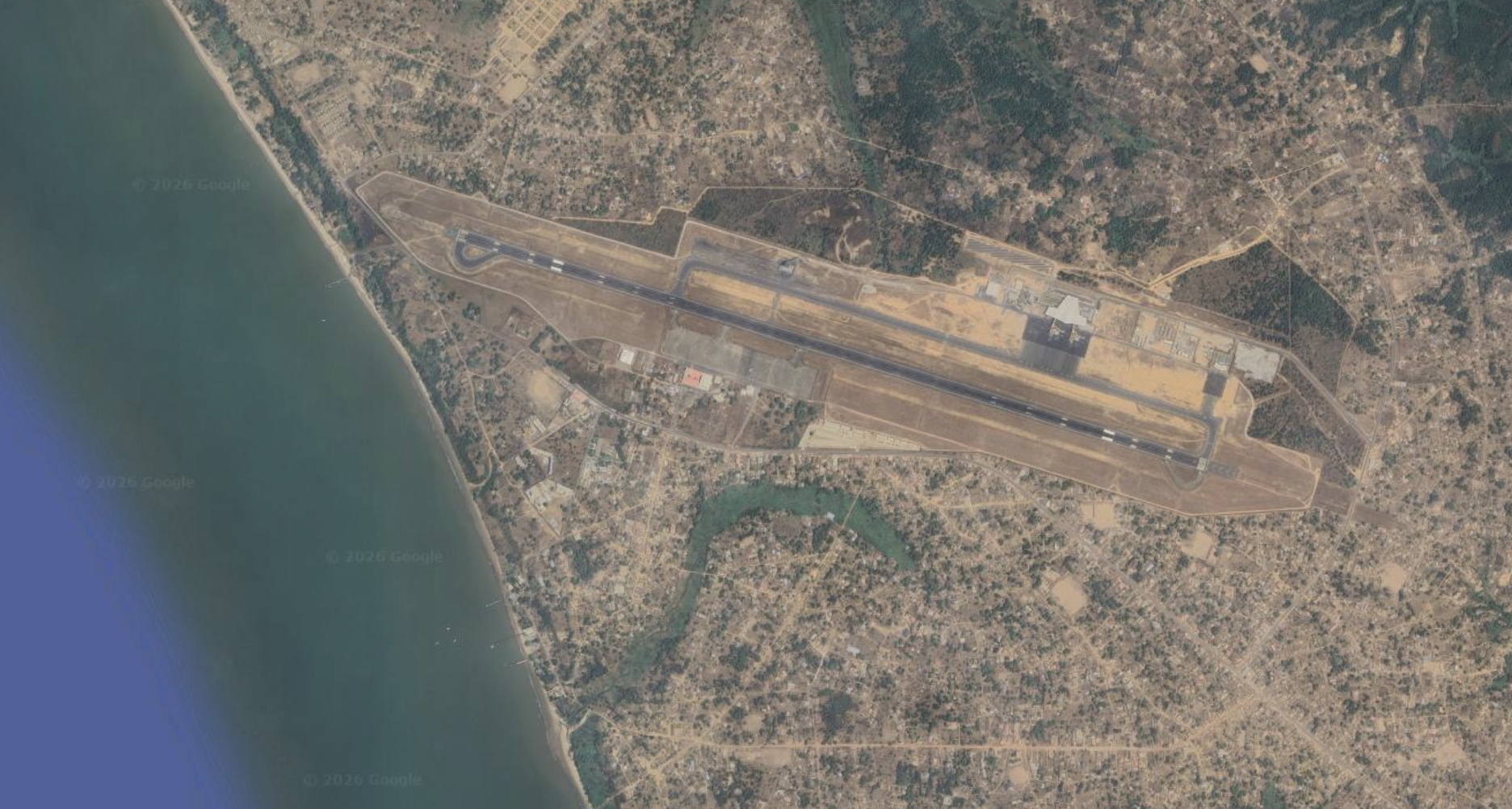
The exact whereabouts of the deportees is currently unclear, however an observer told the GDP that they had been detained in a hotel upon arrival, with armed security. Authorities, however, are alleged to have restricted access to information regarding the location of the hotel and the exact conditions and regime inside. Local media reported the use of a hotel in Lungi, which is where the country’s primary airport is also located. There are several hotels reported to be in Lungi, including Lungi Gateway Hotel, Lungi Airport Lodge, LIA Hotel, and Hotel Airport View.
Legal Context
The entry, stay, and exit of non-nationals are governed by the 1965 Non-Citizens (Registration, Immigration, and Expulsion) Act. Article 19 provides numerous categories of “prohibited immigrants,” such as “any idiot or insane person,” “any person who is without visible means of support or is likely to become a pauper or a public charge,” and any person who “has not in his possession a valid passport or in the case of a privileged African a travel certificate.” Article 21 further permits the state to order “any non-citizen” to leave the country, and Article 24 provides that any person issued an expulsion order can be detained. The irregular entry of a “prohibited immigrant” is treated as a criminal offence by Article 28, with punishment of up to six months in prison.
Vulnerable groups such as children are not protected from detention and removal, and the country’s legislation explicitly provides for the detention of refugees. Article 17 of the 2007 Refugees Protection Act states that “a refugee who has been arrested may be detained in a prison, police cell or a convenient place holding females and minors separate from male adults.”
Although the Refugees Protection Act provides for the non-return of refugees and their families (Article 16(1), it includes exceptions–“on the grounds that the expulsion is necessary for reasons of national security or in pursuance of a decision reached after due process.” At the same time however, the Act incorporates the principle of non-refoulement, with Article 16(2) stating that:
“Notwithstanding subsection (1), no refugee or a member of his family shall be expelled, extradited or returned from Sierra Leone under any circumstances whatsoever to a country where there are substantial grounds for believing that he would be in danger of being subjected to torture, within the meaning of Article 3 of the United Nations Convention Against Torture and Other Cruel, Inhuman or Degrading Treatment or Punishment.”
According to information received by IOM, the number of detention cases in the country is generally low. The Sierra Leone Immigration Department (SLID), which oversees immigration detention, does not have a dedicated detention centre, and instead usually outsources temporary detention to the Sierra Leone Police. This raises particular concerns, given previous findings regarding poor conditions in police stations. For example, a 2022 police investigation identified “deplorable and inappropriate” detention facilities, particularly for women and children.
Although the country has asylum legislation in place (the Refugees Protection Act of 2007), Sierra Leone receives relatively few asylum applications, and its asylum system is limited in scale and capacity. As UNHCR notes, it is marked by “a lack of resources, limited infrastructure and the need to strengthen institutional capacities.”