Despite recent setbacks in passing migration and asylum reforms, Dutch authorities are now seeking to pass standalone legislation to make irregular stay a criminal offence. The proposed measure has been widely criticised as incompatible with international human rights standards. Set against a backdrop of stricter family reunification rules, expanded return measures, a newly introduced two-tier asylum system, and persistent concerns surrounding detention conditions and regimes, the effort is part of the country’s increasingly restrictive approach to migration.
Efforts to Criminalise Irregular Stay
The push to criminalise irregular stay first emerged in 2025, when the Dutch House of Representatives (Tweede Kamer) passed a package of asylum reforms that included provisions in the so-called ‘Emergency Asylum Law’ to criminalise irregular stay as well as criminalising the provision of assistance to people without residence. These reforms, however, proved highly controversial, with opposition parties, as well as bodies such as the Council of State and NGOs like Amnesty International Netherlands and VluchtelingenWerk Nederland expressing strong opposition.
VluchtelingenWerk Nederland argued that it would make undocumented people less likely to seek medical treatment, and noted that “this law does not lead to better policy, but undermines society. In practice, people will not leave sooner, but will disappear into anonymity. The real problems – such as long waiting times and a stalled asylum system – are not solved by it.”
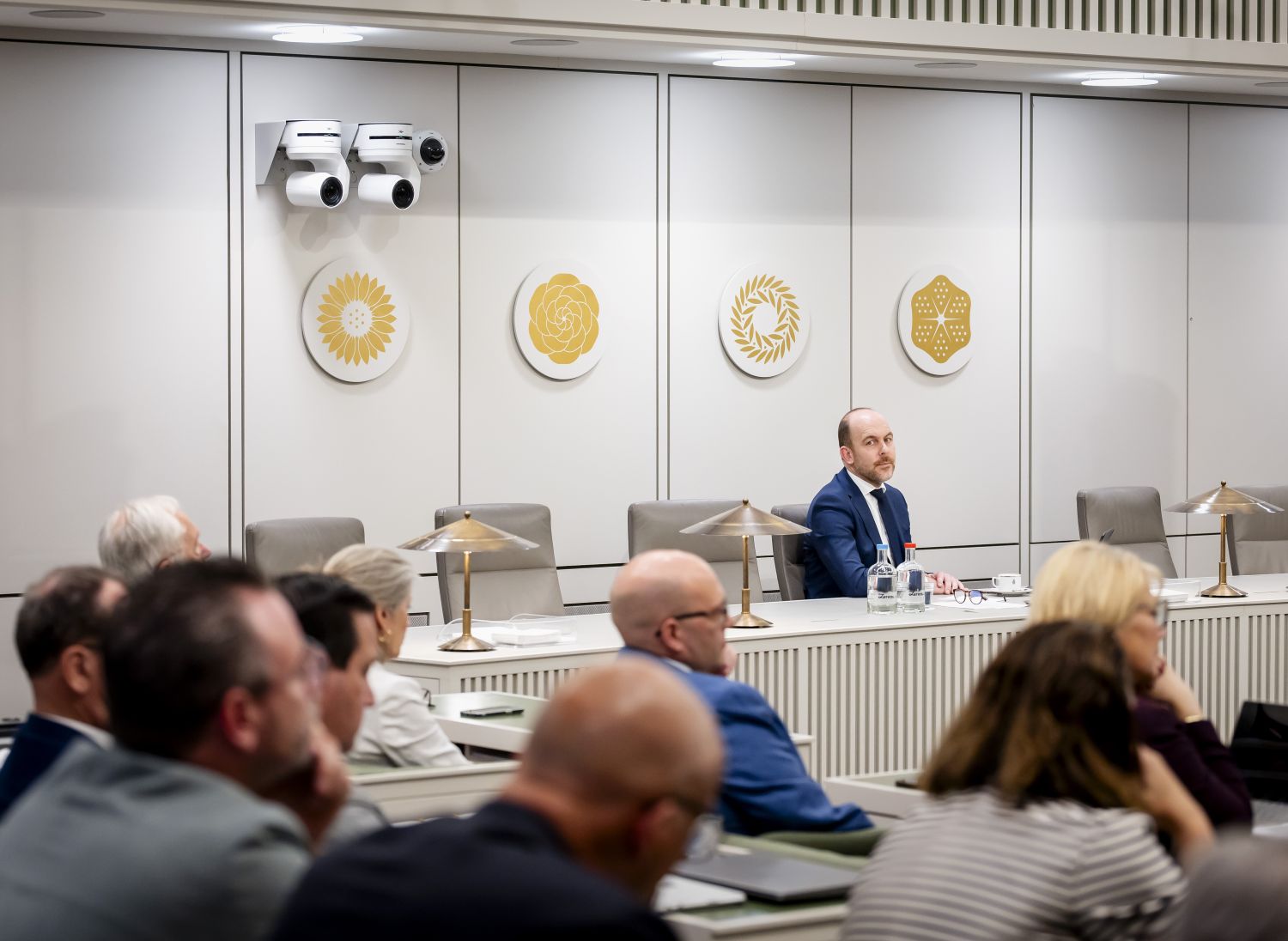
Although the bill was voted down by the Senate (Eerste Kamer) 44 votes to 31, the country’s Asylum Minister Bart van den Brink reportedly is seeking to reintroduce the criminalisation measure through separate national legislation (other measures in the Emergency Asylum Law were revived through the country’s implementation of the EU Migration and Asylum Pact).
The criminalisation of irregular stay, however, runs counter to international human rights standards. Critically, a 2025 joint general recommendation issued by the Committee on the Elimination of Racial Discrimination and the Committee on the Protection of the Rights of All Migrant Workers and Members of Their Families unambiguously states that: “The irregular entry, transit or stay of migrants cannot be considered a crime. The criminalization of irregular migration will therefore always exceed the legitimate interests of States in governing human mobility.” The Committees further underscore that irregular migration must be addressed “from a comprehensive rights-based and humanitarian perspective,” and that states must guarantee the right to seek asylum regardless of irregular entry.
Researchers have also demonstrated that the criminalisation of irregular stay leads to a “net-widening” of detention, significantly expanding the number of people subject to state control and adding an additional layer of punishment and custody for non-nationals. As PICUM has noted, criminalisation leads to “more, not less, harm and suffering.”
A Two-Tier Asylum System
The effort to criminalise irregular entry and stay is part of a wider programme of restrictive asylum and migration reforms. On 21 April 2026, the Dutch Senate passed a new law establishing a two-tier asylum system in the country. Under this framework, an A-status is granted to those fleeing war and natural disasters, while a B-status applies to those fleeing persecution due to their sexual orientation, ethnicity, or religion. The practical implications of this distinction are significant, with B-status holders receiving a limited residency permit and no right to family reunification.
IMMIGRATION DETENTION IN THE NETHERLANDS
Border vs Territorial Detention
Immigration detention in the Netherlands has increased in recent years, rising from 2,550 individuals in 2020 to 4,440 in 2024–although numbers are still significantly lower than in previous decades, such as in 2008 when 8,585 non-nationals were detained.
The country operates two separate immigration detention regimes (bewaring, or custody): “border detention” (Article 6, Aliens Act), whereby an individual is detained at the external border trying to access the Schengen area in the Netherlands, and “territorial detention” (Article 59, Aliens Act) when persons are undocumented and subjected to a return decision.
A key difference between “border” and “territorial” detention regimes is that in the case of border detention, detainees are not considered to have formally entered the Netherlands. Since this measure forms part of the border protection regime–with the aim of preventing undocumented entry–it is not deemed to be imposed with a view to expelling the migrant in question, as is the case with territorial detention. Experts consider this form of formal entry refusal a legal fiction, as the persons are already physically present within the state’s territory and are thus subject to its jurisdiction.
The maximum length of detention differs for these two regimes: those held in “territorial detention” can be confined for up to 18 months, while those detained under the “border” regime can be imposed for up to four weeks (although if the asylum request at the border is denied and entry refused, border detention can be prolonged).
Carceral Regimes
The country operates several administrative immigration detention facilities, including Rotterdam Detention Centre (for men), and Zeist Detention Centre (for women, families with children, and unaccompanied minors), as well as Schiphol International Airport (the Justitieel Complex Schiphol). Persons detained under border procedures may be held in the Schiphol facility, while those detained under the territorial procedure can be placed in any of the three centres. The country also operates a penal facility designated for the incarceration of foreign nationals without legal status (Ter Apel Prison).
A longstanding concern is that while detainees held in “border” detention are governed by the Regulation on Border Accommodation/Border Detention Act (Reglement Grenslogies)), those in “territorial” detention are governed by the Penitentiary Principles Act (Penitentiaire Beginselen Wet)–the same legislation that governs criminal detention. The fact that immigration detention is regulated by the same legislation that applies to penitentiary detention has attracted criticism. A particular case in point is the fact that the Penitentiary Principles Act permits the use of solitary confinement as a disciplinary sanction for up to two weeks, while the Border Holding Area Regime Regulations do not provide such option. In its monitoring visits, the CPT has noted routine use of solitary confinement at Rotterdam detention centre.
Since 2007, the CPT has urged Dutch authorities to remove territorial detention facilities from the scope of the Penitentiary Principles Act–a point that the Committee raised again following its latest visit in October 2025. Instead, the Committee has called for “specific rules reflecting the administrative nature of immigration detention.” This has also been called for by the Dutch Ombudsman. While a ‘Return and Detention of Foreign Nationals Bill’–which would establish a single, dedicated legal framework governing immigration detention– was tabled before Parliament in 2015, it is yet to be adopted.
Conditions inside facilities have continued to draw criticism. In 2025, the CPT found a concentration of detainees at Rotterdam Detention Centre with complex physical and mental health needs and substance-use disorders that the facility could not adequately care for. Observing that many of the detainees had experienced homelessness prior to detention, the Committee noted that the “level of care the facility can provide does not match the needs.” Previously, in 2022, reporting by Dutch newspaper Trouw documented years of inadequate medical care at DC Rotterdam, including a detainee waiting four months to see a doctor after a nurse classified his request as non-urgent.