Since late 2025, the United States has been deporting individuals, including those with existing protection orders, to Equatorial Guinea under a secretive bilateral temporary transfer agreement that is similar to others set up by the US with countries across Africa and Latin America. Reports indicate that upon arrival the deportees have been detained in a hotel in Malabo, and pressured to voluntarily return to the countries from which they originally fled. Documented refoulement has already occurred, and UN human rights experts have issued an urgent appeal, warning that further returns would place individuals at imminent risk of irreparable harm.
Hotel Detention in Malabo
In October 2025, Equatorial Guinea agreed to accept third country nationals removed from the United States. According to Third Country Deportation Watch, negotiations took place alongside discussions over tariffs and U.S investment in Equatorial Guinea’s gas industry. In exchange for accepting third-country nationals deported from the United States, Equatorial Guinea received 7.5 million USD in State Department funds. As a Senate Foreign Relations Committee minority report noted, this sum far exceeds all U.S foreign assistance provided to the country over the previous eight years combined.
In a Note Verbale published by the U.S State Department in June 2026, Equatorial Guinea stated that:
“[T]he Government of the Republic of Equatorial Guinea assures the Government of the United States of America that it will treat any third-country national transferred by the Government of the United States of America to Equatorial Guinea in a manner consistent with its international legal obligations and that third country nationals transferred to Equatorial Guinea will not be subjected to persecution for reasons of race, religion, nationality, membership in a particular social group, or political opinion, or to torture, in Equatorial Guinea or in any other country to which the Government of the Republic of Equatorial Guinea may subsequently transfer them.”
Between November 2025 and April 2026, three ICE flights delivered 32 people to Malabo from ten countries – Angola, Cameroon, Chad, the Democratic Republic of the Congo, Egypt, Eritrea, Ethiopia, Georgia, Ghana, and Mauritania. Most, if not all, had been granted withholding of removal or protection under the UN Convention Against Torture by U.S immigration judges. Reports indicate that many were not informed of their destination until they were on the plane.
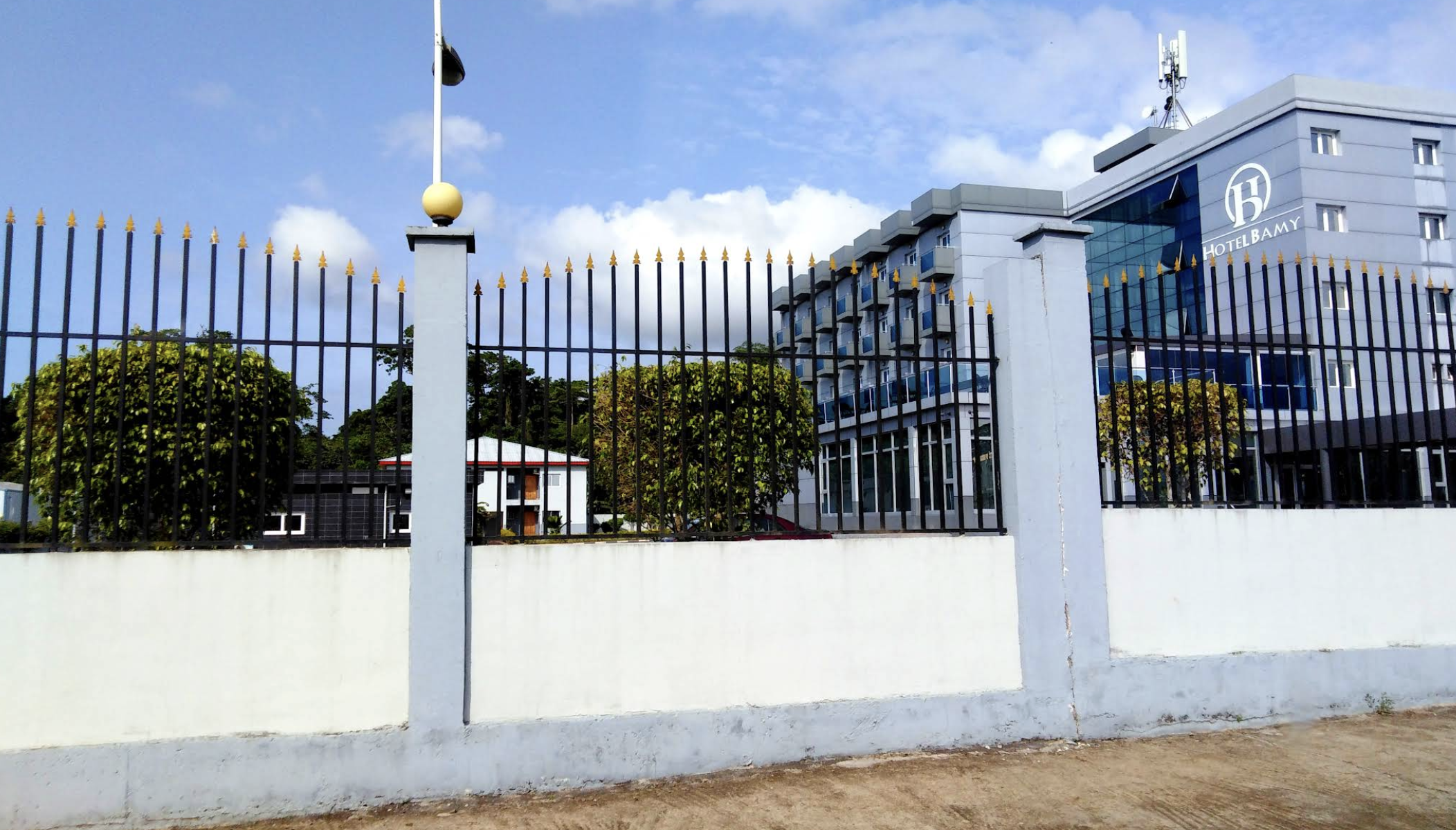
According to the Associated Press, on arrival they were detained in the Bamy Hotel in Malabo. The hotel, which is reportedly owned by the President’s family, is situated to the west of the city close to Malabo International Airport. According to detainees who have spoken to media outlets such as Associated Press and the Guardian, they have been held without access to soap, toothbrushes, or clean clothes, and those who have fallen ill have received inadequate medical care.
Associated Press recounted one detainee’s testimony: “They sleep in fancy rooms that rarely get cleaned, he said, and they are served rice and meat at white cloth tables set up inside the hotel’s restaurant. After being sickened by the food several times, the East African man said he eats the bare minimum.” When one man contracted Malaria and Typhoid, he was not taken to a hospital for treatment until his condition had seriously deteriorated.
UN experts, including the Special Rapporteur on Migrants and the Special Rapporteur on Torture have also noted their detention. In an April statement, CSO EG Justice reported that deportees have been “restricted from accessing legal support, denied medical care and basic hygiene supplies, and exposed to serious health conditions.”
“Imminent Risk of Refoulement”
Equatorial Guinea has no asylum framework, and authorities informed detainees that asylum was not available and that they would be returned to their countries of origin once travel documents were obtained, in apparent violation of the country’s own 60-day detention limit for foreign nationals.
The consequences have been severe. As of early March 2026, 17 of the original 29 individuals from the first two flights have been refouled to their home countries, the very countries from which U.S courts had determined they could not safely be returned. Among them was Diadie Camara, who had escaped hereditary slavery in Mauritania and had submitted an asylum application in Equatorial Guinea with civil society support, but who was returned to Mauritania on 25 December 2025 upon which he went into hiding.
Of the 12 individuals remaining in Equatorial Guinea, as of June 2026, only two have been able to apply for asylum, with assistance from civil society organisation EG Justice. On 13 May 2026, UN human rights experts issued a statement warning that at least nine individuals detained in Malabo faced “imminent” risk of refoulement, co-signed by a representative of the African Commission on Human and Peoples’ Rights. The experts noted that individuals had been presented with temporary travel documents (‘salvoconductos’) and told deportation was imminent. The statement noted that “states must ensure that no one is returned, directly or indirectly, to a situation where their life, freedom or physical or mental integrity would be in danger.”
Later, on 5 June, human rights groups including Asian Americans Advancing Justice, EG Justice, the Global Strategic Litigation Council, and the Institute for Human Rights and Development in Africa filed a complaint before the African Commission on Human and People’s Rights against Equatorial Guinea, on behalf of 14 African migrants deported from the US between November 2025 and April 2026.
The complaint alleges violations of international human rights law, and calls for an urgent halt to further deportations, improved detention conditions, access to legal counsel, and compensation for those already returned. Bella Mosselmans, director of the Global Strategic Litigation Council, described the process as “a cycle of hell,” noting that some deportees had been effectively rendered stateless after their home countries refused to admit them.
A History of Arbitrary Detention
The choice of Equatorial Guinea as a receiving country raises particular concerns.
Equatorial Guinea’s treatment of non-national migrants has been a long standing concern. In particular, observers point to its troubling detention record–in particular, its actions in late 2021 when authorities launched a mass immigration crack down. Security forces stopped people on the street on the basis of “African foreign facial features,” regardless of their immigration status, and detained those who could not immediately produce identification.
According to local organisations, more than 500 people, including nationals from Cameroon, Nigeria, Senegal, Cote d’Ivoire, the Central African Republic, Chad, and Mali, were detained across several cities. Dozens alleged severe beatings and ill-treatment during arrest and detention. The sudden influx of detainees led to severe overcrowding in police stations, with some non-nationals held in sports facilities including the Malabo Sports Complex. The vast majority received no legal assistance, and were ultimately denied access to due process. Others were deported to their home countries without receiving legal representation or prior notice.
In April 2022, Amnesty International called for the immediate release of four West African men who had been held in a Malabo police station since November 2021, far exceeding the 60-day limit under Equatorial Guinean law (Organic Law 3/2010), without access to legal procedures to challenge their detention.
EG Justice has also warned that third country deportees risk torture or inhumane treatment, given the country’s record of systemic illegal mass arrests and incarceration in squalid conditions. The State Department’s own 2025 Trafficking in Persons Report raised significant concern about government officials’ complicity in trafficking crimes. Equatorial Guinea also has a documented history of forcibly deporting Cameroonian nationals, who have fled persecution, back to Cameroon.
As Tutu Alicante, Executive Director of EG Justice, stated in April 2026: “Equatorial Guinea should never be treated as a safe country for migrants or asylum seekers. This is a highly repressive authoritarian state. Vulnerable migrants are being transferred into a country where they have no legal status, no family networks, and no meaningful protection mechanisms.”
More broadly, the country ranks 173rd out of 180 on Transparency International’s corruption index. The country has been ruled by President Teodoro Obiang Nguema Mbasogo since 1979. Its Vice President, Teodoro Nguema Obiang Mangue, was previously barred from travel to the United States due to corruption prosecutions, before being granted a sanctions waiver to negotiate the deportation agreement.
Described as “one of the most corrupt governments in the world” by U.S Democratic Senator, Jeanne Shaheen, Equatorial Guinea’s history of corruption and human trafficking raises serious questions about the use of the 7.5 million USD payment. As Shaheen wrote in a November 2025 letter to U.S Secretary of State Marco Rubio, “Based on these documented instances of trafficking in Equatorial Guinea by your team, I have serious concerns over whether, without appropriate oversight mechanisms and guardrails, a direct payment to Equatorial Guinea’s government could be used to facilitate human trafficking. I am also concerned about what protections are in place to ensure that third country nationals removed to Equatorial Guinea are themselves not vulnerable to human trafficking, smuggling or human rights abuses.”