Guest post by Bridget Wooding (OBMICA)
The Dominican Republic recently announced that it had agreed to accept third-country deportees from the United States under a non-binding Memorandum of Understanding as part of the new U.S. “Shield of the Americas” initiative. According to OBMICA’s Bridget Wooding, the agreement reignites concerns over the country’s history of arbitrary detention of non-nationals, especially in cross-border human mobility, and its limited reception capacity. It also highlights the growing number of countries in the region willing to accommodate U.S.-led externalisation arrangements as part of a broader geopolitical realignment, presented primarily in the language of security cooperation.
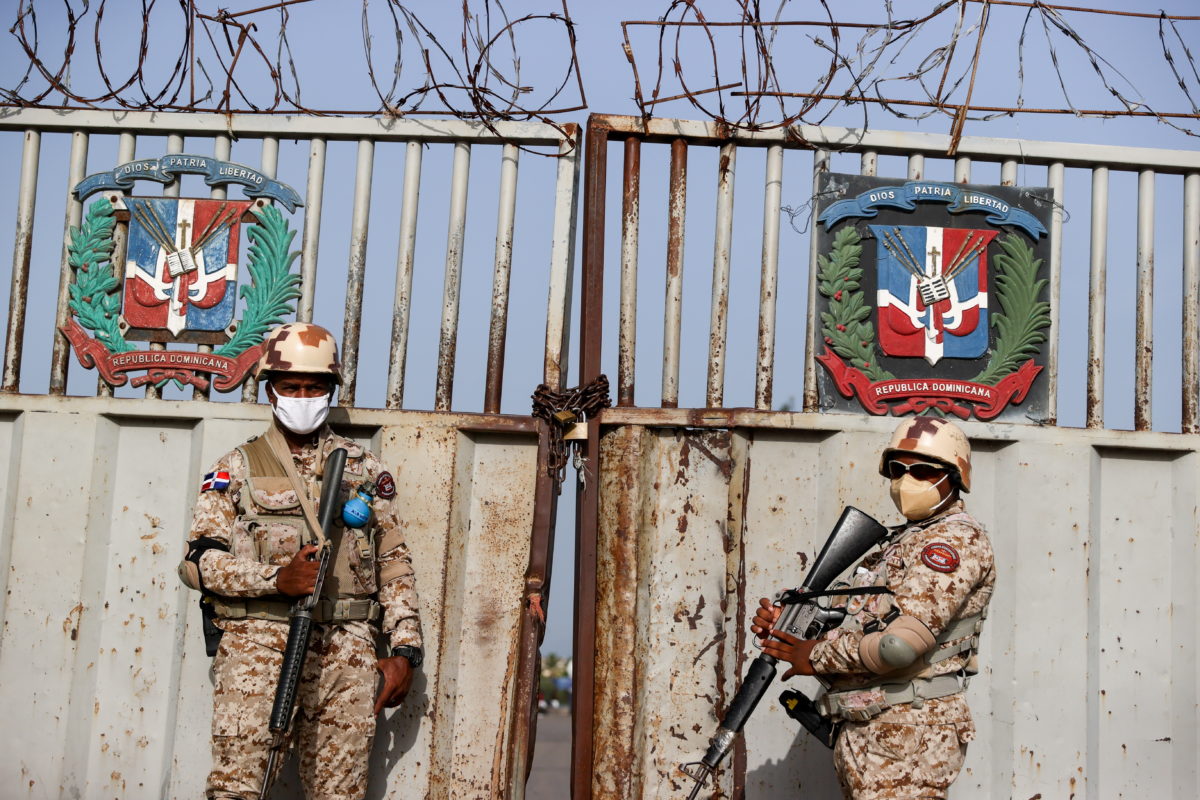
On 12 May 2026, the Ministry of Foreign Relations announced the signing of a non-binding Memorandum of Understanding (MoU) with the United States to enhance bilateral security and migration management. The agreement, framed as part of the “Shield of the Americas” initiative, reportedly establishes a mechanism under which a limited number or third-country nationals deported from the United States will temporarily “transit” the Dominican Republic en route to their home countries. Importantly, like many of the third-country agreements the U.S. has established with other countries across Latin American and elsewhere in the world, there is very little transparency about how the country will treat the deportees and to what rights they will have access.
The announcement has also underscored the growing number of countries in the Americas that have agreed to accept third-country deportations from the U.S. According to Third Country Deportation Watch, a joint initiative of Refugees International and Human Rights First, as of early May 2026, more than a dozen countries across the region had agreed to such arrangements. Importantly, even outside of the Shield of the Americas initiative, other key players in the region, notably Mexico, have already received hundreds of third country nationals in “transit.”
Under the terms of the MoU, the Dominican Republic will permit the “temporary and exceptional” entry of a limited number of third-party nationals. Notably, the agreement excludes Haitian nationals, unaccompanied minors, and individuals with criminal records. The process will be conducted on a case-by-case basis, with the US government providing funding to ensure adequate conditions during deportees’ stay and assistance in facilitating the orderly return of individuals to their countries of origin.
The Dominican government emphasised that this implementation adheres to national legal frameworks and international obligations, asserting that it does not alter current Dominican migration policies or border management procedures.
The Context for Implementation of the New Agreement
The Dominican Republic has a long history of accepting refugees and migrants (Jewish refugees to Sosua in 1938, Venezuelans in 2021, and Haitians over decades). However, the new agreement marks a clear departure from this humanitarian legacy because it is a transit-specific mechanism negotiated as a security partnership with the United States. Whereas previous refugee initiatives focused on long-term residency or integration, this new deal is strictly for “temporary and exceptional” transit, explicitly excluding specific groups (like Haitian nationals) and relying on US financial and operational support for repatriation.
The country has had a formal mechanism for receiving people for decades: The Dominican Republic has been a signatory to the 1951 Refugee Convention, although it has not ratified its 1967 Protocol. In 1984, the government created the National Commission for Refugees (CONARE) specifically to adjudicate asylum claims and manage the legal entry of those seeking protection. However, since its inception, it has remained a largely inoperative framework.
Growing Securitization, Limited Capacity
According to former Dominican ambassador to Washington, D.C. Bernardo Vega, there is clear evidence of diplomatic and political pressure from the US government. In his opinion, Washington is pushing allied nations to assist in managing migrants from third-party countries. These would be individuals who have been rejected by their own nations of origin and currently represent a significant administrative burden for US immigration authorities.
Vega warned that the situation remains fraught with complexity. Many of the deportees targeted by this programme originate from African or Asian nations whose governments refuse to repatriate them, effectively leaving them in a state of legal and geographical limbo. Drawing on international precedents, the specialist further cautioned that there is no formal guarantee regarding the volume of deportees or the duration of their stay. He pointed to previous experiences in other nations where similar relocation efforts resulted in migrants stranded in host countries indefinitely due to the lack of viable exit strategies.
Earlier GDP blogs on the Dominican Republic have raised troubling issues around the country’s ability to properly treat the growing number of people in immigration custody. Blog posts in 2023, 2024, and 2025 all noted the increasingly unmanageable volume of deportations to Haiti as well as the detention and deportation of technically non-deportable persons, per Dominican legislation (the migration law of 2004 and its rules of procedure of 2011), a binational protocol on repatriations with Haiti (1999) and international conventions.
The myriad reports of human rights abuses and arbitrary detentions raise troubling questions about the country’s capacity to properly treat new groups “in transit” non-citizens, who will likely be arriving in the country after spending lengthy periods confined in the U.S. sprawling immigration detention system.
The Wider Context and Reality at Home in the Dominican Republic
Decades ago, Latin America and the Caribbean distinguished itself by “Cartagena”, a legal and political device that refers both to an expanded definition of refugee and a South-South framework of refugee governance cooperation. Although the Dominican Republic did not formally sign up to the process and has not incorporated the Cartagena refugee definition into its domestic legislation, it has participated in the relevant meetings every decade since 1984 and “the spirit of Cartagena” has remained a guiding framework across the region.
However, recent questioning of the effectiveness of the Cartagena +40 process posits the articulation of Cartagena into the global management of mobilities from a critical perspective of the refugee/migrant dichotomy. This critical turn reflects on how Cartagena functions as a discursive façade that obscures states’ simultaneous deployment of containment, deterrence, and selective inclusion measures to control mobilities.
In this context, states across the region may be only too willing to accept “externalisation” as practised by the United States in another geopolitical realignment which appears to be disguised as a security strategy.
Meanwhile, on the other side of the Atlantic, a political declaration aimed at clarifying key aspects of the European convention on human rights was published recently, agreed by all 46 member states of the Council of Europe. Critics fear it will weaken human rights protections for migrants. For example, as regards so-called “migrant returns hubs in third countries” (externalisation by another name), the declaration says states should be able to consider measures such as return hubs to deter irregular migration, but these measures must be in line with the ECHR.
Significantly in the case of the Dominican Republic, civil society groups from both left and right as well as key figures in the Catholic Church have criticised the opacity with which the Dominican Republic/U.S. agreement was arrived at and concur that the terms of it do not necessarily augur well for those persons who would be transferred in this scheme to an unclear status and fate in the Dominican Republic.
Bridget Wooding is an associate researcher of the Centro para la Observación Migratoria y el Desarrollo Social en el Caribe (OBMICA), based in the Dominican Republic (https://obmica.org)