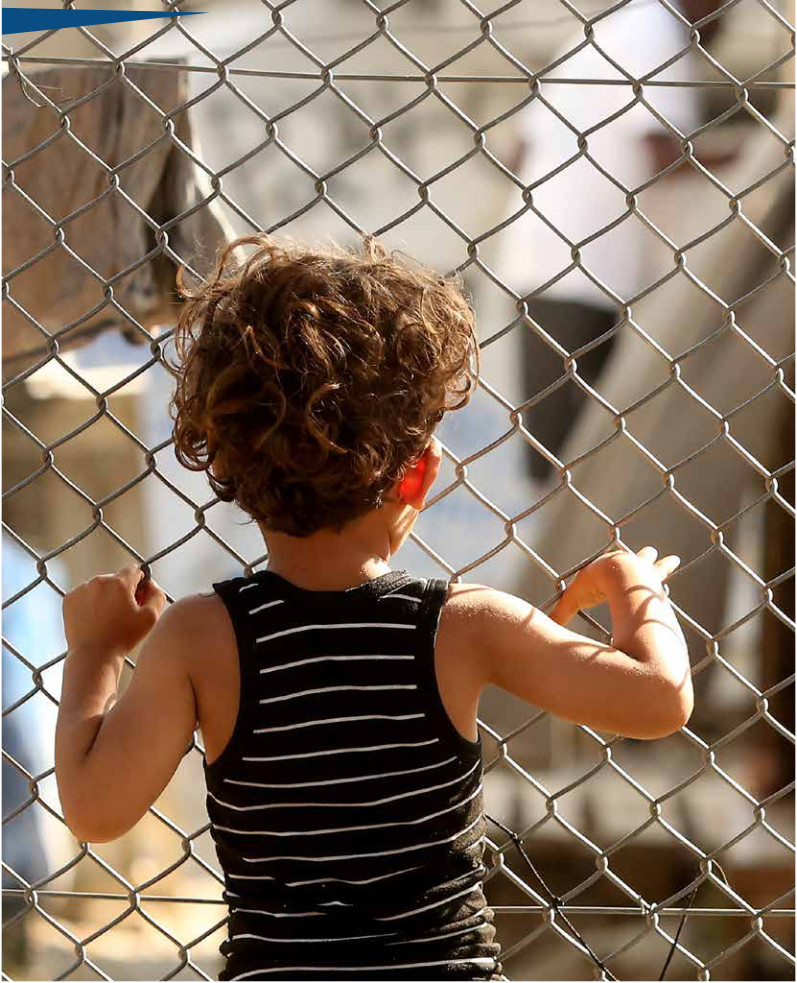
“You don’t feel like you are a human there. Your rights are not respected […] This place is worse than prison. […] People sit there for years. […]” – Testimony of a former detainee
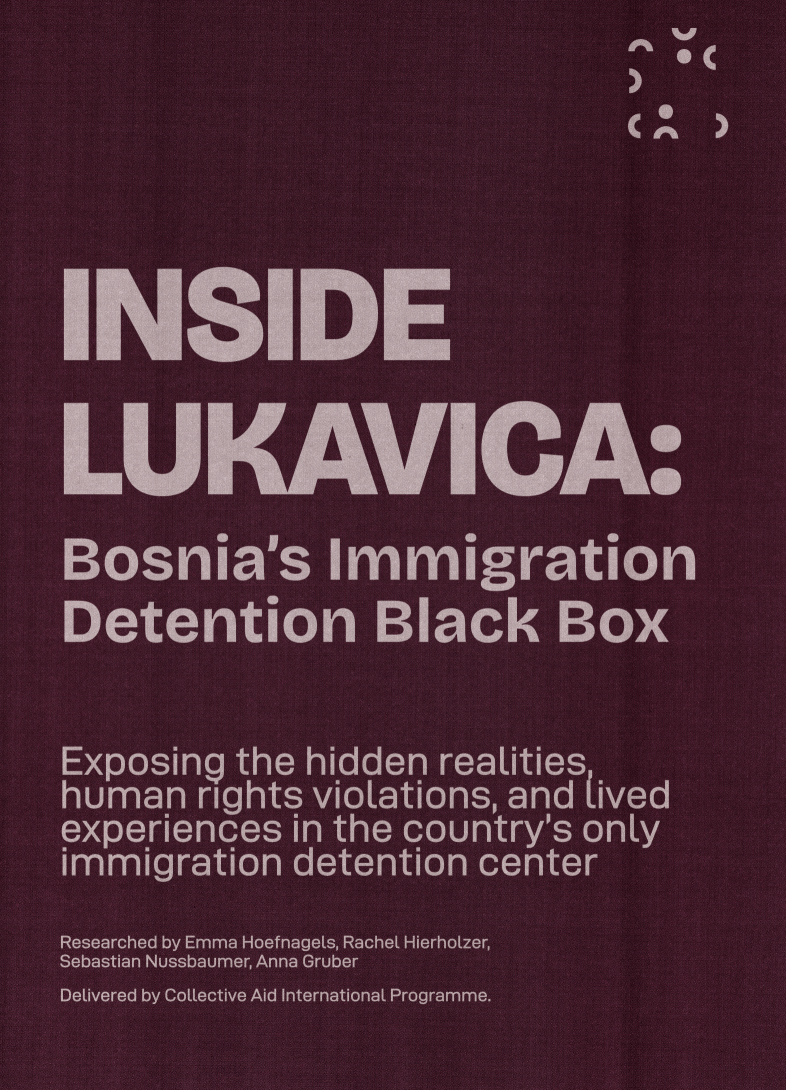
A new report from Collective Aid, a Global Detention Project partner in the Balkans, reveals systemic human rights violations at Lukavica Detention Centre, Bosnia and Herzegovina’s (BiH) sole detention facility for migrants. Despite the existence of formal legal safeguards under Bosnian legislation and official assurances by authorities, the report exposes a facility shrouded in opacity, documenting degrading living conditions, arbitrary detention, a near-total absence of independent monitoring, and serious barriers faced by detainees in accessing legal remedies.
Lukavica’s History
Constructed with EU funding as part of Bosnia and Herzegovina’s EU accession process, under the Stabilisation and Association Agreement (SAA), the Lukavica centre–formally known as Immigration Centre Istocno Sarajevo–was opened in 2009 to hold non-nationals awaiting deportation or readmission. It is the country’s only dedicated immigration detention facility and is under the Service for Foreigners’ Affairs (SFA) direct control.
Collective Aid notes: “Physically, Lukavica Immigration Detention Center is located on the outskirts of East Sarajevo, in the entity of Republika Srpska, away from the city’s everyday life and public transport routes. It sits in an industrial-residential fringe area rather than a central neighbourhood, which means that most people in Sarajevo will never pass by accidentally, and family members, lawyers or journalists can only reach it by making a deliberate, often complicated trip out of town.”
Today, Lukavica can detain up to 120 people–however reports indicate that expansion plans are underway for the facility, with Collective Aid documenting numerous tenders, including an IOM tender in 2022 for an “extension and upgrade,” and several in 2025 for specific elements such as kitchen installation, furniture, and surveillance. FOI data received by Collective Aid reveals that between 2018 and 2024, 4,631 people–amongst them 115 children and 263 women–were detained at the centre.
Documented Rights Violations
Official narratives, Collective Aid notes, depict the centre as a well-regulated facility with clear legal safeguards in place, adequate health care, and access to free legal aid. However, Collective Aid’s research–which included interviews with former detainees, human rights monitors, and lawyers–instead points to serious deficiencies in the centre, including degrading living conditions, a near-total absence of independent monitoring, arbitrary detention, and serious barriers to legal remedies.
- Arbitrary Detention: Collective Aid has documented numerous testimonies from persons who were taken into detention arbitrarily. They provide a specific example: “A man who had been regularly attending distributions in Blazuj reception centre disappeared from our site for over a month, then reappeared and told Collective Aid that he had been detained in Lukavica for that entire period. He said police had taken him from Blazuj under the pretext of moving him to a “safe place,” but he soon realised he was in a detention center without knowing a reason why.
- Hygiene: Sections of the facility are reported to be dilapidated, with broken toilets and damaged fixtures. Many rooms are said to be extremely dirty, with mould on the walls, poor ventilation, and minimal natural light. Detainees also report receiving minimal hygiene supplies, and of only being able to purchase basic supplies like soap using money deposited by relatives into the centre’s bank account.
- Access to Food and Water: Meals are reported to be extremely basic, often centred on bread and lacking in vitamins. Multiple accounts documented by Collective Aid describe “severe restrictions on access to water.” They note: “A former detainee that we spoke to reported that there was no hot water, that people often had to drink water from the sink next to the toilet, and that they received only one or two cups of water per day.”
- Outdoor Access: Although reports note that centre rules require at least two hours of outdoor access per day, Collective Aid has documented numerous accounts of detainees being prevented from going outside for months. “One man we spoke to mentioned that during his two months of detention he only went outside twice, and that usually he was not even allowed into the corridors.”
- Medical Care: While the SFA has stated that Lukavica features an infirmary staffed by a nurse, with regular doctor visits; and that mental health care is made available through a psychiatrist at a contracted health centres, testimonies documented by Collective Aid depict an entirely different reality. “A detainee described to our team lying in bed for long, without staff or police ever asking if he was okay or needed a doctor, even though cameras were present and could have shown if he appeared unwell.”
- Access to Legal Assistance and Translation: Although Bosnian legislation provides several layers of legal protection for immigration detainees–such as the requirement for written decisions, in a language the individual can understand, explaining the grounds of their detention and removal–Collective Aid’s report highlights authorities’ failures to provide detainees with written decisions, interviews without translation, and a lack of information on their right to appeal. “Because people are not informed of their rights at the outset, they frequently miss the appeal window.” Compounding this, detainees are reported to rarely have access to a phone, preventing them from reaching out to lawyers and requesting legal aid.
- Monitoring Access: Although Bosnia and Herzegovina’s Ombudsman’s Office is the formally designated National Preventive Mechanisms (NPM) under the Optional Protocol to the Convention against Torture (OPCAT), its monitoring of Lukavica has been sporadic and “increasingly constrained.” As Collective Aid notes: “The Ombudsman reported being denied entry to Lukavica by SFA, in response to a specific complaint in 2024, an act she described as unlawful, underscoring how far the centre has slipped beyond effective independent control.”
Wider EU Dynamics
Collective Aid’s report comes at a particularly crucial time. With the EU Return Regulation advancing through the legislative process, the proposed framework would enable the deportation of third-country nationals to states such as Bosnia and Herzegovina, extending EU return and detention practices beyond its borders. As Collective Aid’s report shows, however, conditions in Lukavica pose serious risks to human rights, which would be significantly amplified if Bosnia became a regional return hub.
Commenting on this, Anna Gruber–Collective Aid’s Advocacy Manager–told the GDP: “This report arrives at a critical moment, as EU Return Regulation trilogues near completion, making it essential to document these realities before externalization further cements Bosnia and Herzegovina as a return hub, intensifying already unchecked detention and deportation regimes. EU funds have expanded detention regimes in Bosnia without any meaningful human rights assessment. It is therefore crucial to continue documenting the persistent opacity, child detention practices, and inhumane conditions underpinning these systems.”