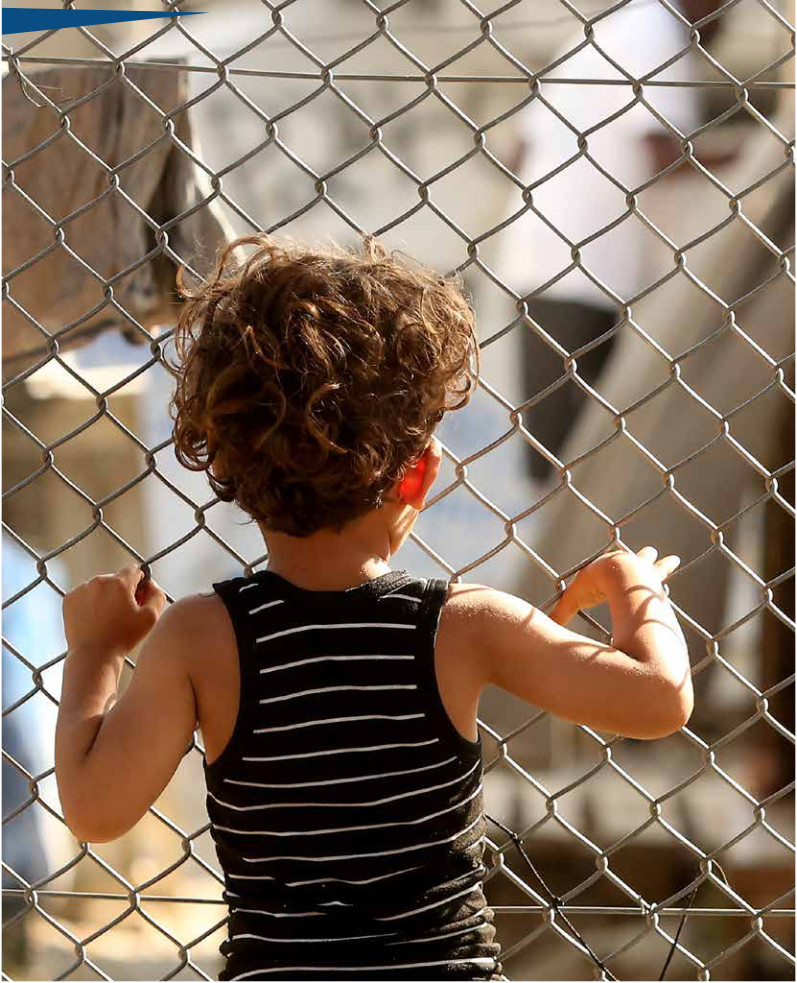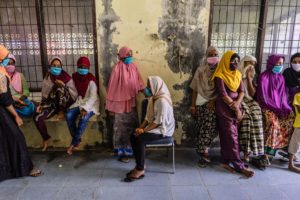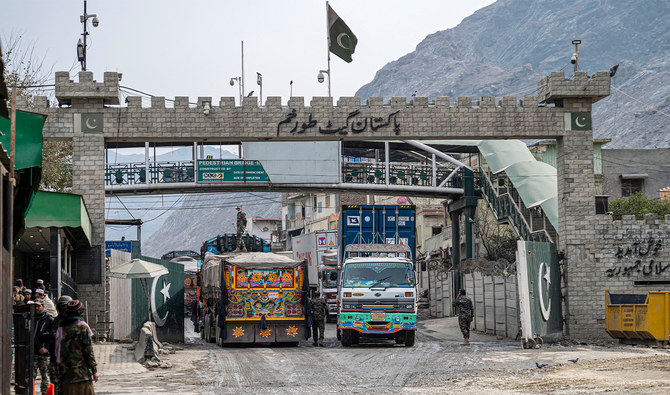
There has been a marked escalation in enforcement actions against Afghan nationals in Pakistan. Under the government’s Illegal Foreigners’ Repatriation Plan, adopted in 2023 for purported national security reasons, hundreds of thousands of Afghans have been rounded up in raids and then subjected to arrest, detention, and summary deportation. Refugees and asylum seekers are held in a variety of sites across the country–including so-called Haji Camps, police stations, and district jails–before their forced removal to Afghanistan. In the most recent crackdown, more than 146,000 are reported to have been deported to Afghanistan, despite UNHCR’s continued non-return advisory for the country.
According to multiple NGO and media reports, since February, Pakistani authorities have stepped up efforts to remove Afghan refugees and asylum seekers from the country. As Human Rights Watch noted in April: “As fighting between Afghanistan and Pakistan has intensified since February 2026, police have expanded operations against Afghan communities in several Pakistani cities, carrying out door-to-door raids, late-night home searches, and arrests without warrants. Police have detained Afghans with valid visas along with those without documentation.”
Noting the escalation in identity checks and arrests, SHARP Pakistan reports that many Afghans have been avoiding public spaces out of fear of detention and removal, “severely constraining access to livelihoods, healthcare, education, and essential services. The unpredictable nature of enforcement has further deepened insecurity and fear across affected populations.” Women and girls, it notes, have been particularly impacted, with restricted mobility increasing isolation and psychosocial stress.
The Illegal Foreigners Repatriation Plan
Pakistan’s recent round-ups of Afghan refugees is part of a much larger removal effort underway in the country, in which authorities have conducted frequent raids, arrests, detentions, and deportations.
While Pakistan has hosted Afghan refugees for decades–beginning with the mass displacement triggered by the Soviet invasion of Afghanistan in 1979, and continuing through successive waves of conflict and upheaval–in September 2023 the government launched a campaign to remove all undocumented foreigners from the country. The Illegal Foreigners Repatriation Plan (IFRP), which authorities argued was necessary for security reasons, consists of three phases of removals of specific groups of non-citizens, to be implemented consecutively: i) illegal and unregistered foreigners; ii) Afghan Citizen Card (ACC) holders; and iii) Proof of Registration (PoR) card holders.
During the first phase in 2023, more than 468,000 unregistered Afghans returned to Afghanistan, with media outlets reporting raids across the country to check Afghans’ documentation; the establishment of “49 holding area points across the country”; the demolition of homes in the outskirts of Islamabad to force Afghans to leave the area; and broadcasts through mosque loudspeakers warning that anyone found providing accommodation to undocumented Afghans would face fines and arrest.
Subsequent phases of enforcement have included:
- January 2025: Authorities ordered Afghan nationals to relocate from Islamabad Capital Territory and Rawalpindi or face deportation.
- 1 April 2025: Initiation of second phase of the IFRP, when it was announced that ACC card holders (ACC cards were issued by Pakistani authorities between 2017 and 2019) were to be removed.
- August 2025: Announcement that those with Proof of Registration (PoR) cards–all of which expired in June 2025– would be targeted for removal.
Since launching the IFRP, hundreds of thousands of Afghans have been targeted for expulsion, with raids, arrests, detentions, and deportations. According to Amnesty International, as of June 2025 at least 1,080,312 Afghans had been forced to return to Afghanistan. Human Rights Watch, meanwhile, reports that more than 146,000 have been deported in 2026 so far, while UNHCR-IOM Flash Updates reveal high numbers of arrests and detentions each week (although numbers appear to have been decreasing since a peak in April), with more than 35,200 Afghans arrested and detained since 29 March.
A similar pattern of large-scale, enforcement-led returns has also been documented in neighbouring countries. In 2025, the GDP submitted information to the UN Special Rapporteur on the Situation of Human Rights in the Islamic Republic of Iran, highlighting comparable practices of mass detention, identity-based raids, and expedited deportations of Afghan refugees without individualised protection screening. Afghans have also been targeted for removal in Tajikistan–although the country is home to a much smaller population of refugees.
A Network of Temporary Detention Sites
In a submission to the UN Committee against Torture (CAT) in advance of its 2026 review of Pakistan, the Afghanistan Media Support Organisation and the World Organisation Against Torture provide a thorough overview of Pakistani authorities’ removal efforts, highlighting neighbourhood sweeps, market inspections, roadside checks, and home raids; arrests without warrants; the detention of refugees and asylum seekers without judicial oversight, access to legal assistance, medical care, or adequate food and water; and forced removal to Afghanistan. Children have not been spared from these campaigns.
According to the organisations, following their arrest, Afghans are being detained in a variety of “holding facilities” where they face “overcrowding, inadequate sanitation, insufficient food, and denial of communication with family members. A majority of detained respondents reported that they were not provided access to a lawyer, were not brought promptly before a magistrate, and were not informed of any available appeal procedures prior to deportation.”
Former detainees have also described death threats by detention officers, and humiliating and degrading treatment such as being forced to sit with their hands placed on their heads. The UN Assistance Mission in Afghanistan has also documented detainees “being slapped, hit with batons and beaten with cables while in detention.”
A network of sites appear to be employed by authorities as “holding facilities” across the country. In 2023, when announcing the use of 49 “holding area points,” state-run Radio Pakistan reported that “36 holding centers have been established in all 36 districts of Punjab, three in Peshawar, Haripur and Landi Kotal districts of Khyber Pakhtunkhwa, two in Kemari and Malir districts of Sindh and three in Quetta, Chagai and Pishin districts of Balochistan. Similarly, one holding center each has been established in Islamabad Federal Capital and Gilgit.”
More recently, in May 2026 observers have described to the GDP the use of “Haji Camps”–government-run facilities originally established to process and accommodate pilgrims traveling to Saudi Arabia for the Hajj pilgrimage–as well as police stations, district jail compounds, and Federal Investigation Agency (FIA) detention facilities, as well as temporary holding centres established for immigration enforcement operations. Reported locations include Islamabad/Rawalpindi, Lahore, Peshawar, and Quetta, as well as facilities near the Torkham and Chaman border crossings.
In particular, various sources have mentioned the use of the Haji Camp in Islamabad’s I-14 district, where a March 2025 video shared by Pakistan’s Joint Action Committee for Refugees shows dozens of men crammed into a room. Describing a Haji Camp, one former detainee told the Afghanistan Media Support Organisation that:
“They took us to what they called a camp. It was surrounded by walls and guarded. Inside there were large rooms with metal bars. They counted us many times. We were waiting for buses. No one explained how long we would stay.”
Deportation and Refoulement
Detention at these sites appears to be relatively short, and used largely as a temporary step in gathering Afghans prior to their swift removal. Reports indicate that they are deported without individualised asylum screening, risk evaluation, or opportunity to present protection claims. As one former detainee told the Afghanistan Media Support Organisation:
“They told us we would be sent back the next day. We asked to speak to someone, to explain our situation. I told them I had worked in media. I told them my name was known. They said “That is not our problem.” They put us on buses. There was no hearing. No interview. Nothing.”
However, UNHCR continues to maintain a non-return advisory for Afghanistan, with groups such as women and girls, journalists, human rights defenders, former government officials, critics of the Taliban, and members of minority religious or ethnic groups remaining particularly vulnerable.
In its original 2021 advisory, UNHCR stated that “the bar on forcible return serves as a minimum standard and needs to remain in place until such time as the security, rule of law, and human rights situation in Afghanistan has significantly improved to permit a safe and dignified return of those determined not to be in need of international protection.”
A 2025 report by the UN Assistance Mission in Afghanistan, meanwhile, documents the cases of Afghans forcibly returned to Afghanistan who have subsequently faced serious human rights violations, including torture and ill-treatment, arbitrary arrest, and detention.
The GDP continues to monitor the situation.