In April, shortly after the Democratic Republic of Congo announced the launch of a “temporary reception system for third country nationals,” a group of deportees from the United States arrived in the country, marking the latest expansion of the Trump administration’s massive immigration crackdown and deportation agenda. Upon arrival, the group were placed in a hotel from which they were reportedly prevented from leaving, raising concerns of de facto detention. The U.S. decision to send deportees to the DRC was made despite the severe human rights crisis wracking the country, including armed conflict, mass displacement, and widespread abuses by state and non-state actors.
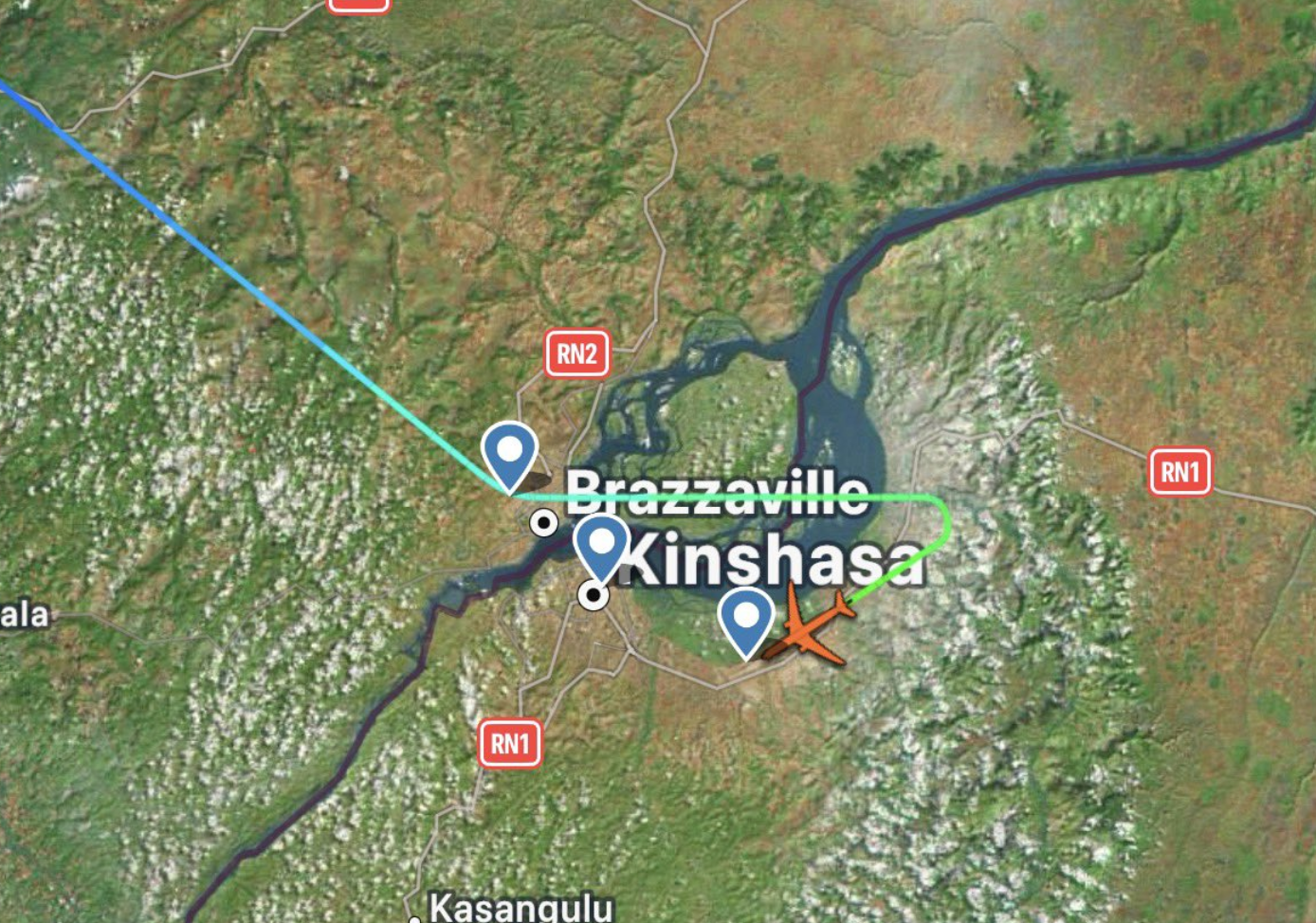
On 17 April, 15 third-country nationals deported from the United States arrived in Kinshasa, DRC, on an ICE Air Flight (OAE2066). The group included individuals from South America including Peruvians, Colombians, and Ecuadorians, as well as at least one individual with a recognised protection claim in the United States. According to Reuters, one female Colombian had filed an asylum claim in the United States citing her experience being kidnapped and tortured by the FARC rebel group, as well as abuse at the hands of her police officer ex-husband. In May 2025, a U.S immigration judge ruled that there was a high risk of the woman being tortured again if she was forced to return to Colombia.
Upon their arrival in DRC, the deportees were placed in a hotel in Kinshasa, near the airport. According to the International Organisation for Migration (IOM), speaking to AFP, the agency had been “requested by the government of the DRC to provide humanitarian assistance to 15 migrants removed by the United States to the DRC on April 17.” The organisation also noted that “In addition to offering assistance based on needs and specific assessments, IOM may also offer assisted voluntary return to those migrants who request it, in line with its mandate and applicable legal frameworks.”
The “voluntariness” of any potential IOM-assigned returns appears difficult to reconcile with reports the deportees were discouraged from applying for asylum in DRC due to safety concerns in the country, coupled with facing alleged movement restrictions. According to Human Rights Watch, “The human rights situation across the Democratic Republic of Congo remains dire, with internal conflicts and poor governance contributing to a severe food crisis and the internal displacement of 5.8 million people, more than anywhere else in Africa. … Armed groups and often abusive security forces continue to carry out massacres, abductions, rape and sexual violence, recruitment of children, and other attacks on civilians with near total impunity.”
An observer who spoke to the Global Detention Project (GDP) reported that–at least initially– deportees were confined to the hotel and unable to move freely, raising credible fears that they have been subjected to de facto detention. (More recent reporting by NPR suggests that the group are free to leave, but security officers have urged them to remain inside.) Concerns regarding the group’s wellbeing were also raised when Reuters reported that one of its journalists had been prevented from entering the building to speak with the group.
NPR, which spoke to several of the deportees who detailed conditions in the hotel, reported, “While the deportees are receiving regular meals, water can cut out for days at a time in the hotel, and rodents scurry through their rooms. Mosquitoes are also ubiquitous.”
The extreme conditions confronting the deportees raises concerns about the genuineness of any “voluntary” returns that deportees may be persuaded to accept. Where individuals are isolated, confined, and lack sufficient access to independent advice, and are effectively cut from any meaningful avenues to seek protection, any decision to return could be deemed as coerced.
The DRC Case Reflects a Pattern of Secrecy Surrounding U.S. Deportations
The secrecy surrounding the reception and treatment of third country deportees has been a hallmark of recent U.S third country deportation schemes. In February, four journalists and a lawyer were arrested and beaten in Cameroon when they attempted to visit a group of deportees confined in a compound in Yaounde. In South Sudan, deportees were arbitrarily detained, incommunicado, in an undisclosed “guarded complex”, with lawyers unable to ascertain their whereabouts. As of January 2026, six of the eight deported to South Sudan remained arbitrarily detained. In Eswatini, deportees held in the Matsapha Correctional Complex have been denied access to legal counsel, granted only occasional opportunity to communicate with family, and reportedly held in solitary confinement.
Importantly, the actual texts of many of the bilateral agreements providing for these third country transfers have often been withheld from public scrutiny. In the case of Ghana, public information regarding the country’s arrangement with the United States remains limited–despite the US Supreme Court ordering the disclosure of the MOU. The GDP, together with Asian Americans Advancing Justice, Democracy Hub, and the Global Strategic Litigation Council, urged the UN Committee on Migrant Workers to call on Ghana to ensure full transparency surrounding any bilateral or multilateral arrangement governing the reception of non-nationals.
Secrecy has also surrounded DRC’s arrangement with the United States. The only confirmation of an agreement came by way of a statement on 5 April by the Congolese Ministry of Communication and Media which announced a “temporary reception system for third country nationals.” According to the statement, the country would soon receive third country nationals, as part of an agreement which “reflects the Congolese State’s ongoing commitment to human dignity and international solidarity.”
The statement further noted that DRC would bear no financial responsibility for the arrangement, with logistical and technical support instead provided by the United States “through specialised agencies for the movement of people worldwide.” At the same time, however, the statement notes: “The Government retains full control over decisions concerning admission to its territory, conditions of residence, monitoring, withdrawal of temporary status, and, where applicable, mechanisms for the return or removal of the persons concerned, in accordance with its legislation.”
Next, Afghan Transfers?
In a separate development, media outlets have reported an advocacy group’s claims that the United States is seeking to transfer more than 1,000 Afghans–who previously worked with U.S forces in Afghanistan between 2001 and 2021–from Qatar to the DRC. The veracity of the claim has not been independently verified by the GDP.
The group, amongst them hundreds of children, were originally evacuated from Afghanistan to a former US military base (Camp As Sayliyah) in Qatar in 2021, following the fall of Kabul. Although originally promised relocation to the United States, the Trump Administration’s shutdown of refugee admissions to the United States in 2025 has seen them stranded in the Gulf.
According to the Guardian, Afghans have been unable to leave Camp As Sayliyah, with some of those inside describing it as a “prison.” Their plight is strikingly similar to that of thousands of evacuated Afghans who were arbitrarily detained in an emergency evacuation compound in the UAE (Emirates Humanitarian City (EHC)) in 2021. As the GDP noted in an Urgent Appeal in March 2023, “Testimonies that were collected by an independent lawyer investigating conditions inside the EHC and which were shared with the GDP reveal that refugees in the facility are prevented from leaving; have limited freedom of movement within the facility; are under constant surveillance; and are denied visits by family and lawyers.”
Commenting on the DRC plans, Human Rights First wrote: “Any transfers to the DRC cannot be viewed as voluntary when considered alongside the only other option families have: return to Afghanistan where they would face certain risk due to their association with the country forcing them into this impossible and perilous choice.” News of the possible relocation of Afghans was also met with opposition in DRC. As NPR notes, on 27 April protesters burned tires in Kinshasa and marched carrying banners against hosting “Afghan mercenaries.”