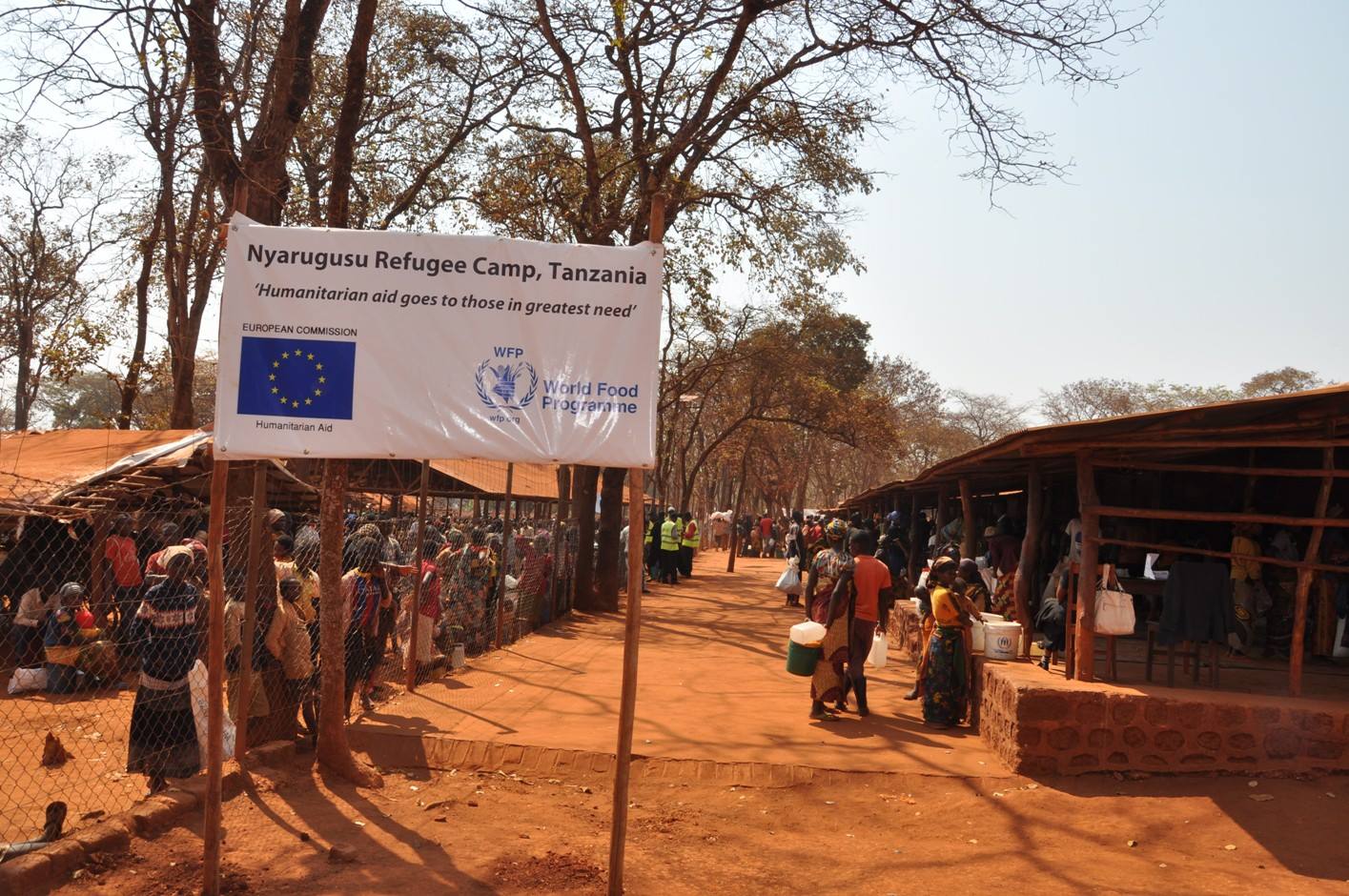
The Global Detention Project has received allegations from Burundian refugees in Tanzania that authorities are detaining individuals who leave Nyarugusu refugee camp, imposing movement restrictions on camp residents, and intensifying harassment and intimidation aimed at pressuring Burundian refugees to leave the country. These claims, which coincide with similar reports from other observers, appear to be part of a broader push by Tanzanian authorities to close refugee camps and return Burundian refugees.
Threats of Detention
According to various reports, refugees in Tanzania’s Nyarugusu refugee camp are facing increasingly restrictive policies, allegedly as an effort by authorities to coerce refugees to leave the country. Following the closure of Nduta Camp on 30 April 2026, Nyarugusu is the last remaining refugee camp in the country–although authorities also plan to close it this summer.
In a May email to the Global Detention Project, a Burundian refugee who reports to be in Nyarugusu refugee camp, writes: “Whenever a refugee risks leaving the camp because of unavoidable necessities, they may face harsh consequences, including confiscation of property, arbitrary detention, physical abuse, and other forms of mistreatment.”
They further explained that signs have been erected within the camp, telling residents that they may not leave the camp, even to collect firewood, and that movement permits would now only be provided on medical grounds. “When refugees go out of the camp for Market, for example during the market day of neighbouring villages,” they write, “the MoHA office in the camp will call the Migration staff and they arrest refugees who are in the markets, and take them to Kasulu or Kibondo for jail.”
A separate April 2026 statement issued by 26 local, regional, and international NGOs–including the International Federation for Human Rights, the Coalition pour la Défense des Droits Humains vivant dans les Camps de Réfugiés, SOS Torture Burundi, and the World Organisation Against Torture–confirms that “An official notice displayed in Nyarugusu camp states that any refugee found outside the camp may face a sentence of up to six months’ imprisonment, effectively restricting their freedom of movement.”
The statement also recounts a particularly violent incident on 19 April 2026, when members of the Wanamugambo militia (a youth militia affiliated with Tanzania’s ruling party), stormed the camp and with sticks and machetes, attacked refugees attempting to leave to collect firewood and water.
Safe For Return?
Since 2017, Tanzanian and Burundian authorities, together with UNHCR, have been facilitating–and encouraging–the return of Burundian refugees. UNHCR Flash Updates report significant return numbers: between 1 January and 21 March 2026, nearly 57,000 refugees returned to Burundi, “with weekly arrivals ranging from 3,000 to 5,000 individuals (with a peak of close to 9,000 arrivals per week at the beginning of March).”
UNHCR, Tanzanian, and Burundian authorities have largely framed these returns as “voluntary”–in line with the Tripartite agreement originally signed in 2001 and which is aimed at encouraging the voluntary return of Burundian refugees to Burundi. UNHCR stated in December 2025 that the partners had re-affirmed their commitment to safe returns: “The Parties agreed to facilitating the return of up to 3,000 individuals per week, in full respect of the principles of voluntariness, safety, dignity, and international protection standards.”
In line with these returns, Tanzanian authorities have shuttered one of the last two refugee camps in the country (Nduta), and plan to close the last remaining camp this summer (Nyarugusu)–a decision that authorities claim falls within the parameters of the tripartite agreement.
The reality upon return, however, raises concerns. While Tanzania’s Minister for Home Affairs stated in December 2025 that “Burundi is safe and the circumstances that compelled them to flee no longer exist,” reports have documented cases of persecution, arbitrary arrests, and enforced disappearances faced by some returnees in Burundi. In 2025, the UN’s Special Rapporteur on the situation of human rights in Burundi similarly condemned “extrajudicial killings, enforced disappearances, arbitrary arrest and detention, acts of torture and other cruel, inhuman or degrading treatment or punishment, and sexual and gender-based violence.”
Coerced Returns
These and other reports call into question the voluntary nature of these returns. Media and NGO reports highlight efforts by Tanzanian authorities to persuade–or force–Burundian refugees to leave Tanzania. There have been allegations of: refugees being beaten and forced onto buses; the demolition of refugee shelters; food assistance being denied to refugees who have not registered to return to Burundi; water being cut off to camps; refugees having their UNHCR identity cards withdrawn, leaving them vulnerable to arrest; and arrests by Wanamugambo militias and of government representatives forcing them to give their fingerprints and to agree to repatriation.
In 2025, the UN Working Group on Arbitrary Detention also raised concerns regarding the enforced disappearance of individuals accused of denouncing forced repatriations or mistreatment in the camps. It noted: “According to the information received, abducted refugees were subsequently located in neighbouring countries, after reportedly being subjected to ill-treatment and torture during disappearance.”
Commenting on the cases of detention documented within Nyarugusu Camp, a representative of the Coalition pour la Défense des Droits Humains Vivant dans les Camps de Réfugiés (CDH/VICAR) told the GDP that “detentions generally last for a few days, and those concerned are often transferred for repatriation after their release. These practices appear to be used as a means of intimidation to discourage refugees from leaving the camp or refusing return to Burundi. Cases of torture and ill-treatment are also regularly reported within the camp.”
According to the April joint NGO statement: “[these] acts of violence are aimed in particular at forcing refugees to register for repatriation or punishing them for discouraging others from returning to Burundi.” Under these circumstances, such returns cannot credibly be characterised as voluntary, safe, or dignified, as required under international refugee protection standards.
Encampment Policy
Under Tanzania’s Refugees Act, refugees are required to stay within a “designated area” (Article 17). Those who fail to comply with this, or who leave such an area without permission, may be found guilty of an offence under the act. In particular, Article 18 provides that any person who leaves or attempts to leave a designated area without a permit faces “confinement in a settlement or camp lock-up for a period not exceeding three days” or fines of up to 5,000 shillings.
The Refugees Act also provides for the detention of refugees, on loose grounds–such as if a refugee or asylum seekers acts “in a manner prejudicial to peace and good order or is prejudicing the relations between the Government of Tanzania and any other government.” In such circumstances, they may be detained in a prison for up to three months (Article 27). Article 28(3), meanwhile, provides for the detention of an asylum seeker or refugee prior to their deportation.
* This blog was updated on 17 June 2026, to include the quote from CDH/VICAR