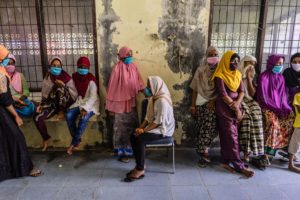
Thailand has ramped up the detention of Vietnamese migrants with reports indicating that Vietnamese officials have been given access to Thai detention facilities to coerce detainees to return. These practices, alongside high-profile cases of extradition and arbitrary detention of asylum seekers, reveal persistent breaches of human rights norms despite the fact that Thailand remains a UN Network on Migration “champion country” for implementation of the Global Compact for Migration.
According to a report by Human Rights Watch (HRW), Thai authorities carried out numerous large-scale operations in 2025 targeting Vietnamese refugees and asylum seekers, resulting in the detention of significant numbers of Hmong and Montagnard individuals, including UNHCR-registered refugees awaiting asylum processing.
Of particular concern, the rights group reports that increased cooperation between Thai and Vietnamese authorities has allowed Vietnamese officials to operate inside Thai detention centres. Former detainees describe interrogations by Vietnamese police, as well as threats of forced repatriation, and requests that Thai authorities prolong detention until refugees agreed to return to Vietnam.
Vietnamese refugees and asylum seekers interviewed by HRW reported growing fears of arrest, abduction, and extradition, citing the June 2024 arrest of dissident Montagnard activist Y Quynh Bdap following an extradition request. Bdap, co-founder of Montagnards Stand for Justice–a group advocating for Montagnard rights in Vietnam’s Central Highlands, but designated a terrorist organisation by the Vietnamese government–was forcibly returned on 28 November 2025. UN experts expressed their alarm in December, warning that “his return exposes him to a serious risk of torture or other ill-treatment, enforced disappearance, arbitrary detention and other grave human rights violations.”
In October 2022, the Thai government published the Prevention and Suppression of Torture and Enforced Disappearance Act, which codified the principle of non-refoulement. However, observers report that the country continues to breach this. As well as the return of Bdap, authorities have conducted pushbacks and forcible returns of Myanmar nationals (which Fortify Rights reports has resulted in some subsequently being forced into military service by the Myanmar junta) and deported ethnic Uyghurs to China. In 2024, HRW also reported on what it called “swap mart” practices, in which it has traded foreign dissidents for critics of the Thai government living abroad.
Wider Detention of Non-Nationals
According to Global Detention Project (GDP) data, Thailand has one of the largest immigration detention systems in Asia. Thai legislation does not provide protection to refugees–the country is not a signatory to the 1951 Refugee Convention and lacks an established asylum procedure, leaving refugees and asylum seekers classified as “illegal aliens” under immigration law, and vulnerable to detention and other forms of abuse.
The country’s immigration legislation (Immigration Act B.E. 2522 (1979)) is notably strict, providing for indefinite detention “at any location,” with the foreign national bearing the costs of their detention (Article 54), as well as criminal sanctions (“Any alien who is in the Kingdom without permission, or whose permission has expired or been revoked, shall be punished with imprisonment not exceeding two years or a fine not exceeding 20,000 baht, or both” (Article 81)). Vulnerable groups, including children and victims of trafficking, are not protected from detention, and their detention is regularly documented. Meanwhile, any person found to have aided or assisted an irregular migrant faces up to five years imprisonment and fines up to 50,000 baht (Article 64).
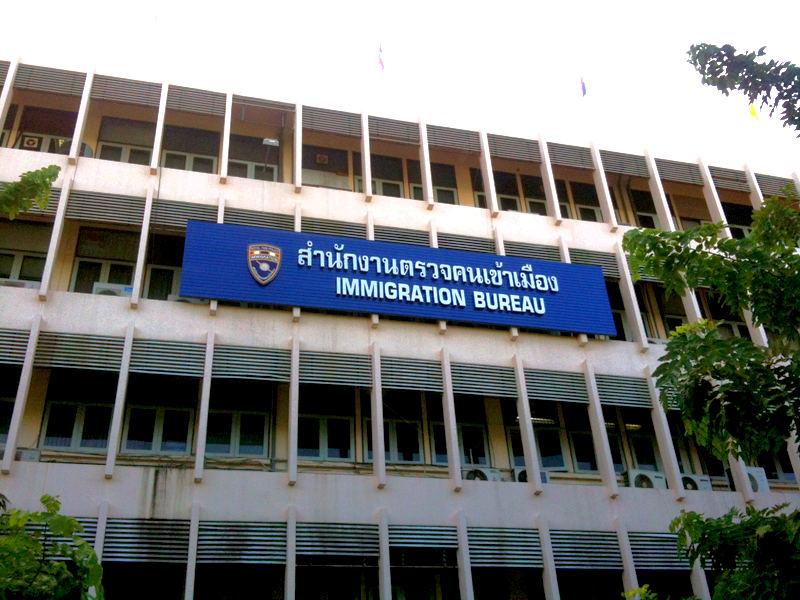
According to an October 2024 report by the International Federation for Human Rights (FIDH), the country operates 22 immigration detention centres (IDCs). However, it states that “obtaining reliable and up-to-date information about IDCs and conditions in these facilities is extremely difficult. The Immigration Bureau of the Thai Police, which administers the IDCs, does not make public the data on the number of IDCs, their locations, and the number and origin of the detainees. Access to IDCs for media and independent monitoring organizations is severely restricted.”
Observers continue to decry appalling detention conditions in the country’s network of IDCs. In 2024, a group of UN experts including the Special Rapporteur on the human rights of migrants and the Special Rapporteur on torture and other cruel, inhuman or degrading treatment or punishment voiced alarm regarding the detention conditions experienced by 43 Uyghurs in the Suan Phlu IDC, which they described as “life-threatening.” They added: “Over the last ten years of their detention, the detainees of Uyghur ethnicity have not been permitted any legal or social visits, access to the exercise yard has been erratic and they have never had permission to make phone calls, remaining incommunicado. Notably, prolonged incommunicado detention amounts to ill-treatment and may amount to enforced disappearance.”
Still a “Champion Country”?
Despite these severe breaches of its international human rights commitments–including its failure to prevent the detention of children–Thailand remains a high-profile “champion country” of the UN Global Network for Migration for implementation of the Global Compact for Safe, Orderly, and Regular Migration. In a letter confirming its acceptance as a Compact “champion,” the Thai Ministry of Foreign Affairs offered to promote access to health care for migrants and alternatives to immigration detention for children.
Thailand’s poor record with respect to the treatment of refugees notwithstanding, UNHCR praised the country in December 2025 for resolving more than 100,000 statelessness cases–with the majority receiving residency, and more than 12,000 acquiring Thai nationality. During the 2023 Global Refugee Forum, the Thai government had announced its intention to resolve statelessness in the country. This was followed by the approval of a landmark resolution in October 2024, providing an accelerated pathway to permanent residency and nationality for the country’s stateless population. Under the resolution, 335,000 stateless residents and members of recognised ethnic minorities will be eligible for permanent residence, and more than 142,000 of their Thailand-born children will be eligible for Thai nationality. At the time of this resolution’s announcement, UNHCR’s representative in Thailand said: “This will be historic. … It would be the most dramatic reduction of statelessness the world has ever seen.”