In December, the UN Working Group on Arbitrary Detention delivered a sobering assessment of Australia’s immigration detention system, highlighting numerous policies that call into question the country’s adherence to international human rights obligations. Among key concerns, according to the Working Group, are the country’s policies of mandatory and indefinite detention, its ongoing use of offshore processing, the detention of non-nationals aboard Australian Government vessels at sea, and deficiencies in services and safeguards in detention facilities.
In early December, the UN Working Group on Arbitrary Detention conducted an official visit to Australia, more than two decades after its last visit in 2002. At the time of its visit, the Working Group observed that approximately 1,000 individuals were held in immigration detention nationwide. While the majority were men, women and children were also among the detainee population.
Some 20 percent had been detained after attempting to enter Australia irregularly, whereas approximately 80 percent had had their visas revoked under Section 501, either following sentences of 12 months or more or on “character” grounds–criteria for which the Working Group described as “opaque and overly discretionary.” The Working Group expressed particular concern about the high proportion of post-sentence detainees, noting that their presence heightens risks for other detainees. It emphasised that “Authorities must ensure protections are in place to avoid vulnerable detainees being subjected to intimidation and abuse in migration detention.”
As the Global Detention Project noted in our 2022 report on Australia’s detention policies and practices, Australia is one of the few countries in the world with a blanket policy of mandatory detention of anyone without a visa, including children and asylum seekers. This policy was flagged by the Working Group, which highlighted the fact that such a policy “violates the requirement of individualised assessments and detention being a last resort. … Any form of administrative detention in the context of migration must be applied as an exceptional measure of last resort, for the shortest period and only if justified by a legitimate purpose.” Further, the group urged Australia to “prohibit any migration-related detention of persons under 18 years.”
Detention periods are also excessively long, as there is no time limit placed on immigration detention. According to the Australian Human Rights Commission, as of June 2025 the average length of detention was 452 days–although cases of foreign nationals being detained for as long as 15 years have been recorded. While the High Court’s 2023 decision in NZYQ found the indefinite detention when there is no real prospect for removal to be unlawful, prompting the release of more than 350 detainees, the Working Group notes that “its implementation has not been consistent nor comprehensive.”
“Dismayed to hear that ABF officials are detaining non-citizens and transporting them to Nauru.”
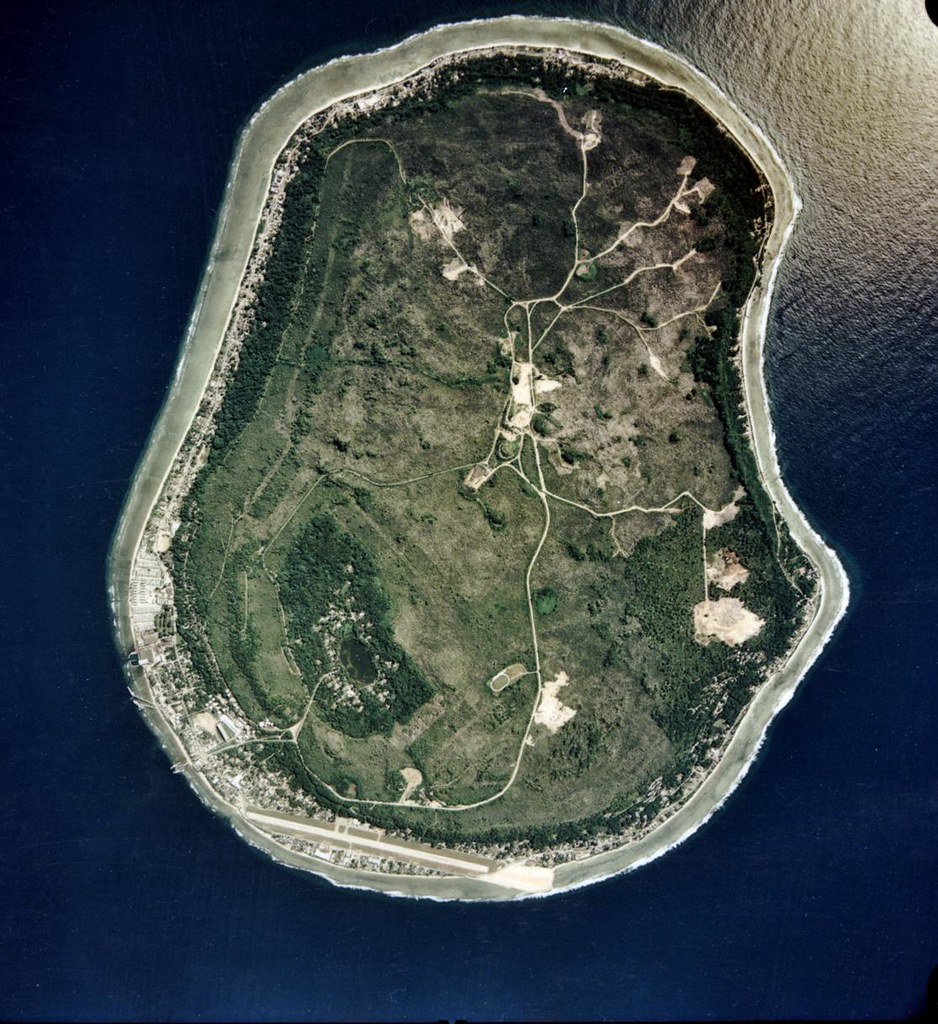
Critically, instead of freedom, some of those released following the NZYQ decision have been sent to Nauru under a new Third Country Reception agreement. Under this agreement, former detainees have been granted long-term visas for Nauru. However, as the Working Group notes, “though foreign nationals are supposed to be at liberty in Nauru under this arrangement, the Working Group heard that its tiny size and lack of facilities and opportunities for meaningful work render it like a prison for those foreigners involuntarily sent there. … the Working Group calls on [Australia] to ensure that persons deported to Nauru are afforded their human rights, particularly their right against arbitrary detention.”
Much about this agreement has been kept secret. As the Asylum Seeker Resource Center (ASRC) noted, “There has been no transparency or accountability around this new agreement, with critical details deliberately hidden from public scrutiny.” Calling for an end to offshore detention, ASRC added that “exposing people to cruelty, isolation and trauma has never made anyone safer – it only punishes people who need protection.”
The Working Group also pointed to reports of non-nationals being detained at sea on governmental vessels–sometimes for weeks. “They are reportedly held in cages on the deck on rubber matting and have limited opportunity to obtain legal advice.” Noting a lack of official information regarding these practices, the Working Group urged authorities to “provide full and detailed information on the numbers, duration and conditions of such detentions at sea.”
Onshore, meanwhile, where detainees are held in facilities like Villawood in NSW, the Working Group was informed of detainees’ concerns regarding difficulties in accessing medical care–which the GDP has long-documented. Other concerns raised regarding detention sites include the absence of any form of oversight body, and the use of APODs (alternative places of detention–typically hotel rooms) from which detainees are rarely permitted to leave. During its visit, in which it also went to correctional facilities, police watch houses, youth detention facilities, and close psychiatric and forensic facilities, the Working Group was prevented from visiting youth detention facilities in Western Australia, and was denied access to any facilities in the Northern Territories. The Working Group noted: “This complete lack of cooperation by authorities in the NT undermines the Working group’s ability to implement its mandate and deprives detainees of access to independent international protection.” Previously, in 2022, the UN Subcommittee on the Prevention of Torture (SPT) suspended a visit to the country after being denied full access to facilities in New South Wales and Queensland.