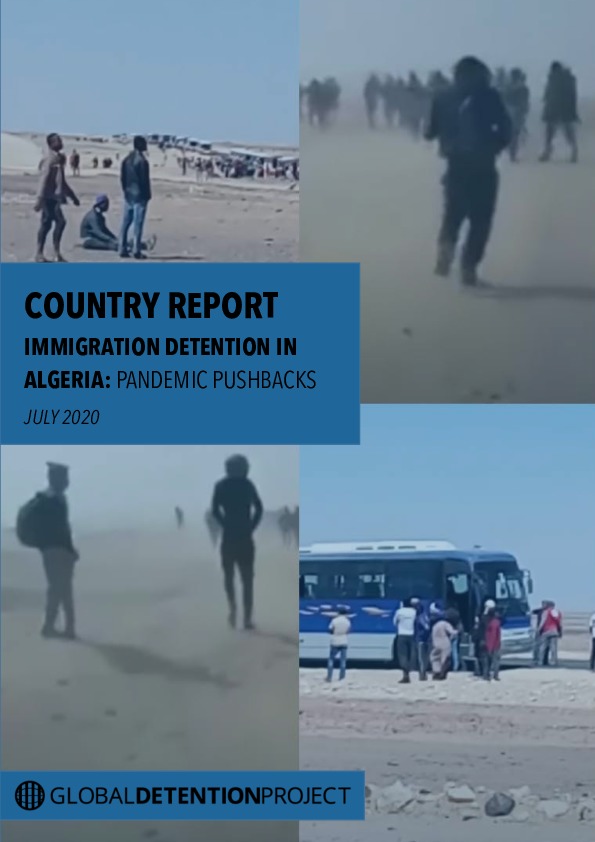
In recent years, Algeria has ramped up its detention and deportation operations in response to mounting pressure from Europe. Working increasingly with both neighbouring and European countries, Algerian authorities have conducted targeted raids, used an extensive network of formal and informal detention sites, and carried out (often violent) crossborder pushbacks to Niger and elsewhere. […]
Algeria: Covid-19 and Detention
As increasing numbers of Algerians seek to flee their country and make the hazardous passage across the Mediterranean to Spain, concerns are growing about the plight of migrants and refugees located in Algeria’s land borders, particularly those shared with Morocco and Niger, which have been heavily impacted by the COVID-19 pandemic and political tensions across […]

Algeria: Covid-19 and Detention
According to Human Rights Watch (HRW), between early September and early October Algerian authorities expelled more than 3,400 people from at least 20 countries, including 430 children and 240 women, all of whom were sent to Niger. The expulsions followed waves of arrests in no fewer than nine cities, during which children were reportedly separated […]

Algeria: Covid-19 and Detention
Responding to the Global Detention Project’s Covid-19 survey, a non-governmental actor in Algeria reported that expulsions of undocumented people have been halted since 21 March 2020, though information from news sources appears to contradict this claim. The source, who asked to remain anonymous but whose identity was verified by the GDP, said that they did […]

Algeria: Covid-19 and Detention
In correspondence with the Global Detention Project (GDP), UNHCR Algeria reports that the Algerian Government “suspended collective expulsions of migrants in irregular situations in Algeria in mid-March due to the Covid-19 crisis. However, it is reported that groups of nationals from Niger continued to be removed to Niger in March and April, although in smaller […]

Algeria: Covid-19 and Detention
With the Covid-19 crisis provoking a state of “panic” across Algeria, the country has announced a “plan d’urgence.” Authorities have continued their efforts to block unauthorized migration from sub-Saharan countries, including detaining “migrants clandestine” and arresting alleged traffickers. However, simultaneously, the Ministry of Justice announced that it was temporarily suspending court functions. In addition, all […]

Last updated: July 2020
DETENTION CAPACITY
ALTERNATIVES TO DETENTION
ADDITIONAL ENFORCEMENT DATA
PRISON DATA
POPULATION DATA
SOCIO-ECONOMIC DATA & POLLS
LEGAL & REGULATORY FRAMEWORK
Does the Country Have Specific Laws that Provide for Migration-Related Detention?
GROUNDS FOR DETENTION
Criminal Penalties for Immigration-Related Violations
Grounds for Criminal Immigration-Related Incarceration / Maximum Length of Incarceration
Has the Country Decriminalised Immigration-Related Violations?
LENGTH OF DETENTION
DETENTION INSTITUTIONS
PROCEDURAL STANDARDS & SAFEGUARDS
COSTS & OUTSOURCING
COVID-19 DATA
TRANSPARENCY
MONITORING
NATIONAL HUMAN RIGHTS MONITORING BODIES
NATIONAL PREVENTIVE MECHANISMS (OPTIONAL PROTOCOL TO UN CONVENTION AGAINST TORTURE)
NON-GOVERNMENTAL ORGANISATIONS (NGOS)
GOVERNMENTAL MONITORING BODIES
INTERNATIONAL TREATIES & TREATY BODIES
International Treaties Ratified
Ratification Year
Observation Date
CAT, Convention against Torture and Other Cruel, Inhuman or Degrading Treatment or Punishment
1989
2017
ICRMW, International Convention on the Protection of the Rights of All Migrant Workers and Members of Their Families
2005
2017
CTOCTP, Protocol to Prevent, Suppress and Punish Trafficking in Persons, Especially Women and Children
2004
2017
Ratio of relevant international treaties ratified
Ratio: 13/19
Relevant Recommendations or Observations Issued by Treaty Bodies
Treaty Body
Human Rights Committee
Recommendation Year
2018
Recommendation Excerpt
38. The State party should take the necessary steps to promptly adopt asylum legislation that is consistent with the Covenant and international standards and provides protection to asylum seekers and refugees, in particular with regard to procedures for entering the country, requesting asylum and lodging appeals. It should also (a) refrain from conducting mass arrests of migrants and asylum seekers; (b) refrain from subjecting migrants and asylum seekers to arbitrary detention and ensure that they have access to counsel and to information about their rights; (c) refrain from conducting, under any circumstances whatsoever, collective expulsions of migrants and asylum seekers, a fortiori in inhumane and degrading conditions; and (d) arrange for training programmes on the Covenant, international asylum and refugee standards and human rights standards to be organized for immigration and border control officials.
Sources
Human Rights Committee, "Concluding observations on the fourth periodic report of Algeria," CCPR/C/DZA/CO/4, 5 July 2018, https://uhri.ohchr.org/en/document/d4635f04-1127-45b4-b35a-15ce1effd93f
Treaty Body
Committee on Migrant Workers
Recommendation Year
2018
Recommendation Excerpt
40. The Committee recommends that the State party:
(a) Amend Act No. 09-02 of 25 February 2009 on legal assistance to ensure that this right is guaranteed to all migrant workers, including those in an irregular situation;
(b) Amend Act No. 08-11 of 25 June 2008 on the conditions of entry, residence and movement of foreign nationals in Algeria and Act No. 09-01 of 25 February 2009 in order to decriminalize irregular migration, since the Committee considers that, in accordance with its general comment No. 2 (2013) on the rights of migrant workers in an irregular situation and members of their families, the fact of entering, leaving or staying in a country in an unauthorized manner or without proper documentation or overstaying a residence permit should not constitute a criminal offence;
(c) Include in its third periodic report detailed information, disaggregated by age, sex, nationality and/or place of origin, on the number of migrant workers currently detained for immigration offences and the place, average duration and conditions of their detention;
(d) Detain migrant workers for infringing migration laws only in exceptional circumstances and as a last resort; ensure that they are held in special facilities and, in all cases, held separately from ordinary prisoners, that women are held separately from men and that conditions of detention comply with international standards; prohibit, in law and in practice, the detention of minors for immigration-related reasons, in accordance with general comment No. 3 (2017) on the general principles regarding the human rights of children in the context of international migration, and general comment No. 4 (2017) on State obligations regarding the human rights of children in the context of international migration in countries of origin, transit, destination and return, jointly adopted by the Committee on the Protection of the Rights of All Migrant Workers and Members of Their Families, and the Committee on the Rights of the Child; and ensure that alternatives to detention are used for children and their families and for unaccompanied minors;
(e) Prohibit and consider alternatives to the administrative detention of foreign nationals awaiting deportation from the national territory.
....
44. The Committee recommends that the State party:
(a) Facilitate access for Algerian migrant workers residing abroad to consular and diplomatic assistance from the State party, particularly in cases of detention or expulsion;
(b) Ensure that its diplomatic and consular services effectively carry out their duty to protect and promote the rights of Algerian migrant workers and members of their families and, in particular, provide the necessary assistance to any such persons who are deprived of liberty or subject to an expulsion order;
(c) Take the necessary steps to ensure that the consular or diplomatic authorities of countries of origin, or of a country representing the interests of those countries, are systematically notified of the detention in the State party of one of their nationals, in accordance with article 36 (1) (b) of the Vienna Convention on Consular Relations (1963).
(a) Amend Act No. 09-02 of 25 February 2009 on legal assistance to ensure that this right is guaranteed to all migrant workers, including those in an irregular situation;
(b) Amend Act No. 08-11 of 25 June 2008 on the conditions of entry, residence and movement of foreign nationals in Algeria and Act No. 09-01 of 25 February 2009 in order to decriminalize irregular migration, since the Committee considers that, in accordance with its general comment No. 2 (2013) on the rights of migrant workers in an irregular situation and members of their families, the fact of entering, leaving or staying in a country in an unauthorized manner or without proper documentation or overstaying a residence permit should not constitute a criminal offence;
(c) Include in its third periodic report detailed information, disaggregated by age, sex, nationality and/or place of origin, on the number of migrant workers currently detained for immigration offences and the place, average duration and conditions of their detention;
(d) Detain migrant workers for infringing migration laws only in exceptional circumstances and as a last resort; ensure that they are held in special facilities and, in all cases, held separately from ordinary prisoners, that women are held separately from men and that conditions of detention comply with international standards; prohibit, in law and in practice, the detention of minors for immigration-related reasons, in accordance with general comment No. 3 (2017) on the general principles regarding the human rights of children in the context of international migration, and general comment No. 4 (2017) on State obligations regarding the human rights of children in the context of international migration in countries of origin, transit, destination and return, jointly adopted by the Committee on the Protection of the Rights of All Migrant Workers and Members of Their Families, and the Committee on the Rights of the Child; and ensure that alternatives to detention are used for children and their families and for unaccompanied minors;
(e) Prohibit and consider alternatives to the administrative detention of foreign nationals awaiting deportation from the national territory.
....
44. The Committee recommends that the State party:
(a) Facilitate access for Algerian migrant workers residing abroad to consular and diplomatic assistance from the State party, particularly in cases of detention or expulsion;
(b) Ensure that its diplomatic and consular services effectively carry out their duty to protect and promote the rights of Algerian migrant workers and members of their families and, in particular, provide the necessary assistance to any such persons who are deprived of liberty or subject to an expulsion order;
(c) Take the necessary steps to ensure that the consular or diplomatic authorities of countries of origin, or of a country representing the interests of those countries, are systematically notified of the detention in the State party of one of their nationals, in accordance with article 36 (1) (b) of the Vienna Convention on Consular Relations (1963).
Sources
Committee on Migrant Workers, "Concluding observations on the second periodic report of Algeria," CMW/C/DZA/CO/2, 11 April 2018, https://uhri.ohchr.org/en/document/bdb784ca-7a7f-41ef-ab71-0d121b979f7f
Treaty Body
Committee on the Rights of the Child
Recommendation Year
2012
Recommendation Excerpt
§ 26. "The Committee recommends that all professional groups working for and with children be adequately and systematically trained in children’s rights, in particular law-enforcement officials, teachers, media, health workers, social workers, personnel working in all forms of alternative care and migration authorities... 37.The Committee notes as positive that birth registration is almost universal in the State party. The Committee is however concerned that:(a)Registration officers and family judges often refuse to register children born out of wedlock although no legal restriction exists concerning the registration of those children; (b)Refugee and stateless children are not systematically provided with birth certificates which puts them at risk of statelessness and hinders their access to essential social services; and (c)Unregistered children are deprived of access to schools and are enrolled in mosques and in literary classes... 65.The Committee is concerned that there is no comprehensive legal framework for refugees and asylum seekers in the State party and that the Bureau Algérien pour les Réfugiés et les Apatrides (BAPRA) created within the Ministry for Foreign Affairs does not have the executive capacity to address the situation of asylum seekers and refugees. The Committee is also concerned that: (a)Asylum seekers and refugee children, including those recognized by the Office of the United Nations High Commissioner for Refugees (UNHCR) are generally considered and treated as illegal migrants, and face arrest, detention and occasionally expulsion; (b)The State party does not provide free legal aid, the assistance of a guardian, protection, psychological and medical support and shelter to unaccompanied minors and child victims of gender-based violence; (c)Sub-Saharan child asylum seekers and refugees lack birth certificates and are denied most of their economic, social and cultural rights, especially their right to health, and education; and (d)The UNHCR has still not been able to conduct proper registration of Sahrawi refugees who still live in precarious conditions in the Tindouf province under the administration of the Polisario Front and has not been granted access to detention centres where migrants deemed “irregular”, including children are held... 68. The Committee urges the State party to decriminalize irregular migration as recommended by the Committee on the Rights of Migrant Workers (CMW/C/DZA/CO/1 , para. 21) and to take all the necessary measures to ensure that children of migrant workers enjoy their rights without discrimination... 77.The Committee welcomes Act No. 09-01 of 25 February 2009 which criminalizes trafficking in persons and increases penalties for offenders who traffic children. The Committee is however concerned that limited measures have been taken to enforce the new anti-trafficking law and that the State party continues to consider trafficking victims including children as illegal migrants and to deport them, sometimes in conditions that threaten their lives. The Committee is particularly concerned that: (a)There has been no investigation or prosecution for trafficking offences, or conviction or punishment of trafficking offenders during the year 2010 and that some traffickers reportedly benefit from the complicity of some members the Algerian police; (b) Child victims of trafficking may be jailed for unlawful acts committed as a result of their being trafficked, such as engaging in prostitution or lacking adequate immigration documentation; (c)There are no Government-operated shelters for victims of trafficking and civil society is prohibited from operating any such shelters because they would be penalized for harbouring undocumented migrants; (d)The State party does not provide children with assistance for their physical and psychological recovery and their social reintegration; and (e)Legal alternatives to removal to countries where victims may face retribution or hardship are not provided by the State party.
Sources
Committee on the Rights of the Child, "Consideration of Reports Submitted by States parties under Article 44 of the Convention - Concluding Observations: Algeria," CRC/C/DZA/CO/3-4, 18 July 2012, https://tbinternet.ohchr.org/_layouts/15/treatybodyexternal/Download.aspx?symbolno=CRC%2fC%2fDZA%2fCO%2f3-4&Lang=en
Treaty Body
Committee on the Elimination of Discrimination Against Women
Recommendation Year
2012
Recommendation Excerpt
45 (a) ensure that refugees and asylum-seekers, in particular women and girls, are not penalized for illegal entry and stay in the country , that detention of asylum-seekers is only used as a last resort where necessary and for as short period as possible , and that safeguards against refoulement are fully implemented; and develop cooperation mechanisms with unhcr to identify persons in need of international protection;
Treaty Body
Committee on Migrant Workers
Recommendation Year
2010
Recommendation Excerpt
"take steps to ensure that the detention of migrant workers in an irregular situation is only a measure of last resort and that, in all circumstances, such detention is carried out in conformity with articles 16 and 17 of the convention."
Sources
Consideration of reports submitted by States parties under article 74
of the Convention - Algeria, CMW/C/DZA/CO/1, 19 May 2010
Global Detention Project and Partner Submissions to Treaty Bodies
Treaty Body
Committee on Migrant Workers (CMW)
Session Date
10 April 2018
Submission Partners
Global Detention Project & Collectif Loujna Tounkaranké
Session Information
28ème Session (9-20 avril 2018)
Submission Type
State Report
Recommendation Impact
Yes
Discussion of Impact
The Committee’s Concluding Observations reflected several of the concerns we raised in our joint submission. The Committee recommended that children not be detained for immigration-related reasons under any circumstances, and called for the use of alternatives to detention. It recommended immigration detention be used only in exceptional circumstances and as a last resort, and that detainees be held in appropriate facilities, separated from ordinary prisoners and by gender, in line with international standards. Additionally, the Committee urged Algeria to include, in its third periodic report, detailed information on the number, nationality, place of origin, location, duration, and conditions of detention for migrant workers. However, the Committee failed to pick up several of the questions we raised, including details about procedures followed for those arrested since 2016, which authorities are deciding on expulsions, how many sub-Saharan migrants have opted for voluntary return since 2016, or who operated centres in Zeralda and Tamanrasset.
Sources
Committee on the Protection of the Rights of All Migrant Workers and Members of Their Families, "Concluding observations on the second periodic report of Algeria," 25 May 2018, https://tbinternet.ohchr.org/_layouts/15/treatybodyexternal/Download.aspx?symbolno=CMW%2FC%2FDZA%2FCO%2F2&Lang=en
Global Detention Project, "Joint Submission to the UN Committee on Migrant Workers: Algeria," 20 March 2018, https://www.globaldetentionproject.org/submission-to-the-un-committee-on-migrant-workers-algeria-2
Treaty Body
Committee on Migrant Workers (CMW)
Session Date
13 April 2017
Session Information
26 Session (03 Apr 2017 - 13 Apr 2017)
Submission Type
List of Issues
Recommendation Impact
Partially
Discussion of Impact
>> The Committee’s List of Issues reflected several of the concerns we raised, both directly and indirectly. It addressed the collective expulsion of hundreds of sub-Saharan migrants, refugees, and asylum seekers to Niger, and the need to implement legal safeguards against deportation, though without citing the 2016 incidents specifically. The Committee also indirectly raised the question of whether children are detained for immigration reasons, but did not explicitly reference “waiting centres” or Article 37. However, the Committee did not address our specific query on how Article 37 of Algeria’s Aliens Law is applied in practice, the location and operators of such centres, whether detainees can leave freely, or the average duration of detention.
>> There was also some impact on the State response to list of issues concerning Q/13, as Algeria claimed that “There are no detention facilities for migrants in Algeria. The only centres are those that accommodate migrants in an irregular situation who have been identified by their consular authorities and are being escorted to the border with the agreement of their respective Governments and the technical assistance of the International Organization for Migration and the Office of the United Nations High Commissioner for Refugees (UNHCR)."
>> There was also some impact on the State response to list of issues concerning Q/13, as Algeria claimed that “There are no detention facilities for migrants in Algeria. The only centres are those that accommodate migrants in an irregular situation who have been identified by their consular authorities and are being escorted to the border with the agreement of their respective Governments and the technical assistance of the International Organization for Migration and the Office of the United Nations High Commissioner for Refugees (UNHCR)."
Sources
Global Detention Project, "Submission to the UN Committee on Migrant Workers: Algeria," 14 March 2017, https://www.globaldetentionproject.org/submission-to-the-un-committee-on-migrant-workers-algeria
Committee on the Protection of the Rights of All Migrant Workers and Members of Their Families," List of issues in relation to the second periodic report of Algeria," 17 May 2017, https://tbinternet.ohchr.org/_layouts/15/treatybodyexternal/Download.aspx?symbolno=CMW%2FC%2FDZA%2FQ%2F2&Lang=en
Committee on the Protection of the Rights of All Migrant Workers and Members of Their Families, "Consideration of reports submitted by States parties," 20 April 2018, https://tbinternet.ohchr.org/_layouts/15/treatybodyexternal/Download.aspx?symbolno=CMW%2FC%2FDZA%2FQ%2F2%2FAdd.1&Lang=en
> UN Special Procedures
> UN Universal Periodic Review
Relevant Recommendations or Observations from the UN Universal Periodic Review
Recommendation Issued
Yes
Year Issued
2022
UPR Cycle
4th
Recommendation Excerpt
Migrants, refugees and asylum-seekers
59. The Sahraoui Observatory for Media and Human Rights (Sahraoui Observatory)
stressed that gross violations of human rights were and still prevailing practices over four
decades in the refugee camps including extrajudicial killings, kidnappings, enforced
disappearances, arbitrary detention, torture, intimidation, cruel and abusive treatment,
writing with sharp instruments on the body of victims, rape and other forms of violations.
71. The Human Rights Committee recommended that Algeria provide protection to
asylum-seekers and refugees. The Committee also recommended refraining from conducting
mass arrests of migrants and asylum-seekers, and further recommended refraining from
subjecting migrants and asylum-seekers to arbitrary detention and from conducting collective
expulsions of migrants and asylum-seekers.
59. The Sahraoui Observatory for Media and Human Rights (Sahraoui Observatory)
stressed that gross violations of human rights were and still prevailing practices over four
decades in the refugee camps including extrajudicial killings, kidnappings, enforced
disappearances, arbitrary detention, torture, intimidation, cruel and abusive treatment,
writing with sharp instruments on the body of victims, rape and other forms of violations.
71. The Human Rights Committee recommended that Algeria provide protection to
asylum-seekers and refugees. The Committee also recommended refraining from conducting
mass arrests of migrants and asylum-seekers, and further recommended refraining from
subjecting migrants and asylum-seekers to arbitrary detention and from conducting collective
expulsions of migrants and asylum-seekers.
Sources
Working Group on the Universal Periodic Review, "Working Group on the Universal Periodic Review Algeria", 18 November 2022, United Nations General Assembly, (Paragraph 59 & 71), https://docs.un.org/en/A/HRC/WG.6/41/DZA/3
Recommendation Issued
No
Year Issued
2008
Sources
UNIVERSAL PERIODIC REVIEW Report of the Working Group on the Universal Periodic Review Algeria A/HRC/8/29
23 May 2008 https://www.upr-info.org/sites/default/files/document/algeria/session_1_-_april_2008/ahrc829algeriae.pdf
Recommendation Issued
No
Year Issued
2012
Sources
Report of the Working Group on the Universal Periodic Review* Algeria, A/HRC/21/13, 5 July 2012, https://www.upr-info.org/sites/default/files/document/algeria/session_13_-_may_2012/ahrc2113algeriae.pdf
Recommendation Issued
No
Year Issued
2017
Sources
Report of the Working Group on the Universal Periodic Review* Algeria, A/HRC/36/13, 19 July 2017, https://www.upr-info.org/sites/default/files/document/algeria/session_27_-_may_2017/a_hrc_36_13_e.pdf
HEALTH CARE PROVISION
HEALTH IMPACTS
COVID-19
Country Updates
As increasing numbers of Algerians seek to flee their country and make the hazardous passage across the Mediterranean to Spain, concerns are growing about the plight of migrants and refugees located in Algeria's land borders, particularly those shared with Morocco and Niger, which have been heavily impacted by the COVID-19 pandemic and political tensions across the region.
A key area of concern is the disputed Western Sahara, where the Algerian-supported Polisario Front seeks to create an independent state in the territory, annexed by Morocco in 1975. In early November, tensions flared after Algeria accused Morocco of bombing Algerian trucks transiting the region. "The conflict has received renewed attention due to growing frustration among the Saharawi people in refugee camps in Algeria, who are largely backing the resumption of conflict since November last year," reported Africa News. Algeria has hosted Saharawi refugees since Morocco's annexation of Western Sahara.
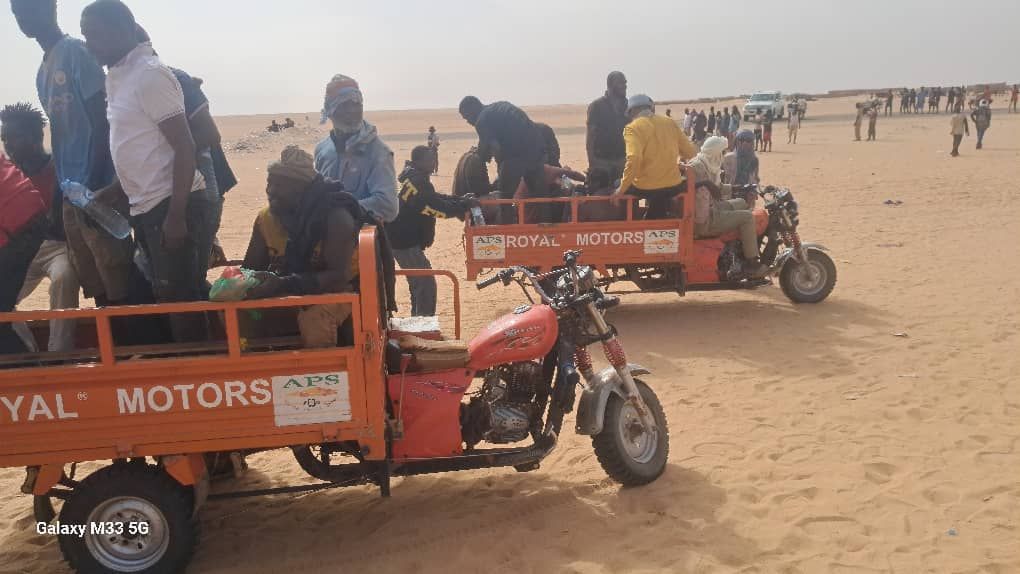
Algeria's border with Niger has also become a key humanitarian concern because of Algeria's expulsion of migrants and asylum seekers in the region throughout the pandemic (see also the 13 October 2020 update on this platform). The expulsions have often taken the form of ad hoc mass removals, during which larges groups of people are stranded in the desert. In April 2021, Médecins Sans Frontières (MSF) reported that since the start of the year, some 4,370 people had been abandoned by Algerian security forces in the middle of the desert in a place nicknamed “point zero,” near Agadez in Niger. Migrants abandoned in the desert are left without GPS or maps, forcing them to find their way to Niger. Falikou, a 28-year-old Ivorian, told Infomigrants in January 2021: “They dropped us off about 15 km from the border. The rest we had to do on foot. That night, between 2 a.m. and 6 a.m., we walked towards Niger, there were about 400 of us.”
According to MSF, the deportation procedures follow a similar pattern: migrants are arrested, sent to detention centres for days or weeks, and then put in buses that take them to the desert. According to one deportee named Safi: “The gendarmes broke down the door. … They took everything: money and phones. Then they took me to the police station.” Safi was then sent to a detention centre for four days before being transported to the border between Algeria and Niger in the desert.
According to MSF, 23,175 migrants crossed the desert in 2020 and arrived in the small town of Assamaka near Niger’s border with Algeria. Although this figure is slightly lower than the 29,888 recorded expulsions in 2019, most of the arrivals occurred after Niger’s borders had been officially closed due to the COVID-19 pandemic. MSF reported that most of their patients had experienced violence, including torture.
UNHCR has been a key source of pandemic-related support for refugees and asylum seekers in Algeria, in particular for those at the five refugee camps near Tindouf. By the end of July 2021, the refugee camps had experienced large waves of COVID-19 infections, including more than 1,460 cases and 63 deaths. To combat the pandemic in Tindouf, UNHCR provided 10,000 rapid antigen tests, as well as masks, soap, and hand sanitiser, as well as bleach for disinfection of public places.
While the country began a national vaccination campaign in January 2021, according to the local humanitarian organisation, Aprosch Chougrani, few migrants are being vaccinated against COVID-19 in the town of Oran in northwest Algeria. The organisation believes this is partly due to the fear of being deported by Algerian security forces as well as for fear of stigmatisation. On the other hand, Sahrawi refugees began being vaccinated in May 2021. The Algerian Government donated vaccinations to the refugees and UNHCR is supporting the vaccination campaign. In Algiers, UNHCR is also conducting registration, Refugee Status Determinations, and documenting asylum seekers, while advocating for the adoption of legislation to protect persons in need of international protection. United Nations mechanisms have already commented on Algeria’s lack of asylum legislation.
During its review for the third cycle of the UN Universal Periodic Review (UPR) in 2017, Algeria received several asylum-related recommendations, including: “adopt national legislation implementing the Convention relating to the Status of Refugees and its 1967 Protocol, in order to institute a functioning system for the processing of refugees in accordance with international law and to grant protection to refugees determined and recognised as such by the Office of the United Nations High Commissioner for Refugees (Sweden) (para. 129.222)” and “grant and recognise refugee status for all persons coming under the mandate of the United Nations High Commissioner for Refugees, in particular by giving them the national documents necessary to that effect (Portugal) (para. 129.226).”
According to Human Rights Watch (HRW), between early September and early October Algerian authorities expelled more than 3,400 people from at least 20 countries, including 430 children and 240 women, all of whom were sent to Niger. The expulsions followed waves of arrests in no fewer than nine cities, during which children were reportedly separated from their families by security personnel, migrants and asylum seekers were stripped of their belongings, and no efforts were made to screen people for vulnerabilities or protection needs. HRW reported that Algerian authorities crammed Nigeriens into trucks or buses and handed them over to Niger’s army, while convoys of mixed nationalities were reportedly left in the desert near the border.
As reported previously on this platform, the onset of the COVID-19 pandemic did not deter Algeria from continuing to expel migrants, in contrast to other countries in the region (see 29 May and 15 April Algeria updates on this platform). However, the recent roundups and mass expulsions appear to represent a sharp uptick in these operations. So far this year, Algeria has deported more than 16,000 people, with Nigeriens making up a little over half of all deportees.
On 1 October 2020, Algeria’s Interior Ministry announced a new operation to combat “illegal migration,” claiming it respected human rights. However, on 3 October Algeria expelled 705 adults and children of 18 nationalities to the desert, followed by the forcible return of 957 Nigeriens in a convoy on 5 October, and the expulsion of 660 people of 17 nationalities to the desert on 8 October.
Prior to their expulsions, migrants and asylum seekers were detained in police stations, holding centres, and camps. According to HRW, while all the Nigerien convoys are conducted in-line with a 2014 bilateral oral agreement, mass expulsions of mixed-nationality groups to the border are not. Niger’s Interior Ministry stated that they had asked Algeria to refrain from expelling non-Nigerien nationals to their border.
Six migrants told HRW that Algerian authorities deported them to the border without any due process. In addition, three of the migrants reported that police or gendarmes beat them or their friends during the roundups or in detention. Two migrants said they saw authorities destroy other migrants’ documents during the roundups. All six migrants said the authorities had confiscated everything they had on them, including phones and money, and never returned any of it.
Non-African nationals have also been expelled in this manner, including Yemeni, Syrian, and Palestinian asylum seekers. According to HRW, of the 3,400 migrants expelled by Algeria between 5 September and 8 October, around 1,800 were Nigeriens driven into Niger in “official” convoys; the remaining 1,600 people--mostly West and Central Africans, in addition to 23 Sudanese, two Somalis, two Eritreans, two Mauritians, one Pakistani, and one Libyan--were left at the border. HRW stated that the Algerian military stripped migrants of all their personal belongings, abandoning them and ordering them to walk 15 kilometers to Assamaka. Migrants expelled in July described similar experiences: “they pushed us into the desert and left us there, saying: ‘this is the way to Niger’. I had no shoes; I walked barefoot. It took us five or six hours.”
Some of the deported migrants stated that Algerian authorities adopted certain measures to avoid the spread of COVID-19 by undertaking temperature checks, wearing or distributing masks, and disinfecting vehicles. Yet, others have contested this saying no precautions were taken. None of the deported migrants reported any coronavirus testing procedures. As HRW noted, by placing hundreds of migrants together while denying them access to medical care, and deporting large groups of people without testing for COVID-19, Algeria has put many lives at risk. On 23 July, four Sahrawi refugees reportedly tested positive for COVID-19.
HRW denounced the practice stating that as a party to the UN Migrant Workers Convention, Algeria is prohibited from conducting collective expulsions and should examine each case individually. In addition, HRW emphasised that as a party to the UN and African Refugee Convention and the Convention Against Torture, Algeria is bound by the principle of non-refoulement, prohibiting the forced return of anyone to countries where they could face torture or threats to their lives or freedom. This means that governments should ensure that asylum seekers’ claims are fully examined before initiating any removal proceedings.
As regards the country’s prisons, as of 22 May, 150 correctional officers had reportedly resigned from their positions since the end of February protesting against the lack of protective equipment. Following the death of a prisoner in April at the Koléa prison (see 6 May Algeria update on this platform), two other prisoners died from COVID-19 at the El Harrach prison in mid-July. On 29 July however, several prisoners and staff members tested positive for the virus in the El Harrach prison: some were transferred to a hospital while others were cared for in the prison.
Responding to the Global Detention Project’s Covid-19 survey, a non-governmental actor in Algeria reported that expulsions of undocumented people have been halted since 21 March 2020, though information from news sources appears to contradict this claim. The source, who asked to remain anonymous but whose identity was verified by the GDP, said that they did not have any information regarding whether a moratorium on new immigration detention orders had been put in place or if the country had adopted new immigration and/or asylum policies. The source also stated that they were not aware if immigration detainees were being tested for Covid-19 or whether detainees had been released at all.
On 5 May, however, reports indicated that between mid-March and mid-April, hundreds of migrants were forcibly expelled from Algeria and now find themselves stranded in transit centres across Niger in harsh conditions in makeshift quarantine camps in Agadez.
As previously reported (see 6 May update on this platform), refugee camps such as the Sahrawi camps are particularly vulnerable to the spread of Covid-19. Reports indicate that as of 8 May, more than 170,000 people were living in the Sahrawi refugee camps, where healthcare centres have no ventilators and are not equipped to deal with the consequences of a Covid-19 spread. In the Tindouf province, where the camps are located, nine cases of Covid-19 have been confirmed. Oxfam’s Country Director in Algeria, Haissam Minkara said: “The new confirmed cases are very close to the camps, which means the risk of an outbreak is now imminent and would be disastrous for the refugee population - one that has already suffered four decades of conflict.”
Because refugees in the camps are living in close quarters and many of them suffer from health conditions, including acute malnutrition, diabetes, and anemia, an outbreak would be devastating. Oxfam reported that within the camps, health centres are already experiencing a shortage of beds, medical supplies, protective equipment for staff, and hygiene products. In addition, all non-essential businesses have been closed in the camps and travel between the five camps has been restricted by Algerian authorities. Oxfam stated that although suspending humanitarian aid activities is essential for preventing an outbreak, this also complicates life for people already on the brink. As camps are geographically and economically isolated, and with most economic activities in the camps halted, refugees’ ability to purchase food and hygiene items is increasingly limited.
Oxfam and its partners report that they are providing protective equipment and hygiene items to meet the needs of the 33 health facilities and clinics in the camps in addition to manufacturing and installing handwashing units throughout the camps. Oxfam is appealing to the international community to support funding needed to help respond to the crisis. Oxfam’s country director stated: “The Sahrawi refugee crisis has been overlooked for four decades and now, more than ever, the stakes couldn’t be higher for those already left behind by the international community. We are mobilising resources, but it will not be enough. Oxfam is looking to the international community for support to strengthen our capacity to deal with an outbreak.”
On 18 April, the country has also opened sewing workshops in 30 of its penitentiaries with the aim of producing 200,000 masks. An extension of this initiative is being planned, by which prisoners would also produce protective suits for medical personnel and disinfection cabins.
In correspondence with the Global Detention Project (GDP), UNHCR Algeria reports that the Algerian Government “suspended collective expulsions of migrants in irregular situations in Algeria in mid-March due to the Covid-19 crisis. However, it is reported that groups of nationals from Niger continued to be removed to Niger in March and April, although in smaller numbers than before. However, cross-border movement restrictions taken to contain the spread of Covid-19 might currently impact on the possibility for refugees to access the territory and asylum, which must be maintained even as governments take measures to protect public health.”
UNHCR Algeria also told the GDP that “Algeria has not adopted any new asylum policies or practices in response to the Covid-19 crisis. UNHCR office in Algiers receives and registers asylum applications and conducts refugee status determination. Due to the Covid-19 situation, the number of asylum applications received has decreased since March 2020. Reception and appointment for refugees and asylum-seekers in UNHCR office have been temporarily suspended to prevent the virus transmission, and remote pre-registration and interviewing modalities were introduced. Through its Call Centre numbers, Hotline and UNHCR Help website for Algeria (https://help.unhcr.org/algeria/), UNHCR is providing practical information and assistance on a daily basis on procedures and services available to refugees and asylum-seekers during the Covid-19 situation.”
As of 5 May 2020, Algeria had recorded 4,648 Covid-19 cases and a total of 465 deaths related to the disease. The government enacted two Decrees (No. 20-69 and 20-70) on 21 and 24 March, establishing social distancing measures, confinement facilities, movement restrictions, and specific rules on commercial activities. Public transport, flights, trains and taxis have all been suspended. The government has announced that these measures will remain in palce until 14 May.
Refugee camps like the Sahrawi refugee camps, located a few kilometers from Tindouf, are particularly vulnerable to the spread of Covid-19. Due to the lack of medical staff and health care material, the spread of Covid-19 within these camps could cause a catastrophe. A Saharawi doctor, Abdala Banani Saaid, stated that the health personnel has just 600 pairs of gloves and 2000 masks for a population of between 180,000 and 200,000 people. She added that “no health centre is really ready. Even the national hospital does not have respiratory equipment. Let’s hope we don’t get any case, because we really don’t have anything here.”
UNHCR, UNICEF, WFP and five NGO partners have called attention to the challenges faced by Sahrawi refugees. A plan requiring US$ 15 million has been drawn up by the these organisations outlining measures to: “(1) prevent transmission of Covid-19 among Sahrawi refugees; (2) provide adequate care for patients affected by Covid-19 and to support their families and close contacts; and (3) adapt programmes in health, education, food security, protection, and water, sanitation and hygiene (WASH) to mitigate the worst effects of the pandemic.” Agostino Mulas, UNHCR representative in Algeria stated that “as governments across the world are taking extraordinary measures to contain the spread and mitigate the impact of Covid-19, we must not forget vulnerable populations such as the Sahrawi refugees. I would like to express our gratitude to the Algerian Government for its continued support to this refugee population and for including them in all the Covid-19 national response strategies … I humbly call on all donors, whether governments, foundations or individuals, to support these efforts and help the humanitarian community working in the Tindouf camps to face this unprecedented crisis.”
On 1 April 2020, the Algerian President, Abdelmadjid Tebboune, ordered the release of 5,037 prisoners. Prisoners on remand and those with a sentence of less than 18 months were released while those convicted of terrorism, espionnage, murder or other violent crimes will remain in prison. In the Koléa prison, a prisoner died from Covid-19 on 9 April 2020. Following the death, the prison was placed in isolation and movements in and out of the prison have been suspended, including prisoners attending their hearings in Court. In the Blida prison, 59 prisoners were released to alleviate overcrowding and avoid the spread of Covid-19.
While the country has taken measures to protect prisoners from Covid-19, the GDP has been unable to find reports indicating that authorities have taken measures to assist migrants in detention.
With the Covid-19 crisis provoking a state of “panic” across Algeria, the country has announced a "plan d’urgence." Authorities have continued their efforts to block unauthorised migration from sub-Saharan countries, including detaining "migrants clandestins" and arresting alleged traffickers. However, simultaneously, the Ministry of Justice announced that it was temporarily suspending court functions. In addition, all visits to prisons have been suspended and lawyers may only see their clients through a glass separation. The GDP has been unable to find any reports indicating that authorities have taken measures to assist migrants and asylum seekers, including those in detention.
International Organisations
UNHCR Algeria Country Page, http://reporting.unhcr.org/node/7039#_ga=1.250451142.1574793458.1466088472
IOM Algeria Country Page, http://www.iom.int/countries/algeria
NGO & Research Institutions
Amnesty International, https://www.amnesty.org/en/countries/middle-east-and-north-africa/algeria/
Human Rights Watch, https://www.hrw.org/middle-east/n-africa/algeria