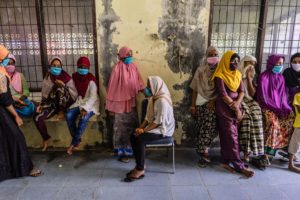
Italian police are targeting doctors who issue health certificates declaring migrants “unfit” for transfer to immigration detention. Observers argue that the case highlights a fundamental paradox in Italy: doctors are asked to determine whether someone is “fit” to be placed in immigration detention centres that many doctors–and a growing number of public health experts–regard as manifestly harmful to a person’s physical and mental health.
Investigating Doctors
In February this year, police raided the Infectious Diseases Department of the Santa Maria della Croci Hospital in Ravenna, and launched an investigation into eight doctors who had issued migrants with “unfit for detention” certificates, which protect them from being detained. Prosecutors argued that these certificates contained false information, and all eight doctors were subsequently barred from certifying fitness for detention–with three also banned from practicing medicine for 10 months.
In September, police widened their investigation, placing at least 23 additional doctors under investigation who had issued “unfit for detention” certificates, including in the cities of Bari, Biella, Bologna, Florence, Livorno, Milan, Rimini, Rome, and Varese. According to a warrant cited by Italian newspaper Il Fatto Quotidiano, investigators believe that doctors were not acting on their own, individual accord, but instead as part of “an associative structure with a division of roles and responsibilities.”
Deputy Prime Minister Matteo Salvini is cited by Italian media as stating that if found guilty, the doctors should face harsh sentences, and right-wing politicians have expressed support for the investigation, invoking fears about public safety and the alleged threat of migrants awaiting removal. However, numerous rights groups have expressed serious concerns and several protests in support of the doctors have been reported.
A statement from a coalition of organisations (the Tavolo Asilo e Immigrazione, TAI)–which includes Amnesty International Italy, ASGI, MSF, Oxfam Italy, and SOS Mediterranee Italy–expressed solidarity with the doctors and emphasised the “incompatibility of the Repatriation Detention Centers (CPR) with the principles enshrined in the Constitution, in particular Articles 13 and 32, as they are places of constant and daily violation of fundamental rights.”
The President of the Italian National Federation of Medical Associations, meanwhile, highlighted the need to maintain a clear separation between the responsibilities of doctors and those of security authorities. “Doctors are not auxiliaries of security policies but healthcare professionals, whose fundamental mandate is to protect the health and dignity of every person.” Further, he pointed to a fact-finding inquiry into conditions in Italy’s penitentiary system recently launched by the Chamber of Deputies’ Justice Committee, and called for its scope to be extended to examine health conditions in the country’s CPRs (Centri di Permanenza per il Rimpatrio).
“Fitness” to Be Confined in Harmful Environments
In Italy, a doctor affiliated with the national health system must certify that individuals are fit for life in a secure environment before they can be transferred to an immigration detention centre.
Although guidelines (Article 3(1) of the 2022 Lamorgese Directive) provide that examinations should focus on the presence of infectious diseases that would pose a risk to other detainees, mental disorders, and chronic degenerative diseases, observers have noted that assessments commonly only focus on the risk of communicable diseases, are brief, and are often conducted by certifying medics who have little knowledge of the conditions inside CPRs. As the European Committee on the Prevention of Torture (CPT) noted in 2024:
“In practice, the vast majority of medical examinations consisted of a cursory review of the main vital signs of the detained person, with no specific reference to their adaptability to a secure environment or signs of possible mental disorder. The medical certificates issued and reviewed by the delegation reflected the cursory nature of the examination and ranged from a brief statement certifying the “adaptability to a secure environment” to a modular checklist signed by the ASL doctor. Such certificates were issued by general practitioners in the community, doctors in emergency departments of civil hospitals and prison doctors, with unknown familiarity with the challenges and specific conditions of a CPR.”
Critically however, as the GDP documented in detail in a 2026 evidence brief for the WHO, the consistent and overwhelming evidence about the health problems stemming from even short periods of time in immigration detention centres appears to indicate that these centres are inherently harmful. Immigration detention also exposes people to social and environmental conditions–such as overcrowding, poor hygiene and sanitation, restricted access to medical care and other services, environmental hazards and pests, isolation, and uncertainty–that systematically aggravate existing health problems, leading to widespread negative outcomes for detainees. The WHO brief concludes: “Ultimately, to prevent the damaging health impacts of detention, immigration detention should be avoided during migration and asylum proceedings.”
Drawing upon our evidence brief, Nicola Cocco, an infectious disease specialist, and several co-authors note in an April article for the Lancet that immigration detention facilities are increasingly being characterised as “torturing environments” because their very nature and conditions can produce “suffering that meets the functional definition of torture.” Cocco has played a prominent role in the campaign to challenge the use of CPRs, and is considered by Italian investigators to have acted as a key point of references for doctors involved in issuing “unfit for detention” certificates. He and his colleagues conclude that:
“In this scenario the medical assessment of “fitness for detention” becomes a clinical paradox: certifying that a patient is “fit” for an environment known to destroy psychophysical integrity intrinsically contradicts the fundamental Hippocratic principle of primum non nocere (first of all, do no harm).”
In an earlier article for the BMJ, Cocco and others similarly noted:
“Healthcare practitioners should be firm in saying that no one should ever be considered fit to be “locked up” in pathogenic environments where health is disregarded and fundamental human rights are at risk.”
Detention Conditions in Italy
Observers have regularly documented serious concerns regarding conditions inside Italian CPRs–which, unlike Italian prisons, are private facilities run by private entities. However, as the GDP’s Executive Director explained to Italian newspaper Il Manifesto, “periodic calls to reform the system are regularly ignored.”
In January 2025 the GDP reported how the CPT had raised a “host of concerns” during its April 2024 visit to four of Italy’s main CPRs, including “poor material conditions, an excessive focus on security, inconsistent healthcare service quality, over-medication of detainees with psychotropic drugs, poor quality food, limited legal safeguards, and minimal transparency in the management of CPRs by private contractors.” In a scathing conclusion, it found that:
“[Italy’s] CPRs are not fit for purpose and that the treatment of persons held within them needs to significantly improve. … The CPT calls upon the Italian authorities to take resolute action to improve the approach and the general situation in CPRs in the light of the Committee’s recommendations.”
These concerns have also been recognised by Italy’s Council of State. In October 2025, it partially annulled the Ministry of Interior’s tender specifications governing the management and functioning of CPRs, requiring significant changes to provisions concerning healthcare and suicide prevention. Explaining the ruling, ASGI and Cittadinanzattiva note that “the ruling emphasises that prison provisions regarding healthcare and suicide prevention must constitute a minimum benchmark for CPRs.”
More recently, Tavolo Asilo e Immigrazione’s 2025 CPR monitoring report characterises Italy’s CPRs as “pathogenic environments,” and concludes that:
“The state of material squalor observed in all the centres, the total depersonalization of the detainees, the routine physical and psychological violence inflicted upon them, and the fact that individuals are merely ‘warehoused’ within the facilities … paints an extremely grave overall picture.”