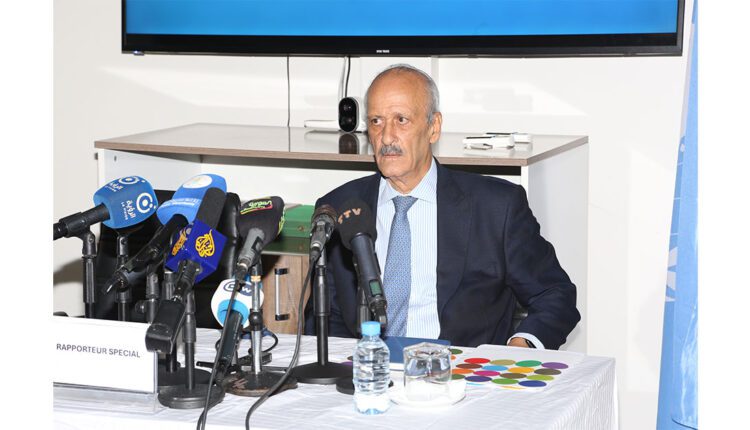
Following his visit to Mauritania on 2-12 September, the UN Special Rapporteur on the Human Rights of Migrants has released his preliminary findings and recommendations concerning the country’s treatment of non-nationals. In advance of the mission, the Global Detention Project provided the Special Rapporteur with a detailed briefing documenting persistent violations of migrants’ and refugees’ rights, including arbitrary arrest and detention, inhumane detention conditions, and collective expulsions. Many of these concerns were echoed in his initial post-visit observations.
The Special Rapporteur congratulated Mauritania–which has become a key transit country for migrant and refugees seeking to journey to the Canary Islands–for its efforts to adopt new policies protecting migrant and refugee rights, including the introduction of Law 2020-017 on trafficking in persons and the smuggling of migrants; the launch of a national referral mechanism for trafficking victims for 2024-2026; and progress on a new draft law on asylum.
On the other hand, the Special Rapporteur emphasised the persistence of policies and practices that violate the country’s human rights agreements, including arbitrary detention and summary removals. Pointing to challenges observed and reported during his visits to two key coastal cities, the Special Rapporter said: “The reality documented in Noaukchott and Nouadhibou by Government institutions, civil society, and the UN reveals persistent and grave problems. Migrants, refugees, and asylum seekers continue to face systemic violations.”
- Read the Special Rapporteur’s preliminary findings and observations
- Read the Global Detention Project’s briefing to the Special Rapporteur ahead of his visit
Widespread Arrests and Detention
Large numbers of migrants have been subjected to arrest, detention, and forced expulsion in recent years. Between January and April this year alone, some 30,000 irregular migrants are reported to have been apprehended in sweeping raids targeting them in homes, workplaces, and streets. According to the reports we have received from observers on the ground in Mauritania, conditions inside detention centres–amongst them the Dar Naim Detention Centre, Arafat Centre, police stations, and prisons–are dire, with detainees subjected to abuse, lack of food, and “non-existent hygiene.”
These practices were highlighted by the Special Rapporteur, who wrote:
“According to the information received, in both Nouakchott and Nouadhibou, migrants are frequently arrested without explanation — in their homes, in the streets, in workplaces, or during voluntary return journeys. Phones are confiscated, documents seized or destroyed, and communication with families is denied. Detention conditions remain poor. In centers such as Arafat or Nouadhibou – Maison Blanche, migrants live in overcrowded rooms, with inadequate food, minimal medical care, and severe language barriers. The Government itself has acknowledged shortcomings including food scarcity and lack of healthcare.”
Of concern, the Special Rapporteur observed a temporary reduction in migrant round-ups during his visit while also noting their resumption upon his departure. “He reminds the Government that targeted round-ups against the migrant community are in violation of Mauritania’s international obligations. He will continue to monitor the situation and calls the authorities to immediately halt such harassment against migrants and people in need of international protection such as asylum seekers and refugees.”
Mauritania’s detention of non-nationals was last highlighted by UN human rights monitoring mechanisms in 2019, when the Human Rights Committee urged the State Party to “intensify its efforts to provide national identity documents to refugees in order to facilitate their access to education, health care, and other social services in order to protect them from arrest, detention, and expulsion.”
Collective Expulsions
Following their arrest and detention, thousands of migrants, refugees, and asylum seekers have also been forcibly expelled across the border into Mali and Senegal. While Mauritania’s Minister of Foreign Affairs has previously stated that deportations are “carried out with respect for human rights,” there are numerous credible reports revealing abuses during forced removal operations. (For more, see our May blog post.)
The Special Rapporteur noted these expulsions, issuing a sharp critique:
“Perhaps the most alarming practice is the collective expulsion of migrants. Malians, Sudanese, and others fleeing active conflicts are deported without assessment of their protection needs. Children — including unaccompanied minors — and women have also been expelled. Deportations occur within 72 hours of arrest, leaving no possibility of appeal or legal aid. These expulsions violate not only Mauritania’s commitments under international law but also its own stated policies of non-refoulement. Deportations should be judicial decisions allowing migrants to appeal them. Currently, the decision to deport is merely administrative and does not provide the basic guarantees to any individual.”
He also emphasised the heightened risks faced by women during these proceedings:
“Women migrants face particular risks. Reports indicate night raids by police, verbal and physical abuse, sexual assault, and extortion. Many women are handcuffed during deportations, a degrading practice. In some cases, they are expelled separately from their children or spouses, which violates the principle of family unity. The Special Rapporteur also notes that a number of individuals, including minors, require special protection and additional medical, psychological and financial assistance, including for people living with disabilities and victims of abuse, including sexual abuse.”
Relevant Recommendations Issued by the Special Rapporteur
In light of his findings, the Special Rapporteur issued numerous recommendations to the Government of Mauritania, amongst them:
Detention:
- “Ensure that administrative detention centres comply with international human rights standards, by providing dignified, humane, and secure conditions of detention for migrants deprived of liberty.”
- “Strengthen judicial oversight of detention and guarantee humane conditions in all centres.”
Expulsions:
- “End collective expulsions and ensure every individual case is assessed before removal. Revise Article 3 of Law No. 2024-029 to incorporate procedural safeguards in line with Mauritania’s human rights obligations and the principle of non-refoulement.”
- “Ensure the protection of family unity and the best interests of the child by implementing protocols that prevent family separation during deportation and disembarkation, including prior family assessments, prioritization of non-custodial measures for families with children, and coordination with child protection services for reunification and care of unaccompanied or separated minors.”
- “Ensure that any return measure concerning a migrant is based on an individual procedure, respectful of fundamental rights and in compliance with the principle of non-refoulement and international standards.”
- Read the Special Rapporteur’s preliminary findings and observations
- Read the Global Detention Project’s briefing to the Special Rapporteur ahead of his visit