Egypt has recently returned hundreds of Sudanese nationals as part of a new “voluntary” transportation scheme that is jointly administered by Egypt and Sudan. Although officials describe the initiative in humanitarian terms, the returns–in addition to the hundreds of thousands of additional “voluntary” returns that have been reported since last year–coincide with larger efforts by Egypt to ramp up the targeting of refugees and asylum seekers for detention and deportation. The crackdown is creating a climate of fear amongst refugee communities and has raised questions about whether the returns can be considered “voluntary.” The UN continues to describe Sudan as the “largest and most devastating displacement, humanitarian and protection crisis in the world today.”
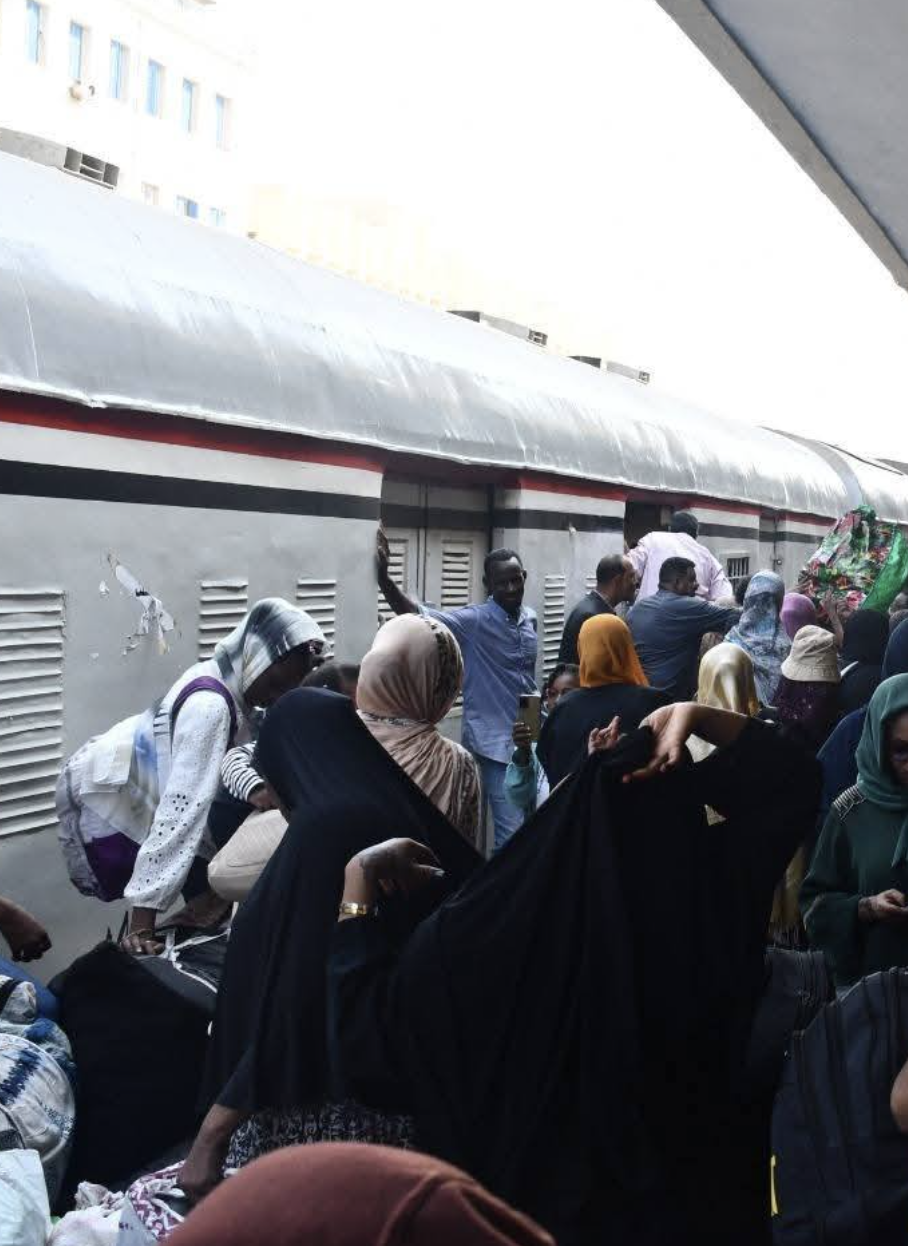
Various media outlets, including Reuters and AP, have recently reported on the joint Egyptian-Sudanese return scheme, which purportedly provides free transport to facilitate the “voluntary return” of Sudanese refugees. The most recent journey departed on 24 August. The programme involves a train journey from Cairo to Aswan, followed by boat and bus connections across the border, and has been coordinated by Egypt’s Ministries of Transport and Foreign Affairs, alongside actors in Sudan.
While the Egyptian National Railways Authority describes the initiative as part of the “close fraternal relations” between the two countries, reports hint at more concerning aspects. These include the involvement of ‘Defence Industries System’ (a Sudanese Armed Forces/SAF-owned arms company which is subject to EU, UK, and US sanctions) in financing the initiative as well as reports indicating and that the Sudanese government is encouraging the initiative to “reinforce its control over recently recaptured areas.”
News of this programme emerged at the same time as the IOM, UNHCR, and UNDP issued a joint statement in which the organisations note that as many as 320,000 refugees have crossed back to Sudan since last year. Most, they report, have returned to “pockets of relative safety” in Khartoum, Sennar, and Al Jazirah States. While some of these areas have been reclaimed by the SAF from the Rapid Support Forces (RSF), widespread devastation remains, and returnees face a “chronic lack of services.” As the IOM, UNHCR, and UNDP note, while calling for increased financial support:
“While fighting has subsided in the areas to which people are returning, conditions remain perilous. Public infrastructure — power supply lines, roads and drainage systems — have been completely destroyed. Schools and hospitals have been ruined or turned into collective shelters hosting displaced families. Lost or destroyed civil documents and the inability to replace them means people cannot access existing services. In addition to the dangers posed by unexploded ordnances, sexual violence and child rights violations are widespread.”
Made to Feel Unsafe
Importantly, the IOM-UNHCR-UNDP statement fails to make any reference to forced returns, a practice that the Egyptian military has long been accused of by on-the-ground observers (see, for instance, previous GDP reports about forced returns of Sudanese and deportation of Eritrean refugees).
Although the joint statement refers to “the thousands of people seeking to return home … driven by hope, resilience, and an enduring connection to their country,” observers have questioned the extent to which these returns can be considered “voluntary.” While some reports have highlighted refugees’ excitement to return, others highlight the difficult conditions in Egypt–including limited financial means–as a reason for deciding to return. In an interview with BBC Africa, UNHCR’s Regional Director for East and Horn of Africa said: “it’s not about willingness to return, but limited services inside Egypt.”
These returns are taking place against the backdrop of increasing pressure on refugees in Egypt. A recent joint report by the Refugees Platform in Egypt (RPE) and the Egyptian Initiative for Personal Rights (EIPR) states: “In the first three months of 2025, we have witnessed state authorities ramp up targeting of refugees and asylum seekers in a campaign that is unprecedented in both its scale and methods.” These methods have included stopping people in the street based on their skin colour and–in a new development for Egypt–raiding homes in neighbourhoods known to house large numbers of refugees and migrants, like 6th October City and Ard El-Lewa. Children have been amongst those apprehended during these raids, with rights groups documenting the arrest of at least 21 children in Faisal between 1 January and 23 March 2025.
Compounding refugee’s vulnerability is that Egypt’s legal system renders access to protection and asylum almost impossible, leaving refugees and migrants in a state of irregularity. As the GDP has previously reported, such as in this 2024 urgent appeal, visas are largely unattainable for Sudanese refugees, compelling many to enter Egypt irregularly. Further worsening their vulnerability, asylum seekers must travel over 1,000 kilometres to Cairo to lodge their applications for protection–but the average wait for UNHCR registration is eight to twelve months. Refugees and asylum seekers are also required to obtain six-month residence permits to regularise their stay in the country–but according to RPE and EIPR, as of March 2025, the wait for an appointment had reached 29 months. Without UNHCR paperwork and residence permits, refugees and asylum seekers face a constant risk of detention.
Following their arrest and detention, many Sudanese are arbitrarily expelled from the country in a practice that amounts to refoulement. Local actors report a record number of such deportations during the first quarter of 2025 (Reuters reports that 21,000 were removed between January and March), and “in none of the cases documented was the decision to deport a refugee or asylum seeker subject to judicial review, nor were the refugees o r asylum seekers allowed access to asylum processing.”
According to RPE and EIPR, the culmination of this has been the creation of a “higher policy to strip refugees of protection and make them feel unsafe in the host country.” If this is the case, it is difficult to present current returns to Sudan as entirely voluntary.
Commenting on the situation, the Geneva-based Committee for Justice (CFJ), which promotes human rights in Egypt, told the GDP: “In such an environment, initiatives branded as ‘voluntary returns,’ such as the so-called free train journeys, cannot genuinely be considered voluntary. Refugees are being driven to leave because they face harassment, detention, lack of documentation, and almost no access to livelihoods, education, or healthcare. Returning under these conditions is not a free choice, but the result of coercion and despair. A truly voluntary return must be safe, dignified, and informed; standards that are absent today in Egypt. Without urgent reforms and genuine protection, these practices risk pushing vulnerable people back into a war zone, endangering their lives and violating international refugee law.”
UNHCR states in its Handbook on Voluntary Repatriation: International Protection:
“One of the most important elements in the verification of voluntariness is the legal status of the refugees in the country of asylum. If refugees are legally recognized as such, their rights are protected and if they are allowed to settle, their choice to repatriate is likely to be truly free and voluntary. If, however, their rights are not recognized, if they are subjected to pressures and restrictions and confined to closed camps, they may choose to return, but this is not an act of free will.”
Reluctance to Reform
For the past few years, rights groups–including the Global Detention Project–have repeatedly urged Egypt to cease its harmful treatment of refugees. These concerns have also been echoed by official international monitoring bodies, including a recent appeal issued by a group of UN experts regarding Egypt’s controversial new asylum law.
While the country engages with human rights mechanisms, it often appears to be largely symbolic. Following its fourth periodic review by the UPR Working Group, for example, recommendations that the country ratify important international instruments, like the Optional Protocol to the Convention against Torture (OPCAT), were merely “noted”–while in response to key recommendations related to upholding the principle of non-refoulement, it expressed its support while stating “already implemented.” As the Executive Director of the CFJ noted at a side event on the sidelines of the 59th session of the UN Human Rights Council in July, Egypt’s participation in the UPR was “not reflective of a genuine commitment to reforming the human rights situation in the country, but rather closer to a publicity effort aimed at improving its international image without taking concrete steps on the ground.”