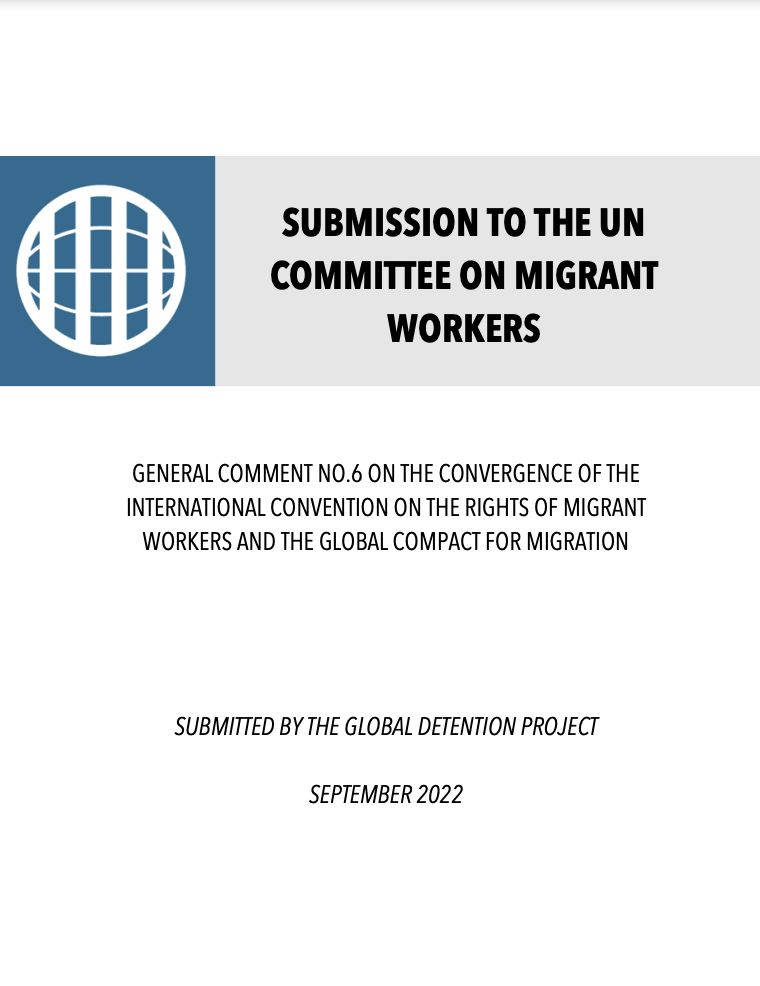
To support the UN CMW’s work developing its new General Comment (No.6) on the Convergence of the Convention and the Global Compact for Safe, Orderly and Regular Migration, the GDP has provided comments – particularly regarding Articles 16 and 17 of the ICRMW and Objective 13 of the GCM. […]
Publications & Events
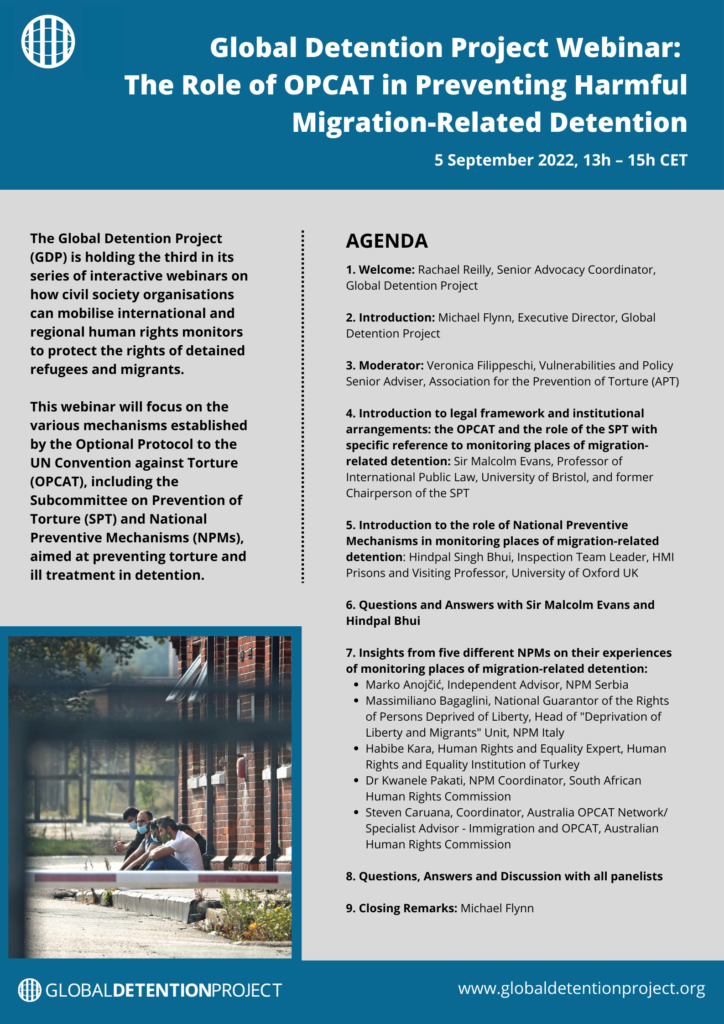
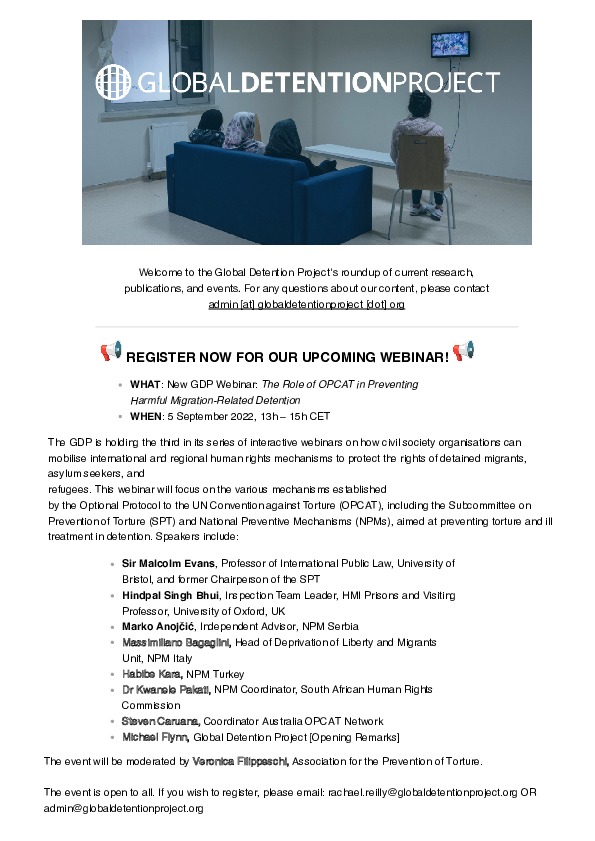
GDP Hosts Third Interactive Webinar: The Role of OPCAT in Preventing Harmful Immigration Detention
On Monday 5 September, the GDP hosted the third in its series of interactive webinars aimed at building stronger connections between local civil society organisations and international human rights instruments and exploring how these instruments can be applied to protect the rights of detained refugees and migrants. Examining the Optional Protocol to the Convention Against Torture (OPCAT), this webinar explored the role of the OPCAT bodies—the Subcommittee on Prevention of Torture and other Cruel, Inhuman or Degrading Treatment or Punishment (SPT) and National Preventive Mechanisms (NPMs). […]
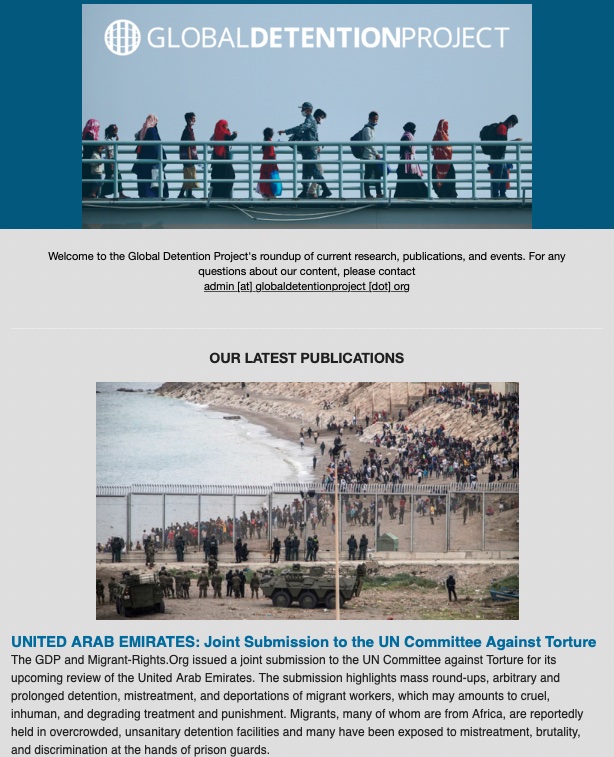
NEWSLETTER: Investigating Detention in Southern Africa + The OPCAT Webinar + New Blog
The GDP’s Summer 2022 roundup of research, publications, and events – including our latest submissions to the Committee on the Elimination of Racial Discrimination and the Working Group on Arbitrary Detention; news about our blog relaunch; and information about our upcoming webinar. […]
TÜRKIYE: Joint Submission to the Committee on the Protection of the Rights of All Migrant Workers and Members of their Families
Together with the International Refugee Rights Association, the GDP has submitted information to the Committee on Migrant Workers concerning Türkiye’s immigration detention laws and practices. In particular, the submission highlights reports of ill-treatment and limited access to health care; the detention of vulnerable groups; and the treatment of migrants identified as Yabancı Terörist Savaşçı. […]
“Immigration Detention” in WHO’s World Report on the Health of Refugees and Migrants
On 20 July, the World Health Organisation launched its first ever report on refugee and migrant health. Bringing together key evidence about the multitude of health challenges faced by refugees and migrants, the report explores the trends, gaps, and good practices in protecting and promoting the health of refugees and migrants worldwide. Key to health […]
ZIMBABWE: Joint Submission to the Committee on the Elimination of Racial Discrimination
In a joint submission to the Committee on the Elimination of Racial Discrimination, the GDP and LHR highlight Zimbabwe’s efforts to control and block migrants, refugees, and asylum seekers for reasons related to their nationality. In particular, the submission points to reports of discriminatory treatment including forced returns of refugees, limited freedom of movement and confinement in Tongogara Camp, female migrants’ health vulnerabilities, and the detention of children. […]
GDP Webinar: The Many Tools of OPCAT for Preventing Harmful Migration-Related Detention
The third instalment of the GDP’s webinar series on how civil society organisations can mobilise international and regional human rights monitors to protect the rights of detained refugees and migrants focuses on the various mechanisms established by the Optional Protocol to the UN Convention against Torture (OPCAT) that can help prevent human rights violations in migration-related detention, including the Subcommittee on the Prevention of Torture (SPT) and National Preventive Mechanisms (NPMs). […]
NEWSLETTER: OPCAT and Preventing Harmful Detention + UAE & Botswana under Review
The GDP’s June 2022 roundup of research, publications, and events – including our latest submission to the Working Group on Arbitrary Detention, and news of our upcoming webinar. […]
BOTSWANA: Submission to the UN Working Group on Arbitrary Detention
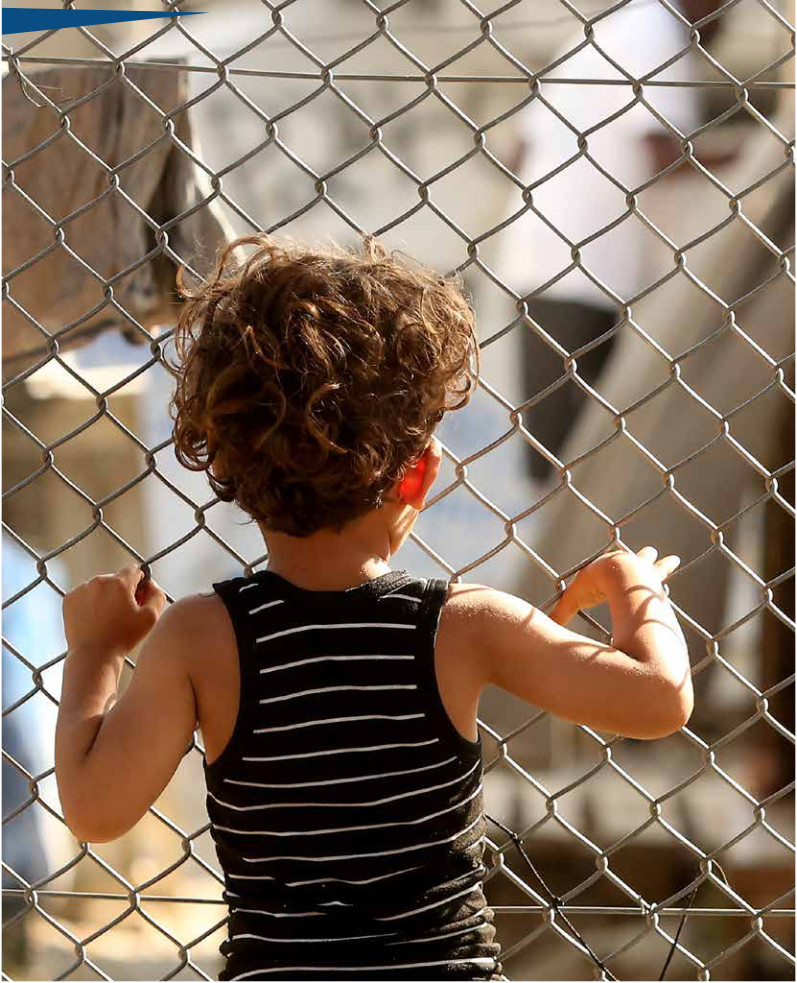
Botswana has both administrative migration-related detention measures, including for the detention of refugees, as well as criminal penalties that can include lengthy imprisonment for migration offenses. These measures violate norms promoted by the Working Group, which says that migration infractions must not be subject to criminal penalties and there should be a prohibition on the detention of refugees, asylum seekers, and children. […]
The GDP and Migrant-Rights Submit Freedom of Information Requests to Government Agencies in UAE
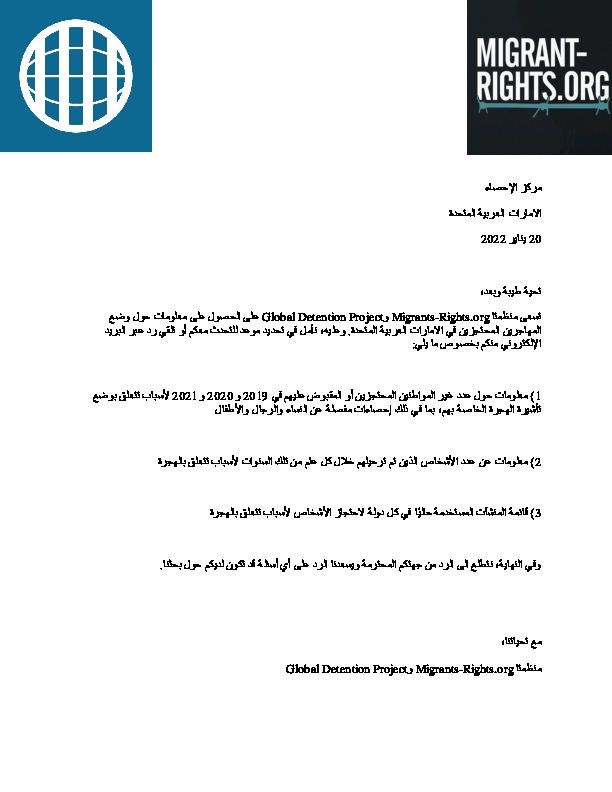
On 21 June 2022, the GDP and Migrant-Rights.org submitted freedom of information requests regarding immigration detention practices to UAE’s Ministry of Interior; Judicial Department (Human Rights Office); Federal Authority for Government Human Resources; Ministry of Human Resources Emiratisation; and Statistics Center. In particular, we requested the following information: The GDP and Migrant-Rights.org did not receive a response […]