In a submission to the UN Committee on the Elimination of Racial Discrimination, the GDP and the Migrant Rights Research Open Repository (MRRORS) direct the Committee’s attention to Kuwait’s detention and removal of migrants on immigration status related grounds. The submission examines how immigration enforcement practices—including detention, deportation, and restrictions linked to residency status—affect migrant […]
Publications & Events
Lithuania: Joint Submission to the Universal Periodic Review
Together with our partner in Lithuania, the Human Rights Monitoring Institute (HRMI), the GDP submitted a joint report to the UN Universal Periodic Review (UPR) examining Lithuania’s immigration detention laws and policies. Highlighting Lithuania’s failure to implement key recommendations it accepted during the third cycle of the UPR in 2022, the report documents ongoing concerns […]
Webinar: “Immigration Detention: From Global Trends to Bosnia and Herzegovina”
On 23 June, the GDP was invited to speak at a Collective Aid webinar, “Immigration Detention: From Global Trends to Bosnia and Herzegovina.” Presenting their latest research report examining conditions within Bosnia and Herzegovina‘s Lukavica Detention Centre, Collective Aid’s Advocacy Manager Anna Gruber highlighted serious deficiencies in the centre, including degrading living conditions, a near-total […]

2025 Annual Report: Building Momentum to Roll Back Immigration Detention
The Global Detention Project 2025 Annual Report chronicles a year of expanding research, advocacy, and global engagement amid rapidly evolving migration control regimes. From exposing abusive detention practices and opaque deportation arrangements to strengthening partnerships with UN bodies, civil society, and affected communities, the report captures growing momentum to challenge immigration detention and advance respect for migrants’, asylum seekers’, and refugees’ fundamental rights worldwide. […]
Ghana: Joint Submission to the UN Committee on Migrant Workers
Together with Asian Americans Advancing Justice, the Ghana-based Democracy Hub, and the Global Strategic Litigation Council, the Global Detention Project has urged the UN Committee on Migrant Workers to assess the country’s recent agreement with the United States to accept deported third-country nationals, as well as its subsequent detention and removal of these individuals. […]
Guatemala: Joint Submission to the UN Committee on Migrant Workers
In a submission to the United Nations Committee on Migrant Workers ahead of its adoption of a List of Issues Prior to Reporting for Guatemala, the Global Detention Project and the American Friends Service Committee called on the Committee to request detailed information from Guatemala regarding its recent agreement with the United States to accept deported third-country nationals. Together, we also urged the Committee to seek information on the detention and removal of these individuals to enable effective scrutiny of the impacts of this scheme. […]
MSF-Italy General Assembly Keynote: The Global Expansion of Immigration Detention, “Unleashed from Human Rights”
11 April 2026 In a keynote address at MSF-Italy General Assembly in Italy, the GDP’s Executive Director issued a stark warning: immigration detention is not only expanding worldwide—it is becoming more punitive, less accountable, and increasingly detached from basic human rights standards. Alongside panellists Stefano Anastasia (the Guarantor for the rights of detainees for the […]
Trinidad and Tobago: Joint Submission to the Universal Periodic Review
Since 2018 Trinidad and Tobago (T&T) has experienced unprecedented flows of migrants and asylum seekers from Venezuela, many of them entering via irregular channels. The country’s legislation, however, treats irregular entry as a criminal offence and it continues to lack asylum-specific legislation, leaving all irregular arrivals vulnerable to arrest and detention upon arrival. Together with our partner in the Caribbean, the Caribbean Human Rights Centre, we highlighted shared concerns regarding the country’s immigration detention policies and practices to the Universal Periodic Review Working Group–and called for important changes to ensure respect for non-nationals’ rights. […]
Thailand: Joint Submission to the Universal Periodic Review
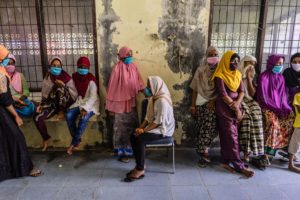
Despite legal safeguards and stated commitments to protect migrants, refugees, and asylum seekers—including those in detention—Thailand’s treatment of these groups continues to fall short of international standards. Together with our partner, the Cross Cultural Foundation, we raised multiple concerns with the Universal Periodic Review’s Working Group, urging critical reforms to the country’s detention policies and practices and broader compliance with its international human rights obligations. […]
Cyprus: Submission to the UN Committee on the Elimination of Racial Discrimination
In a new submission, the Global Detention Project has urged the UN Committee on the Elimination of Racial Discrimination to demand that Cyprus end its harmful migrant detention policies–which include the continued use of police holding cells; arbitrary and de facto detention in Pournara Reception Centre; and prison-like detention conditions in Menoyia Detention Centre. The […]