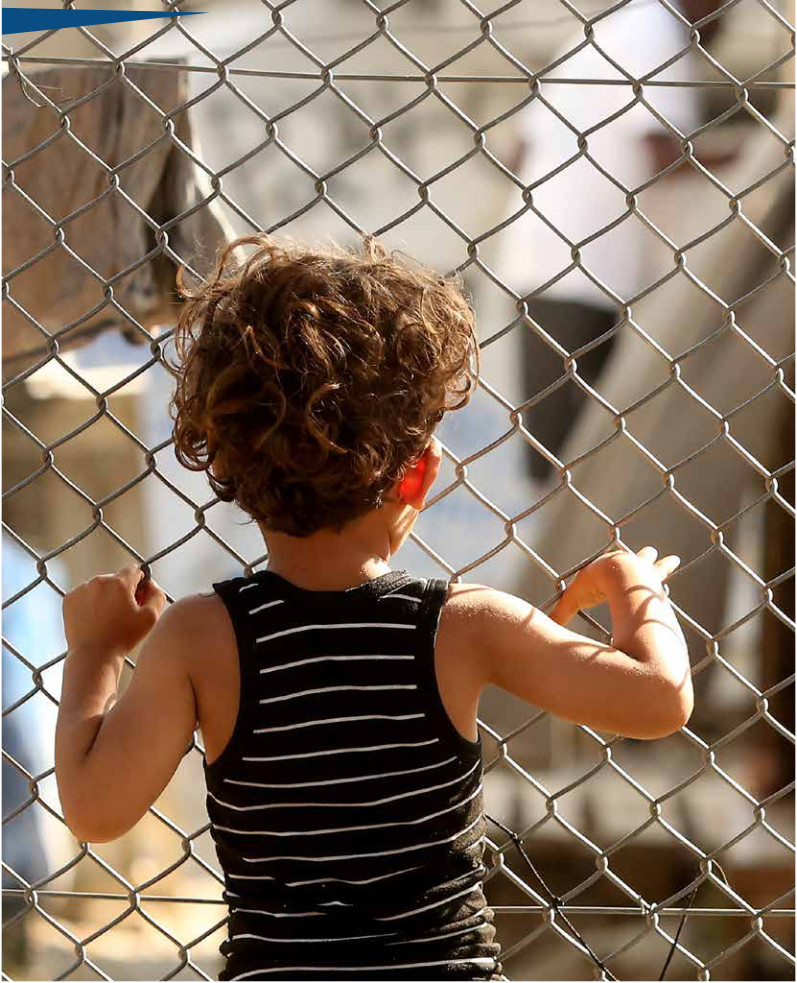
The Institute on Statelessness and Inclusion interviews the GDP’s Mariette Grange about the detention of stateless persons and the importance of international human rights standards in safeguarding the rights of this vulnerable population. […]
Staff PublicationsArticles, blogs, books, chapters, op-eds, and other publications written by Global Detention Project staff members and advisers for journals, partner organisations, scholarly collaborations, or media outlets.
Articles, blogs, books, chapters, op-eds, and other publications written by Global Detention Project staff members and advisers for journals, partner organisations, scholarly collaborations, or media outlets.
Border Securitization and Containment vs. Fundamental Rights: The European Union’s “Refugee Crisis”
When the “refugee crisis” surged to the forefront of the EU’s agenda in 2015, it did little to discourage the xenophobic wave that swept across member states. It did just the opposite. […]

Detained Beyond the Sovereign: Conceptualising Non-State Actor Involvement in Immigration Detention
In this chapter for the recent book Intimate Economies of Immigration Detention (Routledge, 2016), Michael Flynn discusses the emergence of new actors in immigration detention systems across the globe and the challenges this poses in efforts to hold states accountable. […]
From Bare Life to Bureaucratic Capitalism: Analyzing the Growth of the Immigration Detention Industry as a Complex Organization
This journal article by a GDP Contributing Researcher assesses post-structuralist approaches to the study of immigration detention, contrasting them with conceptual approaches developed in bureaucratic capitalism, which highlight the various private- and public-sector interests impacting the evolution of detention regimes. […]
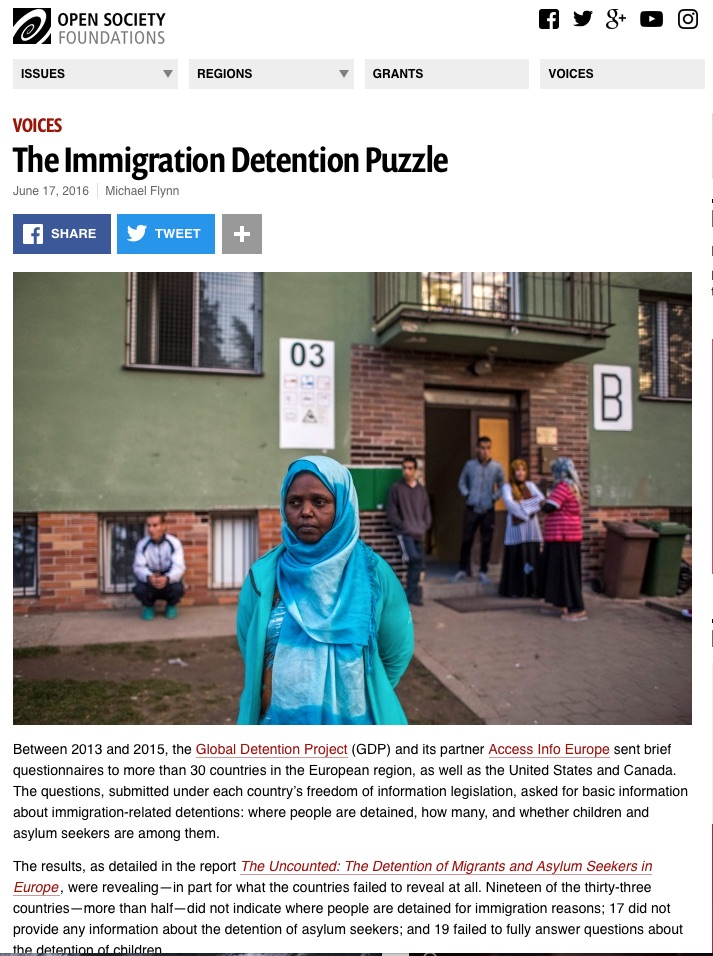
The Immigration Detention Puzzle
We should be shocked that so many countries fail to provide even basic details about their immigration detention practices. And yet, for those who have worked on this issue over the last two decades, the absence of public accountability about detention comes as no surprise.
[…]
Sovereign Discomfort: Can Liberal Norms Lead to Increasing Immigration Detention?
Liberal democracies betray discomfort at public scrutiny of immigration detention, neglecting to release statistics, cloaking detention in misleading names, and limiting what they define as deprivation of liberty. These countries have also expanded their detention activities and encourageed their neighbors to do the same. What explains this simultaneous reticence towards and embrace of detention?
[…]
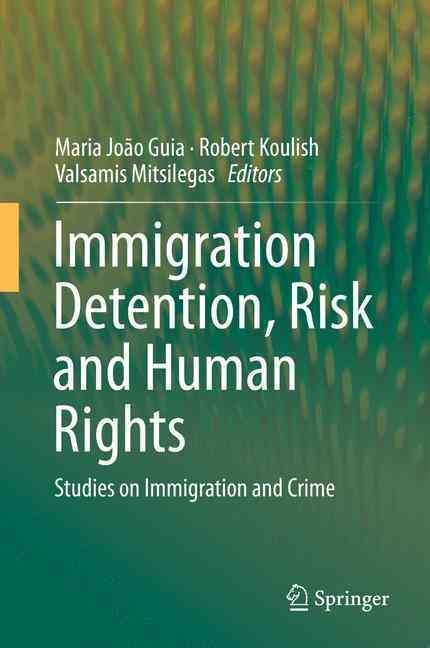
Detaining Outsiders: Migrants, Borders, and Security
Research undertaken by the Global Detention Project indicates that an often over-looked variable shaping detention policies and practices is the response by states to pressure stemming from key international norms relevant to the rights of non-citizens, including the right to liberty and security of the person. Available here. […]
The CJEU’s Ruling in Celaj: Criminal penalties, entry bans and the Returns Directive
In its ruling in the Skerdjan Celaj case (C-290/14), rendered on 1st October 2015, the Court of Justice of the European Union (CJEU) addressed once again the relation between immigration and criminal law and in particular the compatibility of national penal measures imposed as a punishment for irregular migration with the EU Returns Directive.
[…]
Discipline and Punish? Analysis of the Purposes of Immigration Detention in Europe
Pre-removal detention is usually considered an administrative measure aimed at the facilitation of the removal of irregular migrants by preventing them from absconding during removal proceedings. The administrative nature of immigration detention implies that persons subject to this measure do not have access to the fair trial guarantees that criminal detainees are entitled to. However, the assessment of pre-removal detention under European Union and Swiss legislation demonstrates the penal nature of such detention despite its formal administrative classification.
[…]