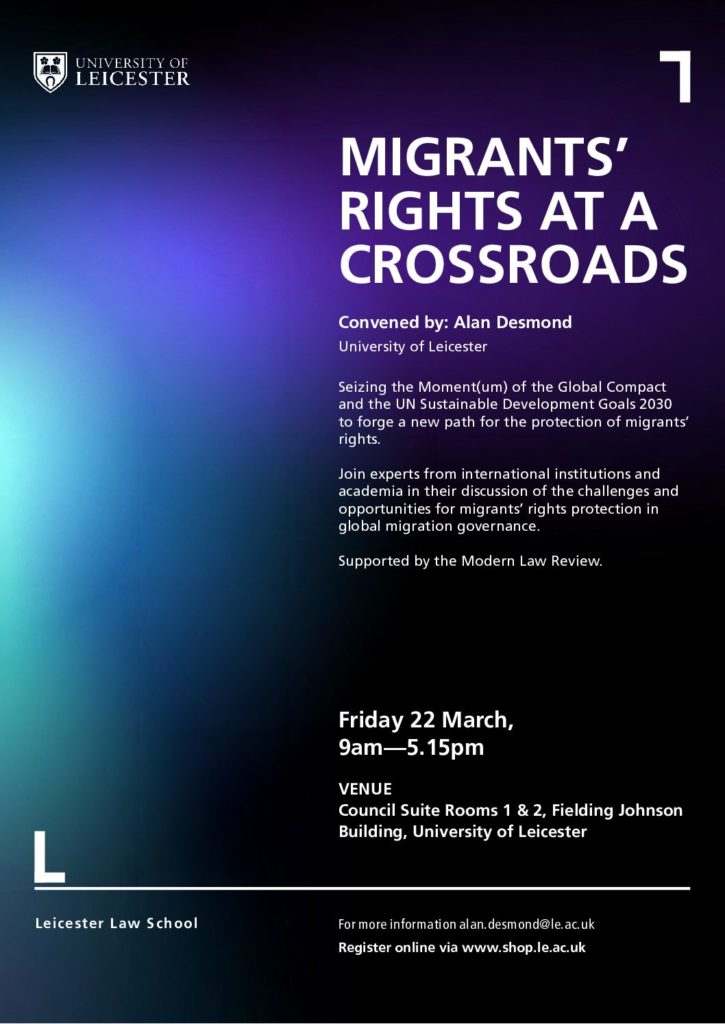
Migrants’ Rights at a Crossroads: Seizing the Moment(um) of the UN Global Compact on Migration and the SDGs 2030 to Forge a New Path for the Protection of Migrants’ Rights University of Leicester – Leicester Law School 22 March 2019 With the recent adoption of the UN Global Compact on Migration (GCM), and the integration […]
Publications & Events
Global Working Group of National Societies Working in Immigration Detention
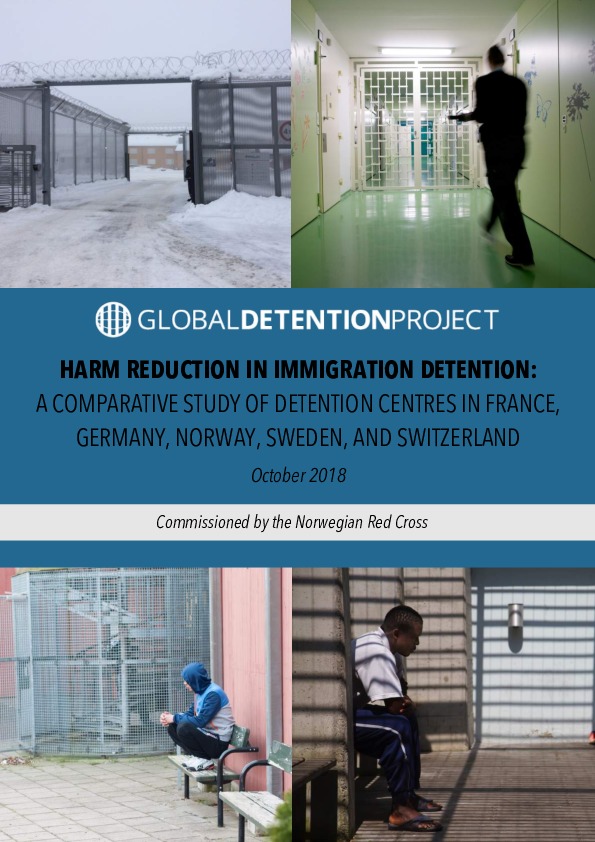
On 20 March, the GDP was invited to make a presentation about our report “Harm Reduction in Immigration Detention” at the annual meeting of the Global Working Group of National Societies Working in Immigration Detention, a gathering of National Societies of the International Red Cross and Red Crescent Movement co-hosted by the International Committee of the Red Cross. […]
Annual Study Visit of the MSc Refugee and Forced Migration Studies (University of Oxford)
On 12 March, GDP Senior Researcher Mariette Grange was invited to address a group of students from the University of Oxford’s MSc Refugee and Forced Migration Studies programme who were visiting Geneva to learn about the work of relevant international organisations and research institutions based here. Discussing the issue of immigration detention around the world, […]
NEWSLETTER: International Women’s Day – Focusing Attention on the Abuses Women Suffer in Immigration Detention
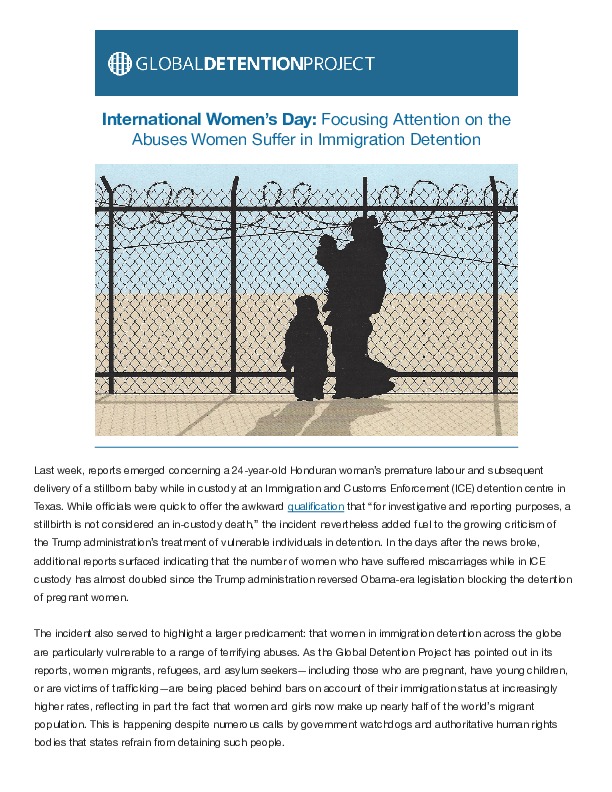
Last week, reports emerged concerning a 24-year-old Honduran woman’s premature labour and subsequent delivery of a stillborn baby while in custody at an Immigration and Customs Enforcement (ICE) detention centre in Texas. While officials were quick to offer the awkward qualification that “for investigative and reporting purposes, a stillbirth is not considered an in-custody death,” the incident nevertheless added fuel to the growing criticism of the Trump administration’s treatment of vulnerable individuals in detention. […]
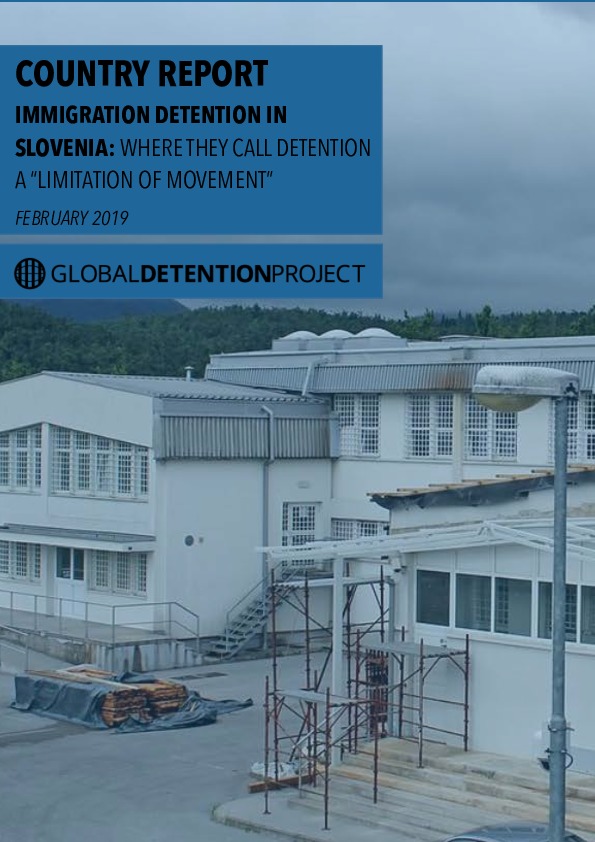
Immigration Detention in Slovenia: Where They Call Detention a “Limitation of Movement”
Immigration Detention in Slovenia (2019 Report): A key transit country for refugees and migrants travelling the “Balkan Route,” Slovenia witnessed a significant increase in the number of border crossings during the “refugee crisis.” Citing fears of a “humanitarian catastrophe,” the country tightened immigration controls, erected wire fencing along its border with Croatia, and introduced stringent new […]
NEWSLETTER: February 2019
✅ Detention conditions in #Slovakia
✅ The rise in detention of asylum seekers at the #EU’s external borders
✅ Putting the “Global Compacts” to Work […]
The Global Governance of Migration: Spotlight on the International Organization for Migration
On 2 February 2019, the GDP’s Senior Researcher, Mariette Grange, was invited to participate in an Expert Workshop on the International Organization for Migration (IOM) at the Refugee Studies Centre, Oxford. Her presentation, “IOM and Detention Practices,” unpacked the consequences of the IOM’s use of euphemistic language and what she described as “norm-setting by stealth.” By […]
NEWSLETTER: January 2019
✅ Detention conditions in Slovakia
✅ The rise in detention of asylum seekers at the EU’s external borders
✅ GDP on the record […]
“Red Line”: The Rise in Detention of Asylum Seekers at the External Borders of the EU
Led by the Hungarian Helsinki Committee (HHC), the “Red Line” project is working to reduce unnecessary and unlawful use of detention as a deterrence measure for asylum-seekers and irregular migrants in Europe, with a particular focus upon four key irregular migrant entry states: Hungary, Bulgaria, Greece, and Italy. In many such countries, “reception” has morphed […]
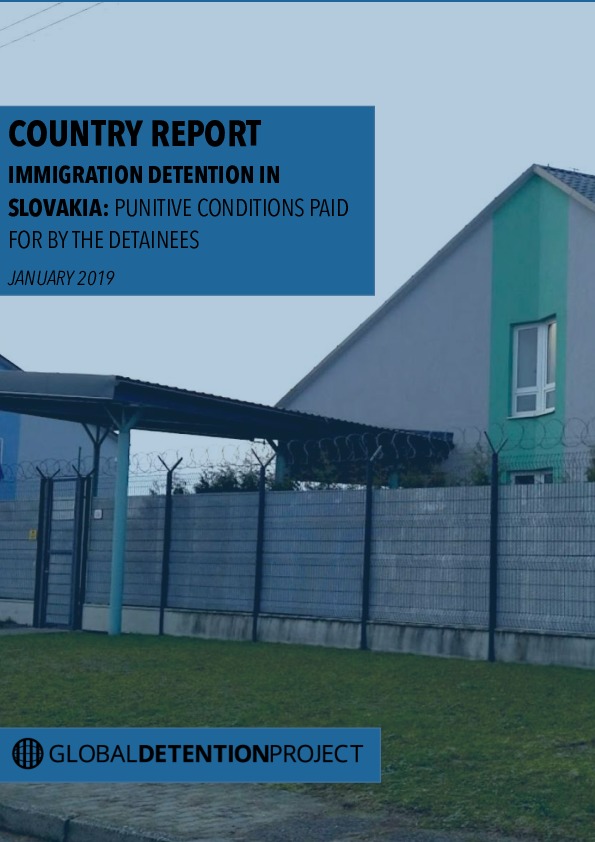
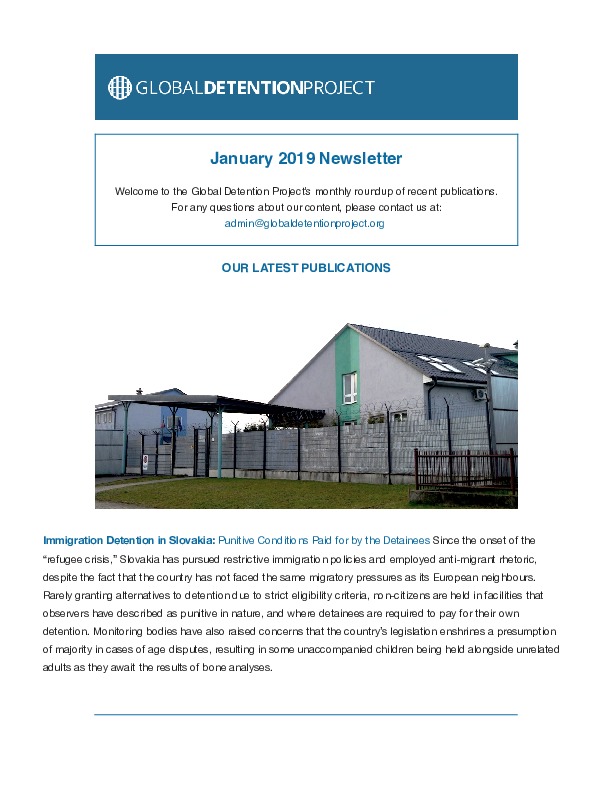
Immigration Detention in Slovakia: Punitive Conditions Paid for by the Detainees
Immigration Detention in Slovakia (2019 Report): Since the onset of the “refugee crisis,” Slovakia has pursued restrictive immigration policies and employed anti-migrant rhetoric, despite the fact that the country has not faced the same migratory pressures as its European neighbours. Rarely granting alternatives to detention due to strict eligibility criteria, non-citizens are held in facilities that […]