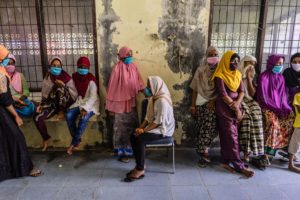
Cas particulier des personnes non admises à la frontière franco-italienne (Read full CPT report) 94. Afin de comprendre la situation des personnes déclarées non-admises sur le territoirefrançais à la frontière franco-italienne, la délégation s’est rendue à Menton. Elle a d’abord observéle déroulement de plusieurs interpellations effectuées en gare de Menton-Garavan avant de serendre au poste-frontière […]
European Union
Temporary Accommodation Centre (from report of the European Committee for the Prevention of Torture 2018 visit to Georgia)
B. Establishments for foreign nationals deprived of their liberty under aliens legislation; (Read full CPT report)32. The CPT’s delegation carried out a first-time visit to Georgia’s only immigration detentionfacility (opened in 2014), the Temporary Accommodation Centre of the Migration Department ofthe Ministry of Internal Affairs (hereafter, TAC or the Centre). Located in Varketili district ofTbilisi, […]
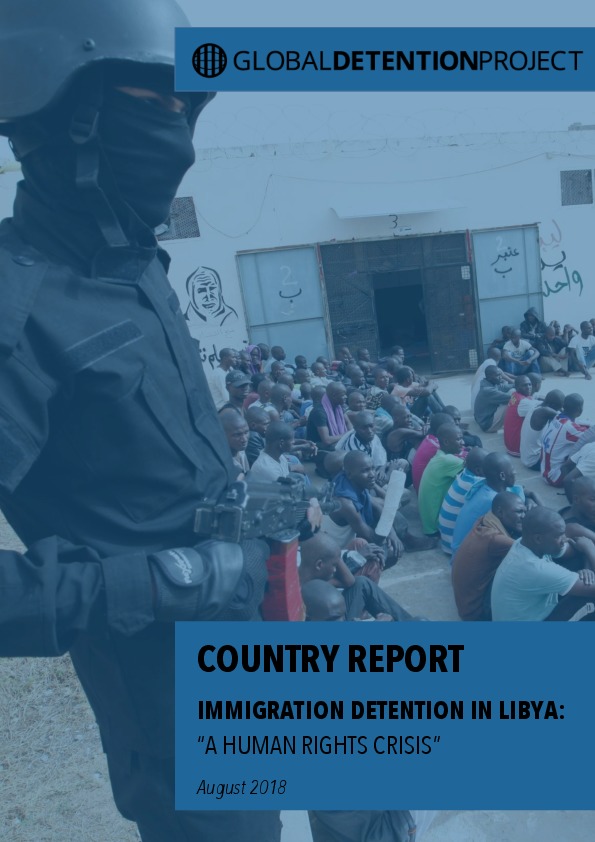
Immigration Detention in Libya: “A Human Rights Crisis”
Libya is notoriously perilous for refugees, asylum seekers, and migrants, who often suffer a litany of abuses, including at the country’s numerous detention facilities. Conditions at these facilities, many of which are under the control of militias, are deplorable. There are frequent shortages of water and food; over-crowding is endemic; detainees can experience physical mistreatment […]
Europe, Migrations and the Mediterranean: Human Mobilities and Intercultural Challenges
The 15th IMISCOE Annual Conference took place in Barcelona on 2-4 July 2018. Organised by the Universitat Pompeu Fabra, the conference brought together the European migration scholarship community to draw attention to geographical dimensions of migration and to provide a forum for methodological discussions linking Mediterranean and migration studies. GDP Researcher Izabella Majcher gave a presentation on data […]
Trandum Police Immigration Detention Centre (from report of the European Committee for the Prevention of Torture 2018 visit to Norway)
Trandum Police Immigration Detention Centre (Read full CPT report) 38. The delegation carried out a follow-up visit33 to Trandum Police Immigration DetentionCentre (hereinafter: “Trandum Detention Centre”), which remains the only immigration detentioncentre in Norway.34 The current policy in Norway is to accommodate asylum-seekers only in openreception centres; thus, Trandum Detention Centre functions primarily as a […]
The Effectiveness of the EU Return Policy at All Costs: The Coercive Use of Administrative Pre-Removal Detention
In February 2017, the European Commission (EC) adopted a specific Recommendation to guide EU states in the interpretation of the Returns Directive, stressing that detention can be essential in enhancing the effectiveness of the return system. However, despite its administrative label, pre-removal detention as interpreted by the EC contains punitive elements. GDP Researcher Izabella Majcher […]
The EU Hotspot Approach: Hotspots and Plethora of Freedom-Restricting Measures
This themed blog series organized by GDP Researcher Izabella Majcher for the Oxford University-based Border Criminologies examines the EU hotspot approach from the perspective of the right to liberty and freedom of movement, highlighting the unclear division of roles and responsibilities between EU agencies and host member states, the blurred line between detention and reception, substandard material conditions, a lack of transparency, and differential treatment based on nationality, among a host of other concerns. […]
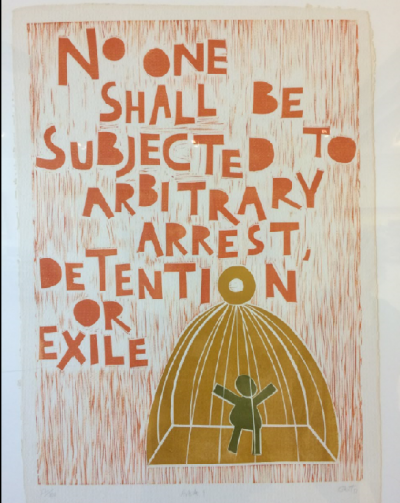
UN Child Rights Experts Call for EU-Wide Ban on Child Immigration Detention
Ahead of a key meeting of EU institutions and member states on issues relating to immigration and asylum, the UN Committee on the Rights of the Child issued an urgent plea for EU countries to bring an end to the migration-related detention of children. “EU law should not allow for child immigration detention, even as a last […]
Uneven Business: Privatisation of Immigration Detention in Europe
Europe reflects a variety of policy responses to the growth of the immigration control industry – from the privatisation of the management of entire immigration detention estates to keeping all detention facilities in official hands and employing private non-profit groups. In this chapter, Michael Flynn, Matthew Flynn, and Eryn Wagon detail the variety of levels and forms of privatisation adopted across the region, as well as the challenges that the outsourcing of immigration controls posits. […]
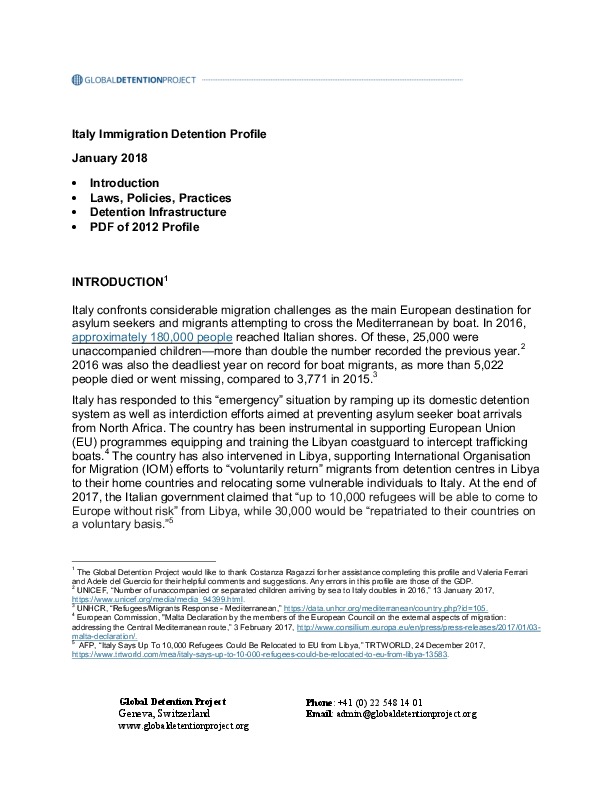
Immigration detention in Italy
As the main European destination for asylum seekers and undocumented migrants crossing the Central Mediterranean by boat, Italy confronts considerable migration challenges. It has responded by ramping up its domestic detention system, implementing the controversial “hotspot” approach to process maritime arrivals, boosting interdiction efforts, and adopting new legal measures that restrict avenues for asylum. The […]